
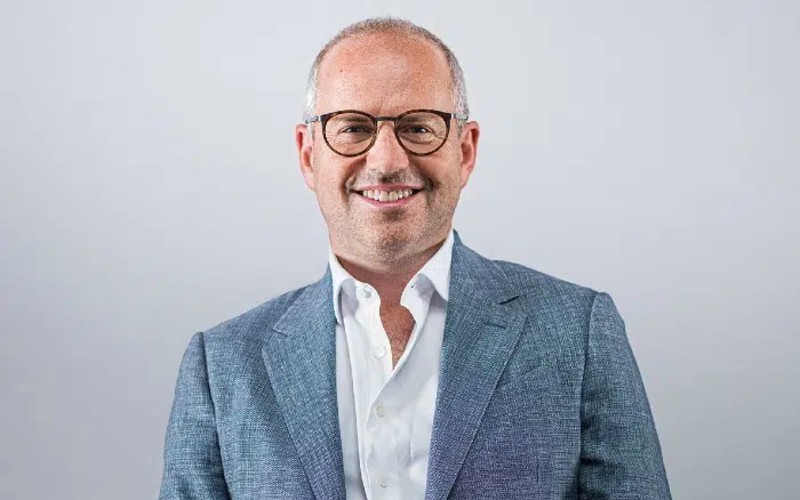
Ocado Group has confirmed that co-founder Tim Steiner will be replaced as CEO in 2028 following weeks of speculation.
Reports suggest that chair Adam Warby and billionaire Tetra Pak investor Jörn Rausing, who sits on the company’s board, had tried to oust Steiner due to its declining share price.
Now an agreement seems to have been reached where he will step down as CEO of the online grocer and warehouse automation tech provider at the end of 2027 then perform the role of ‘founder’ – providing “strategic guidance, deep market expertise and support” to the board – through to 2029.
Steiner founded the company in 2000 with former Goldman Sachs colleagues Jonathan Faiman and Jason Gissing.
Ocado is reported to have approached Niklas Heuveldop – chief executive of Vonage, a subsidiary of Sweden’s Ericsson – about potentially taking over as CEO.

“The board is grateful for Tim’s continued leadership and looks forward to working alongside him throughout this next chapter of Ocado’s development,” Ocado stated.
Ocado Group is a builder of warehouse automation technology. John Lewis was an early backer and it also provided the tech for the online business of its Waitrose subsidiary.
Steiner floated the group in London in 2010 and in 2019, after nearly two decades, Ocado ditched Waitrose and agreed a joint venture (Ocado Retail) with rival M&S – which saw the latter pay £750 million – to sell its food instead on the online-only supermarket platform.

In February 2024, Ocado Group said M&S had withheld a final £190 million payment and threatened legal action. The situation has not been resolved and now Ocado is getting into bed with Asda.
Steiner chairs Ocado Retail, which is profitable – but the same cannot be said of the tech business.
As beauty and fitness retailer THG found with its technology division Ingenuity, R&D and robotics require a constant stream of investment and are rarely profitable compared with their retail counterparts.
THG eventually demerged Ingenuity, which like Ocado has retail clients, in January 2025 to protect the value of its retail arm’s shares, which had dropped dramatically since IPO.
Ocado’s valuation yesterday dipped below its IPO price for the first time but recovered. It stands at 181 pence at the time of writing, having fallen 23% both in the year to date and last 12 months.
It is some way short of the more than 2,200p it reached at the height of COVID. Back then Steiner declared that robotics fulfilment technology was the future of supermarket trading as vast swathes of the population were forced to order from home.
However, despite securing global deals including with Casino in France and Alcampo in Spain, its flagship clients in the United States and Canada – Kroger and Sobeys, respectively – have closed their Ocado-powered fulfilment centres.
The firm admitted that in the US, people prefer to make immediate grocery orders – fulfilled by the likes of Uber Eats – and are more likely to collect an order from a shop.
Warby took over as chair from Rick Haythornthwaite – now chair of NatWest Group – 18 months ago.