
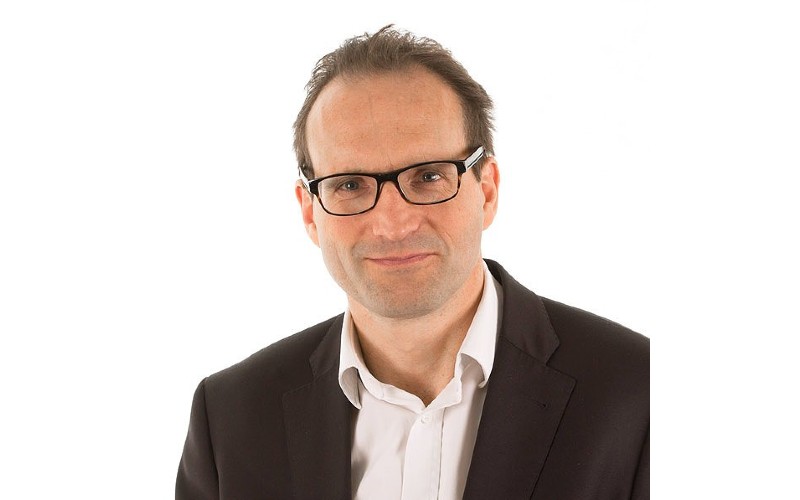

The fight for control of Physiomics plc has turned nasty ahead of a showdown vote later this month.
Last week the firm’s chairman Dr Jim Millen (pictured) was accused of “personally derailing” a boardroom coup led by activist investor Michael Whitlow, and of “throwing his fellow directors under the bus at every opportunity to cling to control”.
Towards the end of the week, Physiomics agreed to requisition a general meeting allowing shareholders to vote on whether to remove its entire board and replace it with new directors including Whitlow.
However the requisition notice included a stinging letter from Dr Millen which he used to attack the credibility of the proposed new directors.
Physiomics is a mathematical modelling, data science and biometrics company which supports the development of new therapeutics and personalised medicine solutions. Dr Millen was formerly the CEO of the Oxfordshire company from 2016 to 2024, and looked set to return to the position when CEO Dr Peter Sargent departs on 29th May 2026.
However last month Physiomics was forced to cancel a share placing and retail offer when an activist shareholder group – led by Whitlow – sought to replace its entire board and accused corporate leadership of “severe erosion of shareholder value” via dilution.
A revised placing and retail offer was then announced. An insider told BusinessCloud that the dissident group has confidence in the operational team – but trust had been eroded in the corporate leadership.
Whitlow holds approximately 12.35% of the company’s share capital. He has removed one of his potential appointees to the board, Martin Gouldstone, from the proposals.
In a long and targeted letter to shareholders last week, Dr Millen describing the requisition as “premature and potentially disruptive”.
He continued: “The board offered substantial representation in the form of two non-executive directors to replace two of the existing non-executive directors as well as a right for Mr Whitlow to recommend a further director.
“There were, however, a number of items on which the parties could not agree and, in particular, the remuneration packages proposed for the two incoming directors (comprising cash, shares, and options) were substantially higher than current remuneration for non-executives of the company.
“The board felt it could not, abiding with its fiduciary duties, grant these unusually high remuneration packages without approval by shareholders. A lesser offer was proposed but this, and a number of other items remained disputed, and negotiations were discontinued on 28th March 2026.”
Dr Millen continued: “The subsequent removal of Martin Gouldstone… materially weakens the credibility of the original proposal. Publicly available information indicated that Mr Gouldstone was the only proposed director with clearly identifiable recent life sciences listed company experience, including roles at ValiRx plc, Open Orphan, and Oncimmune Holdings plc.
“His withdrawal therefore does more than reduce the number of proposed appointees; it underscores the impression that the requisition was assembled in haste and without sufficient diligence as to availability and commitment. The board considers that this is not consistent with the degree of preparation shareholders should expect from a group seeking immediate control of an AIM-quoted life sciences services business.”

Dr Millen then outlined concerns regarding the remaining potential replacement directors Whitlow, Nick Tulloch and Ian Bagnall.
“Mr Whitlow is best known publicly as an activist investor with extensive social media engagement and as a director and former managing director of ECR Minerals plc… the board is therefore not persuaded that activism in quoted companies with small market capitalisations, without a developed sector-specific operating plan, is an adequate basis on which to hand immediate control of the company to Mr Whitlow.
“Mr Tulloch worked with Mr Whitlow at ECR Minerals plc… as chairman. The board has not identified from the public information reviewed any material operating background for Mr Tulloch in life sciences services. His recent listed-company profile appears instead to be centred on cannabis (CBD) and natural resources-related businesses rather than specialist scientific services.
“Mr Bagnall, whilst having accounting background, has no listed companies board experience nor as a senior executive in life sciences or scientific services businesses.
“The proposed new board lacks a coherent plan for Physiomics and has not demonstrated sufficient knowledge of the business.”
Dr Millen also questioned the independence of the trio, adding: “Based on publicly available information as at the date of this document, since Mr Tulloch and Mr Whitlow joined ECR Minerals in September 2023 its share price has remained flat and it has executed several dilutive fundraises. The share price of Mendell Helium, founded by Nick Tulloch, has declined by over 85% since 2021.”
The response from Whitlow, sent to shareholders, was damning.
He said: “Let us be clear: this requisition has not arisen in a vacuum. It is the product of prolonged underperformance, weak market credibility, and a failure at board level to convert a capable operational business into meaningful returns for shareholders.
“The board would prefer to describe this situation as ‘premature’ and ‘disruptive’. In reality, what is truly disruptive is a decade of erosion in shareholder value. What is premature is the board’s attempt to dismiss legitimate shareholder concerns without first addressing the facts.
“Shareholders should focus on outcomes, not narrative. The company has consistently failed to deliver meaningful shareholder returns, market confidence remains weak, and the valuation does not reflect the underlying potential of the business.
“Yet the board is asking investors to support continuity. Continuity of what, exactly? Continuity of underperformance, continuity of poor market perception, and continuity of the same outcomes that have already damaged shareholder value.
“The circular [including Dr Millen’s letter] relies on three familiar tactics: deflection away from performance, mischaracterisation of the proposed new board members, and personalised criticism of individuals that is both unnecessary and unhelpful.
“There are multiple factual inaccuracies about the proposed new board members throughout the circular suggesting not only has the company failed to do its research properly but, worse, it has focused on negatives – specifically trying to find holes in our proposal rather than putting forward a coherent plan of their own.
“None of these tactics addresses the central issue, which is accountability. The suggestion that this process was rushed is false. Engagement did take place, proposals were made, and a balanced solution was offered. The board chose not to act.
“We requested fair and proportionate board representation. This was not a demand for control, but a proposal intended to stabilise governance and strengthen oversight at a critical time.
“The board’s claim that the proposed directors would operate beyond standard non-executive roles is categorically denied. If such assertions are to be made publicly, they should be properly substantiated rather than implied.
“The board has attempted to portray the proposed remuneration structure as excessive, but that characterisation is misleading. The proposed structure was in line with market standards, designed to reduce reliance on costly external advisers, and focused on delivering better value for shareholders.
“Most importantly, the proposed remuneration structure was weighted towards share-based payments, rather than wholly in cash. And, furthermore, the proposed remuneration was less than members of the current board have paid themselves in the past. That is not excess. That is alignment with shareholders.
On credibility and track record, he said: “The board has selectively presented public information in an effort to undermine the requisition, but the facts tell a different story. Capital has been raised at premiums across multiple transactions, share price performance has improved following refinancing events, and in several instances valuations have remained above initial entry levels.
“Contrary to what the Board has asserted, ECR Minerals plc has seen share price gains in the period since Nick Tulloch and I joined that company. From a business that had severe financial issues, ECR now has a strong balance sheet and several promising projects.
“Likewise, Mendell Helium plc, where Nick is CEO and I have supported on investor relations. Even a cursory glance at the share price would show that it has doubled in two years – not the negative performance falsely claimed in the circular.
“The simple facts are that the proposed directors have professional qualifications, several decades of public market experience each and a track record of creating value, eradicating waste and repositioning companies strategically.
“This is not theory; it is execution. By contrast, the current board offers shareholders a long-term record of value erosion.”
On sector expertise, he said: “The board attempts to shelter behind life sciences credentials, but this is not fundamentally a scientific problem. It is a public markets problem. The company already has capable technical staff; what it lacks is capital markets credibility, strategic clarity, investor engagement, and effective governance. Those are board-level failures.
“The board’s argument regarding independence is weak. In small-cap markets, directors are often introduced through shareholder networks, and independence is measured by conduct, not acquaintance. And surely it is better that the company’s new board has an established and long standing track record of working together?
“To suggest that it would be better if we had no such association, which is the implication in the circular, is ludicrous.
“The more important question is this: how independent can a board truly be if it has presided over long-term value destruction without making meaningful change?
“The claim that no plan exists is incorrect. We have engaged with experienced city professionals, initiated discussions to support an orderly transition, and focused on stabilising and strengthening the existing business.
“We are not proposing disruption. We are proposing disciplined change… this is not about personalities. It is about outcomes.”
Physiomics’ most recently reported half-year income – to the end of the 2025 calendar year – was £528,000, up from £354k, and included £30k in grant funding.
Operating losses were £327k, up from £249k, while cash and equivalents were £257k at 31st December 2025 (31st December 2024: £269k).
The requisitioned general meeting will be held on 29th April 2026.
According to Dr Millen, CEO Dr Sargent has expressed his willingness to extend his tenure by up to two months on the condition that Whitlow’s proposals are not passed.