
One of the challenges facing UK universities is how to commercialise the world-leading innovations they create.
Typically this involves spinning out private companies, with a stake retained by the institution. However the University of York and HealthTech PCMIS have evolved a very different model.
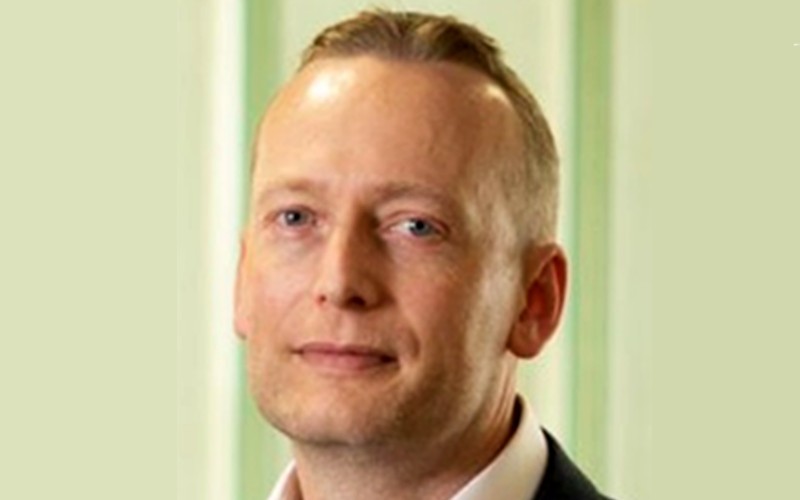
“We are wholly owned by the University of York,” PCMIS co-founder and CEO Byron George tells BusinessCloud. “It puts us in a unique position. We are able to tap into some of the world’s most experienced mental health researchers to help build, test and deploy cutting-edge algorithms to improve patient care.
“It’s a very collaborative and collegial approach… the more innovation we develop, the more sales and revenue are generated from that.
“But we’re not a full-out commercial company, and that puts us in the fantastic position of being able to Gift Aid any profits back to the university to advance further mental health research.”
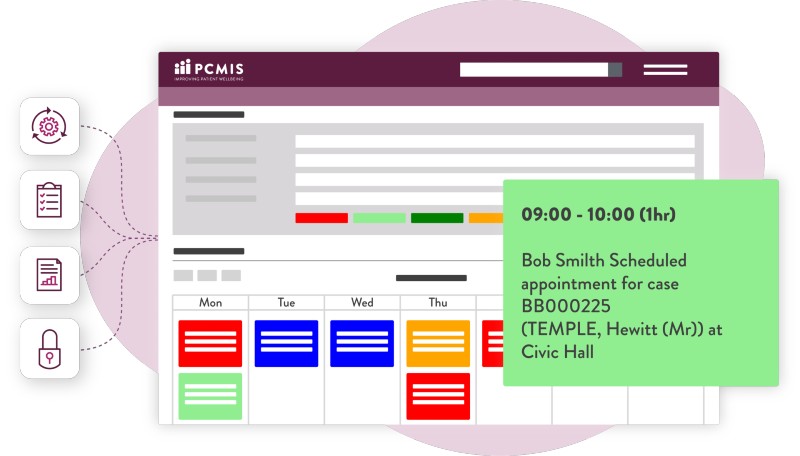
PCMIS develops evidence-based digital case management tools for mental health. It has over 20 years’ experience supporting large-scale healthcare services and mental health programmes such as NHS Talking Therapies.
Able to provide detailed reports into waiting times, treatment outcomes, operational efficiency and more, the firm – which featured on our HealthTech 50 ranking last year – has a dedicated team of just over 20 staff, but its huge network means it can scale rapidly when necessary.
“Depending on what we need to do at any given moment, we can be 3,000-strong – or 20 experts delivering business as usual!” says Byron.
As well as mental health researchers, the extended team might take in experts in finance, marketing comms, innovation, tendering, proposals or wider collaboration with other universities.
“We’re very much positioning our business to be collaborative for the greater good,” says Byron.
Data-rich
Recognised as an exemplar in mental health case management, PCMIS is designed in collaboration with mental health experts through evidence-based research to increase patient recovery and reduce treatment costs.
It is widely adopted within the NHS, with tens of thousands of clinicians and healthcare professionals utilising its electronic patient record (EPR) system on a daily basis. However the tech is also utilised across the globe.
PCMIS – innovative, evidence-based case management tools for mental health
“We arguably hold one of the world’s largest, most complete and data-rich mental health patient systems to date,” Byron explains. “We have 99.6% data completeness, which is incredible.
“That allows us to deliver services which drive true clinical insight… and develop algorithms to be a predictor in terms of patient care.
“[Under a traditional model] a HealthTech might conduct a research trial; capture some data; do seven years of evaluation; create a novel product; and then go to market. In a fast-paced digital environment, seven years doesn’t cut it.
“We’ve overcome that by having this deep, embedded relationship with our researchers and leading experts in the entire field of mental health – that means we can develop things, evidence-based, with real-time input from patients.”
A billion problems
It’s reported that one in four adults at some point in a given year will need mental health support.
“If you scale that up, that’s about a billion people across the world currently living with mental health conditions such as anxiety and depression,” says Byron. “So we wanted to develop something that was clinically proven, evidence-based, that would help track, manage and improve the lives of people suffering with their mental health.”
For example, PCMIS’s outcome feedback technology is able to predict in real-time when patients are not on track with their treatment and inform clinicians that they are at risk of dropping out.
“Based on the research, we can reduce deterioration by 73%,” says Byron. “One of the biggest risks is when a patient is receiving treatments but drops out and doesn’t complete; then there’s a risk, if they are referred back in, that it’s going to be harder to achieve reliable recovery or improvement in health.”
One of PCMIS’s collaborations, with the University of Oxford, aims to identify new ways of supporting patients in between CBT (cognitive behavioural therapy) sessions.
“We know that routinely 20% of patients will drop out between the initial assessment stage and in treatment; there is a bit of attrition. We’re working with them to identify and analyse that activity to improve the fidelity of the treatment.
“We can help therapists to identify where patients need extra support, and to guide the patient in being able to overcome potential obstacles that may be a barrier to improving their recovery. So it’s very much enhancing that relationship between the therapist and the patient.”
In the last decade, PCMIS has also empowered patients to submit routine outcome measures and questionnaires, freeing up valuable time for a clinician to deliver care to patients.
“We’re currently processing over five million outcome measures for services, and that alone is saving close to £400,000 in cost savings,” adds Byron. “We routinely have over 80% of patients completing the forms in advance.
“There’s nothing worse and more frustrating than having an appointment and seeing a healthcare professional having to fill in paperwork rather than delivering care.”
Infected blood scandal
Late last year, PCMIS and NHS England launched a new Infected Blood Psychological Service (IBPS) digital pathway to facilitate dedicated psychological support to those infected or affected by the national infected blood scandal.
The new digital pathway, live across England, is part of the Infected Blood Psychological Service, which delivers specialised, trauma-informed psychological and psychosocial care on behalf of the NHS. It ensures that anyone infected or affected, regardless of location, can securely self-refer online and access the support they need through a streamlined, secure digital pathway.
“It was arguably the largest and most complex mental health deployment in recent years,” says Byron. “It was deployed to 16 Trusts: the NHS very rarely does such a large-scale national deployment of such a sensitive and confidential programme.
“So we were really proud to be recognised and chosen as the supplier of choice for that.”
Talking Therapies
PCMIS is also the provider for the largest NHS Talking Therapies service in the country in Greater Manchester. “They see over 40,000 patients every year just within that one service: it’s four times bigger than the average.
“It’s important for them to optimise their workforce and delivery service, so we weren’t there just as a supplier: it was a truly valued partnership that we built with them to help understand their challenges and how we could deliver support in terms of consolidating multiple complex services into one streamlined system.”
Byron adds: “One of the key areas of NHS Talking Therapies is to empower patients in the ability to retain employment or to move back into employment. We are now providing Talking Therapies across Australia, Ireland and Hong Kong, for example, where they’ve adopted a similar model.”
Off-piste
Perhaps unsurprisingly, Byron is an advocate of physical activity and sport, with a personal passion for off-piste winter sports. “There’s a lot of evidence to show that a healthy body is a healthy mind.
“It’s definitely been a saviour for me, when I’ve needed a little bit of clear thinking, to go away and do something quite intensive physically over the weekends and come back with my batteries recharged for Monday.”
So what is it that gets him and the team out of bed on the weekday mornings?
“We aren’t financially driven: making a real difference in patient care is what drives us.”