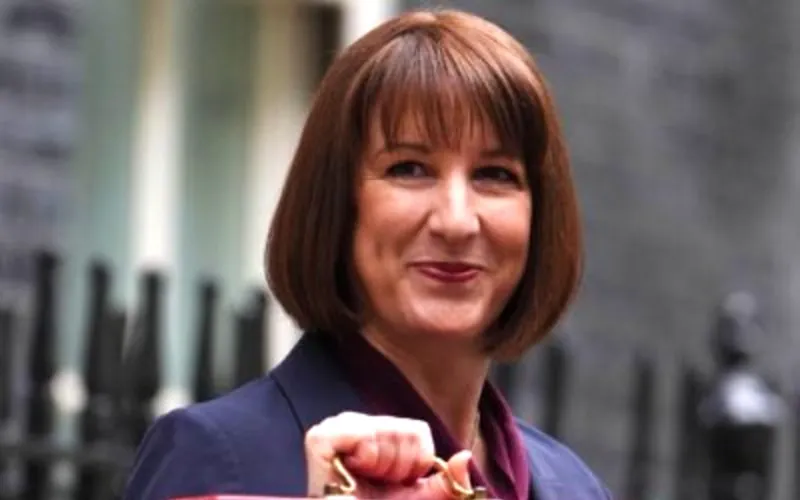
Rachel Reeves has delivered her Spring Statement to Parliament as growth forecasts are downgraded by the Office for Budget Responsibility.
In comparison with last year’s Statement – where billions of pounds’ worth of cuts were announced as Labour sought to get a grip on the nation’s finances – today’s event was lower-key.
The Chancellor’s statement is not a formal Budget – Labour pledged to deliver only one ‘fiscal event’ per year when it won the general election – but rather intended as an update on the Budget delivered last autumn.
The OBR said growth in 2026 is expected to be 1.1%, down from the 1.4% it predicted in November.
However growth in both 2027 and 2028 is now expected to be 1.6%, up from the 1.5% previously announced.
Unemployment will peak at 5.3% this year – higher than the 4.75% in 2025, and the 4.9% the government predicted late last year – the OBR said, before falling gradually to 4.1% by 2030.
The forecast also said the 2% target on inflation will be met later this year.
“This Government has the right economic plan for our country, a plan that is even more important in a world that in the last few days has become yet more uncertain,” Reeves told Parliament.
“The new forecasts from the Office for Budget Responsibility confirm that our plan is the right one – inflation is down, borrowing is down, living standards are up and the economy is growing.”
However the OBR said the conflict in the Middle East “could have very significant impacts on the global and UK economies”.
Shadow Chancellor Mel Stride said Reeves had “nothing to say and no plan… unless, of course, doing nothing is a cunning plan to avoid U-turns further down the line”.

So how did the tech and business sectors react to the Spring Statement?
Stability is welcome
Paul Kenny, managing director at Aquatrust, said tech and leadership talent is key to SME growth.
“In the world we’re operating in right now, stability is welcome. Most SME leaders I speak to, me included, are focused on keeping our heads down, delivering on our goals, and continuing to progress despite the noise around us. A stable outlook gives us the breathing room to do that,” he said.
“We need the tools, digital infrastructure and support to be able to compete alongside the big players. Initiatives like digital grants, access to emerging tech, and proper mentoring can level the playing field. If that support is prioritised, SMEs won’t just survive – we’ll thrive.”
Matt Rouif, CEO of global AI visual creation platform Photoroom, said the Chancellor’s pro-entrepreneur tone is encouraging, but the Government must now go further in delivering practical, grassroots AI support that helps small businesses scale in real terms.
“It was encouraging to hear the Chancellor reaffirm support for entrepreneurs and small businesses as they are the backbone of the UK economy, accounting for more than 99% of all enterprises – so any serious growth strategy must start there. However, the Statement stopped short of outlining how small firms will be supported to adopt AI and digital tools at scale. The opportunity is not just to back founders in principle, but to equip them with the practical tools and skills that help them compete.
“We are seeing a new generation of entrepreneurs building businesses with little more than a smartphone. Human-centred AI is lowering the cost of entry, reducing overheads and helping founders move faster.
“If the Government wants entrepreneurs and small businesses to power UK growth, it should match its positive rhetoric with tangible measures that expand access to AI, strengthen digital skills, and support confident adoption at the grassroots level. AI should not replace human ambition, but remove the friction that holds small businesses back.”
Market turmoil
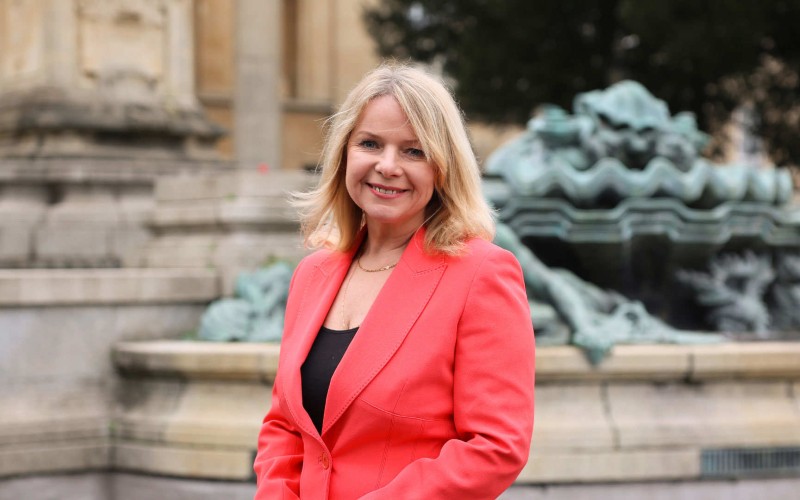
Susannah Streeter (above), chief investment strategist at Wealth Club, said: “The Chancellor was trying to project a ‘keep calm and carry on’ message, but market turmoil continued during her speech, with UK borrowing costs having shot up and London’s FTSE 100 deep in the red, staying around 2.6% lower. Although there was a nod to the current turbulence, the forecasts don’t take into account the rapidly developing situation in the Middle East. So even though Rachel Reeves championed forecasts of a further fall in inflation, there’s a clear and present danger of the price spiral taking off again due to escalating conflict with Iran.
“The Office for Budget Responsibility downgraded growth for this year to 1.1% but upgraded it slightly for the following years. This appeared to help sterling recover slightly against the dollar, but the moves were limited given that big risks have crept back into the outlook.
“The potential wiggle room identified in the OBR’s latest projections also risks being swallowed up by the economic repercussions of war in the Middle East. Hopes for an interest rate cut later this month are being dramatically scaled back due to the spike in energy prices. It means servicing the UK’s debt pile could prove more costly than current forecasts suggest. Already high energy costs have been blamed for holding back growth, and the big worry is that if planned support for industries is not brought forward, more firms could go to the wall, potentially pushing the UK’s fragile recovery back into reverse.”
James Bentley, director at Financial Markets Online, commented: “Rachel Reeves had promised a low-key Spring Statement. What we got was a Spring sideshow, with no policy announcements and a Chancellor relegated to the role of bystander by the market chaos.
“Her speech has been completely overtaken by events. A week ago the markets would have welcomed the news that Government borrowing is coming down nicely, and the OBR’s forecast that unemployment will start to ease from its current five-year high.
“But with the UK stock markets a sea of red, encouraging economic forecasts and a Chancellor in self-congratulatory mood count for little. The Pound picked up against the Euro, but both the FTSE 100 and FTSE 250 barely moved following her speech.
“Two big questions remain – how far will equities fall, and will the surge in oil and gas prices nix any chance of interest rate cuts in the coming months?
“The good news is that the market impact of geopolitical shocks tends to be shorter-lived than that of economic downturns, and we are already seeing investors ‘buying the dip’. But the combination of missiles and rhetoric suggests there is no end in sight to the conflict, and further extreme volatility is likely.”
Measured
However Anisha Chawla, private client tax manager at Menzies LLP, said: “A measured and low-key Spring Statement is exactly what the UK needs after months of turbulence and policy reversals. British businesses will value any sense of consistency, particularly against a continued backdrop of global uncertainty. This sense of predictability is essential if the UK is to retain talent, attract investment and ensure opportunities are not lost to more competitive and reliable markets overseas.
“But stability cannot become a ‘say nothing now and revisit it later’ strategy. Businesses are not looking for difficult decisions to be quietly deferred in the hope they avoid scrutiny – they are looking for certainty and direction. Silence alone will not rebuild confidence. Recent increases in National Insurance contributions and an inflated tax burden have placed significant strain on Britain’s businesses, especially smaller firms. Without a clear and consistent growth strategy, confidence will remain fragile, and investment and planning will continue to stall.
“Growth is subdued, inflationary pressures persist, and the cost of living continues to weigh heavily on households. At the same time, higher energy prices and softer consumer demand are adding further strain across the economy. Businesses need reassurance that there will be no further unexpected tax changes or spending commitments that could disrupt planning and investment.”

Dr Maria Rana (above), lecturer in economics and finance at the University of Salford, said: “[Reeves] argued that households are expected to be around £1,000 better off per year under the Government’s plans.
“However, these forecasts do not account for the potential impact of higher energy prices driven by the conflict in the Middle East. If pressures continue to intensify, the outlook could quickly deteriorate, affecting not only the UK but the global economy.
“At the same time, the UK continues to face heightened scrutiny in the post-Brexit landscape, with several structural challenges still unresolved. It is similar to attempting to complete a puzzle with a crucial piece missing at its centre: however carefully the remaining pieces are arranged, the overall picture cannot fully come together.
“Overall, the message is one of cautious optimism – but one that remains highly vulnerable to geopolitical shocks and unresolved structural weaknesses.”
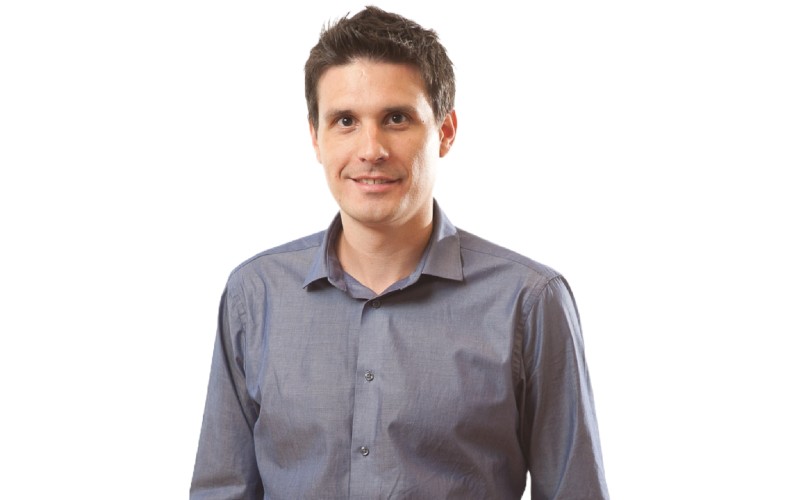
Mark Boost (above), CEO of UK-based cloud provider, Civo, said: “This was a speech light on specifics and ambitions for the UK. Even if the Chancellor was hoping to tone down the noise compared to November, this was still an opportunity to encourage a positive vision for growth in the UK. The silence was telling.
“We are living through a period of extraordinary geopolitical volatility. Supply chains are fragile. Alliances are shifting. And governments around the world are waking up to a fundamental truth: national resilience is no longer just about aircraft carriers and defence budgets. It is about who controls your data, who runs your AI, and whether your critical digital infrastructure sits within your own sovereign borders.
“The Government needs to start thinking fast about the country’s sovereign capabilities. The UK’s long-term competitiveness and security depend equally on sovereign technology infrastructure – cloud platforms, AI compute, and data systems that are owned, operated, and governed in the UK, by UK entities, under UK law. If the Government is serious about resilience and growth, it needs to invest in these sovereign digital capabilities – not leave ourselves solely reliant on events and decision-making beyond our control.”
Stuck in neutral?
Derek Ryan, CEO of North West Europe at Bibby Financial Services, said: “The Chancellor’s Spring Statement is unlikely to shift the dial for SMEs that were hoping for fresh measures to unlock growth. This was an important moment to unlock pent-up investment – even if the Government’s focus for today is on stability, rather than new fiscal intervention.
“Many small business leaders will still be grappling with the high costs of doing business and the elevated tax burden, both of which continue to weigh on hiring and investment decisions. Today’s absence of targeted SME measures may mean that uncertainty lingers, doing very little for business confidence.
“SMEs won’t have expected a silver bullet from today, but they do need a clear and consistent strategy that supports investment, improves access to finance and eases the pressures that constrain growth. Stability is welcome – but without visible momentum behind small business growth, SME confidence risks remaining stuck in neutral at a time when the UK economy needs it in gear.”
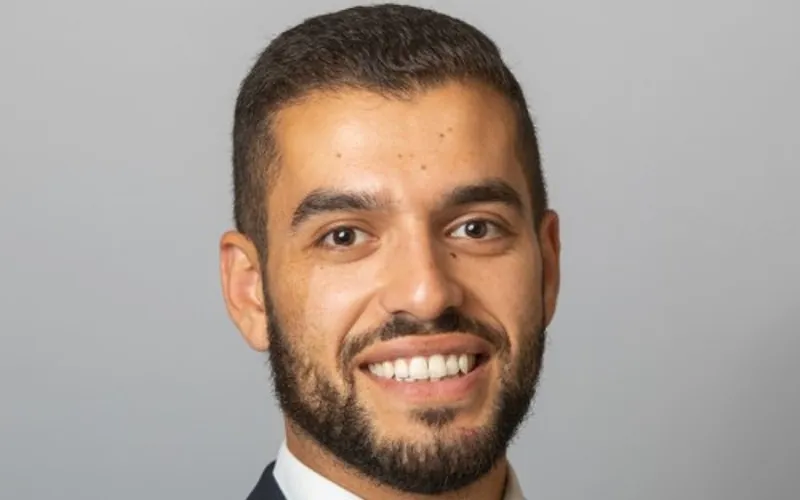
Tariq Attia (above), CEO of UK VC IW Capital, said the next Autumn Budget must move beyond stability and deliver stronger policy support for scaling businesses.
“A Spring Statement focused on stability is understandable but won’t close the gap between the UK’s ambitions as a tech nation and the reality on the ground.
“We have powerful tools available to back early-stage innovation – such as R&D tax credits and incentives like EIS and Entrepreneurs’ Relief – and any steps to extend their reach to scaling businesses are genuine steps forward.
“However, prohibitors are keeping founders in a tough growth environment like the employer NI burden which makes every new hire a harder decision. The UK’s world-class research and deep STEM talent give it a genuine shot at being a leader in AI and deep tech but that potential won’t materialise through forecasts alone.
“The Autumn Budget needs to deliver the policy environment that matches that ambition.”