
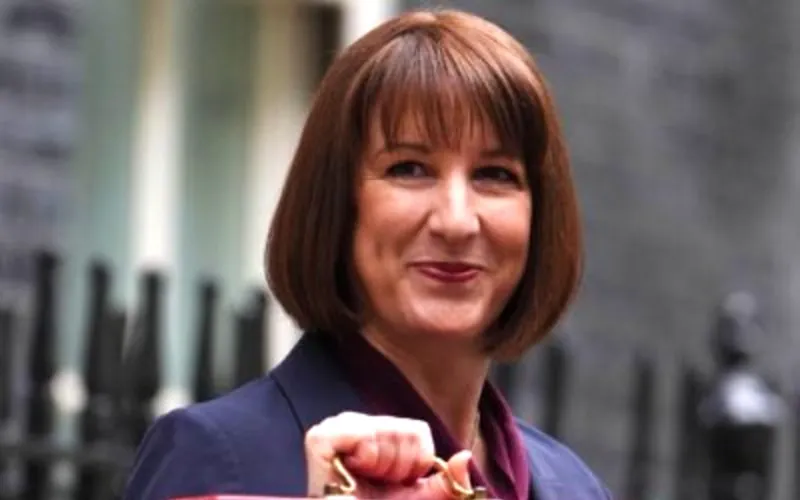
Rachel Reeves’s Autumn Budget was overshadowed at the outset when the Office for Budget Responsibility accidentally published it two hours early.
The OBR apologised for the ‘technical error’, promised an inquiry and said it wouldn’t happen again.
When the Chancellor took to the despatch box, it was amid calls of “shambles” from the opposition benches – and she was quick to distance herself from the gaffe.
Reeves had vowed to take “fair and necessary choices” on the economy in today’s statement to the House of Commons, having acknowledged public anger and frustration at “unfairness in our economy” in an earlier video.
Conservative leader Kemi Badenoch accused her of introducing a “smorgasbord of misery” – focused on tax rises – as Labour U-turned on a reported plan to increase income tax following a public backlash.
A steely-eyed Reeves was clear on the need to fill a black hole in the public finances, accusing the previous Tory governments of plunging the country into £2.6 trillion of debt – 83% of GDP – and insisting this must be paid down.
The OBR said that the Budget will raise taxes by £26 billion by 2029-30, with income tax thresholds to be frozen for three years from 2028. The proportion of tax to GDP will hit an all-time high of 38% in 2030-31.
It said that around three-quarters of the planned reduction in borrowing over the next five years now comes from tax increases. It cut its medium-term productivity growth forecast to 1% from 1.3%.
“A significant rebound from recent negative shocks has not materialised,” the OBR said.
Reeves also scrapped the two-child benefit cap introduced by the Tories, a move which she said would take hundreds of thousands of children out of poverty in one fell swoop.
Badenoch’s view was that the Budget could be summed up in one sentence: “Labour are hiking taxes to pay for welfare.”
She added: “This is a Budget for Benefits Street paid for by working people.”
What did the UK business and tech sectors make of the Chancellor’s statement?
R&D and AI investment
Investment for artificial intelligence was promised – “building that great industry here in Britain”, as Reeves put it – with AI Growth Zones in Wales cited by the Chancellor.
UK Research and Innovation (UKRI) will receive £38.6bn, including £9bn for government priority sectors such as AI, quantum computing and engineering biology.
Cat Mora, director of research operations, Phasecraft, said: “We welcome the Government’s commitment to targeted investment in innovation and the message that if you build here, Britain will back you.
“Phasecraft’s work sits at the intersection of research and real-world application, and we strongly support efforts that streamline R&D funding, prioritise long-term partnerships in critical technologies like quantum and attract top global talent to the UK.
“Widening eligibility for enterprise incentives and expanding EIS schemes will go some way towards helping this.”
Fred Soneya, co-founder & general partner at investor Haatch, said: “For the tech sector, leaving R&D tax credits alone was a good outcome. SMEs need certainty and stability if they are to plan for the future effectively – and this isn’t possible when policy and taxation are constantly changing, so the Chancellor was right to avoid the temptation to tinker with this.
“Similarly, the fact that some form of ‘wealth tax’ wasn’t introduced is good news, even if the broader tax landscape has become less favourable across the past two Budgets.
“A targeted wealth tax would likely have a negative impact on private investments – such as the availability of private equity and VC funding for high-growth startups – making it counterproductive for productivity and economic growth.”
Tax relief
£7bn will be allocated to innovative companies to scale and remain in the UK, with Reeves stating: “Growth begins with the spark of an entrepreneur. Half of new jobs in Britain are created by scale-up businesses. And we want those jobs created here, not somewhere else.
“Our job is to make Britain the best place in the world to start up, to scale up, and to stay.”
Reeves said the Government is widening eligibility for its enterprise incentives to attract talent and capital investment. This includes tax relief for investors and measures for UK listings relief. She is also launching a call for evidence on how the tax system can better back entrepreneurs.
She said that under Labour, the economy will be grown patiently and stubbornly “by founders who bet their savings on an idea. By firms breaking into new markets. Developing new technologies, and creating new opportunities… our job is to partner with them.”
The shift in the VCT qualifying rules to include more established business is a “real game-changer”, said Jamie Roberts, managing partner, YFM Equity Partners.
“Regional businesses often scale over a longer timeline and the previous requirement to secure a first VCT-qualifying investment within a fixed window meant too many strong companies missed out on essential early growth capital,” he said.
“This change means investors can support high-growth businesses for longer, helping ambitious management teams scale across the UK.
“It recognises that ambition exists everywhere, and now the investment can too. This kind of policy encourages sustained growth, creates jobs outside the major hubs, and strengthens the ecosystem for entrepreneurs and investors alike.”
Ritam Gandhi, founder and director, Studio Graphene, said: “The Budget will do little to shake off the prevailing cloud of negativity hanging over the private sector, even with the Chancellor’s promise that ‘If you build here, Britain will back you’.
“Consultations will not help in the here and now; from startups to corporates, the challenges that businesses are facing – from access to finance and talent through to stagnant economic growth and higher taxes – are not going away.
“Such challenges place greater pressure on organisations of all sizes and sectors to improve productivity and find ways to do more with what they’ve got. Invariably, the answer will be technology and, in particular, AI. And that’s where, from a business and technology perspective, the government had already actually played its trump card late last week in announcing a raft of new reforms and investments under its AI strategy.
“This was a welcome move and, amidst all the negativity that has surrounded this Budget, the fact that the government is pursuing different options to improve AI startups’ access to funding and routes to market is really positive.
“They will likely be lost amidst all the noise today, but the AI Growth Zones, Sovereign AI Unit and ‘first customer’ policy were all good steps forward.”
£300m NHS tech pledge
A £300m commitment to modernising NHS technology is a positive sign, said Shilpa Kaluti, CFO at Scrumconnect – but without cross-government digital reform it risks becoming just another isolated upgrade.
“What matters now is turning that funding into real-world improvements people can see and trust. Across the UK, too many public services are still running on outdated, disconnected systems, and fixing one department at a time won’t solve that,” she continued.
“What today’s Autumn Statement shows once again is that digital investment continues to be driven department by department. While targeted spending, such as in the NHS, can make a difference, the lack of a unified, cross-government approach risks reinforcing silos, slowing innovation and limiting the ability to build services that work seamlessly for the people who rely on them.
“A more effective approach would prioritise cross-government investment in the essentials every department depends on: shared data infrastructure, strong digital skills and modern systems that can talk to each other. Countries like Estonia have shown what this makes possible, with national platforms and common standards that allow services to connect effortlessly across government.
“If funding was centred on the outcomes people rely on rather than departmental boundaries, the government could build services that match the way people actually use them. It would mean public services that are easier for users to navigate, more joined-up and far more responsive to communities across the UK.”
Cash ISA limits cut
The UK has some of the lowest levels of retail investment in the UK so from April 2027 Reeves will reform the ISA system, keeping the full £20,000 allowance while designating £8,000 of it exclusively for investment. Over-65s will keep the full allowance.
The aim is to encourage more households to invest their savings into the UK stock market.
Nicholas Hyett, investment manager, Wealth Club, said the ISA reform was “all bark and no bite”.
“There’s a certain logic to ISA reform. Anyone who hits the maximum £20,000 cash ISA allowance year-after-year should really be thinking about investing some of that in the stock market,” he said.
“However, the reality is that this policy needn’t affect your savings decisions at all. Money market and other short dated fixed income funds available in a stocks & shares ISA mean investors can effectively hold cash within a stocks & shares wrapper.
“On the plus side this means investors really don’t need to worry too much about this ISA reform – though banks may find the fall in cheap deposits more problematic.
“It’s less good news for the Chancellor though. The reform was designed to encourage investment in UK-listed companies, but she may find that she has positioned herself against the UK’s army of committed savers and not achieved much at all.”
The Northcoders consultancy brand ‘changing how tech gets done’
Salary sacrifices capped
New limits on how much employees can stash in salary sacrifice schemes before it becomes subject to National Insurance will reduce how much people put away in things like pension pots.
“This cap throws a spanner into the works of private sector pensions, where salary sacrifice is a crucial and valued feature of workplace schemes. At £4.7 billion, the tax take is greater than expected and means the impact of this policy on pensions, pay or businesses – or all three – could be severe,” said Gary Smith, senior partner and retirement specialist, Evelyn Partners.
“Restricting salary sacrifice is a tax penalty on people trying to the right thing by saving efficiently for their own retirement and it’s yet another National Insurance cost increase imposed on firms, which may result in reduced pay and pension benefits for private sector employees. Some employers who currently pay more than the auto-enrolment minimum on behalf of their employees will be inclined to reduce their contribution rates or other employee benefits to adjust for these changes.
“Under the current minimum auto-enrolment scheme percentage contribution rates, someone earning less than £40,000 a year will not be affected by these changes. For those who earn more, it will depend on how firms react and how they manage their pension systems. It could be that many white-collar workers will just see their monthly NI bill go up and take-home pay go down if they study their payslip.
“But one thing this salary sacrifice crackdown won’t do is earn the Chancellor a backlash from the public sector, as a raid on tax-free cash would have done. It is politically convenient that public sector schemes do not generally operate on a salary sacrifice basis but rather operate as ‘net pay arrangements’.
“A cap on employee salary sacrifice for pension contributions should therefore have little impact on the public sector, including all of the civil service and government-backed schemes, which will save this Government another run-in with the unions and vested public sector interests.
“However, the upshot is that it will put a further wedge in the growing divide between private and public sector pensions. Restricting this sensible tax benefit that makes private sector saving more attractive adds insult to injury in a two-tier pension system where public sector pensions, underwritten by taxpayers, are hugely more generous and reliable than those available in the private sector.”
Frozen income tax thresholds
The freeze on income tax threshold means that as wages go up, people will be dragged into paying tax for the first time or shifted into a higher rate.
Greg Cox, co-founder and CEO of Quint Group, responded: “The Chancellor claims she is ‘championing innovation’ and ‘backing working people’, yet today’s measures tell a different story. While she faces a difficult balancing act, the Government is once again making choices that will weigh heavily on British businesses, especially those trying to grow, hire and innovate.
“Hiking dividend tax, freezing income tax thresholds, and tightening rules on salary sacrifice add up to a stealth tax on growth, squeezing cash flow and increasing the cost of doing business. These policies penalise millions of ordinary savers and early-stage investors, and disincentivise the very risk-takers we need to create jobs and attract investment.”
Minimum wage increases
Minimum wage rates will increase next year to £12.71 for adults aged 21 and over, and to £10.85 for 18-20-year-olds.
Vipul Sheth, MD of Advancetrack, says the Chancellor’s move will sharply increase payroll costs for SMEs, adding to already record-high outgoings at a time when economic growth has slumped.
“By raising National Minimum Wage levels, payroll costs for business owners will rise exponentially at a time when economic growth has already slumped – and these aren’t anonymous corporates with endless reserves; they’re individuals who often put their own homes and savings on the line to build companies that support thousands of families,” he said.
“What the country needs is stability and a clear plan to rebuild confidence. Instead, what we have is yet another set of measures that make the UK less competitive and less attractive for those capable of driving growth. If the Government is serious about economic recovery, it must stop treating both employers and employees as a convenient cash machine and start working with them.”
Mansion tax
A levy on homes worth more than £2 million could raise between £400m and £450m for the Treasury. From 2028, properties worth millions of pounds will face a council tax surcharge of £2,000-7,500.
Electric vehicles
A 3p per mile tax for electric vehicles will seek to protect government revenues as people shift from petrol and diesel to EVs.
Paul Holland, MD for UK/ANZ Fleet at Corpay – which includes the UK brand Allstar – commented: “Nothing announced today makes life easier for fleets or small businesses. Fuel duty relief is still absent, with only a five-month freeze before staged increases begin from 2026. Incentives for cleaner alternatives such as HVO are missing. Support to help small firms electrify is nowhere to be seen.
“Instead, the Government has confirmed a new EV mileage tax from 2028, charging 3 pence per mile for battery electric vehicles and 1.5 pence per mile for plug-in hybrids. This is completely the wrong move at the wrong moment. If you increase the cost of running an EV, people will simply delay switching.”
“Without targeted support, EV vans will remain impractical for many small firms. The second-hand EV market will stay weak. Greener fuels such as HVO will continue to be a nonstarter because they are taxed the same as diesel. And now EV taxation risks slowing progress even further. These are practical issues that Government has to confront if it wants a cleaner and more productive transport system.”
Rising pensions
Reaffirming its commitment to the triple lock on state pensions, Labour is increasing the basic state pension by 4.8% – £440 per year. Increases to the new state pension will be above £500 per year.
FTSE firm ‘in wind-down mode’ sees shares dip upon Arqiva news