
Raspberry Pi has fallen to its lowest share price since listing in June 2024, with the stock hitting a low of 277p today and trading around the mid-280s later on.
That dip took the shares below its 280p IPO offer price and way off its peak of 766p almost 12 months ago.
A big part of the weakness traces back to the company’s financial performance since IPO.
In its FY2024 results, the Cambridge-based firm, which is behind low-cost miniature computers used extensively in education, said unit sales were temporarily lower because of a channel inventory correction as supply normalised after the pandemic-era shortages, which weighed on profits.
Revenue fell 2% year-on-year to $259.5 million, while profit before tax plunged to $16.3m from 2023’s $38.2m.
The same theme carried into the latest disclosed numbers, with H1 2025 revenue ($135.5m) falling 6% year-on-year and profit before tax ($6.2m) dropping sharply, even as the company talked up improving momentum into the second half.
The first half of its financial year also marked a company-first, with the business selling more semiconductors than boards for the first time.
Despite the negativity, the firm did launch seven new products in the period.
Its falling stock has also been compounded with the news that CFO Richard Boult has informed the board that in the second half of 2026, after seven years at the firm, he will leave the company to “explore new challenges and enable the company to put in place a team for its next period of growth”.
Investors have also been digesting what “normal” demand looks like now that Raspberry Pi devices are widely available again.
The Financial Times also recently reported that surging demand for chips and memory from AI infrastructure projects is pushing up component costs, creating pricing pressure for electronics manufacturers such as Raspberry Pi.
Some experts are suggesting that its current share price could bounce back and be a good investment for traders, but are also warning that its future could depend on AI.
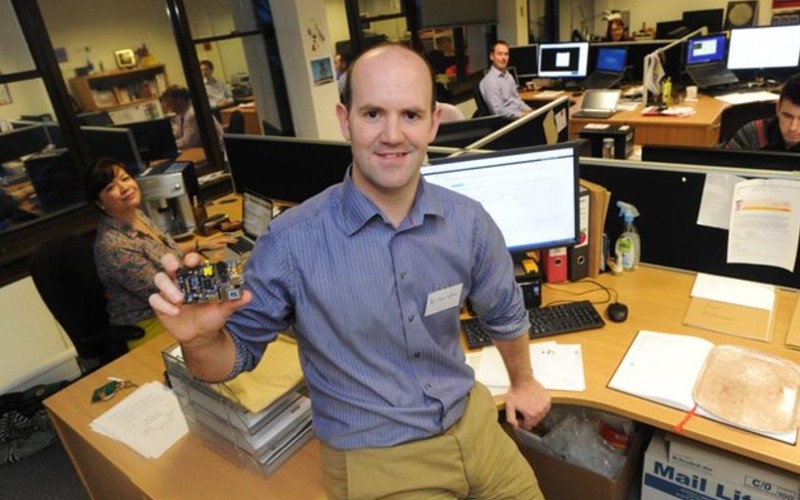
It is still a member of the FTSE 250 and CEO Dr Eben Upton is confident that momentum is building.
“Our growing pipeline of OEM opportunities, disciplined supply chain management and strong product roadmap position the business for future growth,” he said after the company released its half-year results in late September.
“For the full year, we remain on track with profit expectations unchanged, underpinned by strong anticipated sales volumes and unit economics in the second half.
“We are encouraged by the uptake of new products, expanding OEM engagement, and the first instance of semiconductor volumes exceeding board volumes.”
Raspberry Pi currently has a market cap of over £550m and is expected to release its full-year results in the coming months.