
Nobody plans to lose everything.
When you start a business, you imagine growth, success and momentum. You picture the good years. You do not picture the day when it all stops.
The day when the phone goes quiet, the numbers stop working and you realise the thing you spent years building is slipping away. I have lived through that.
Here is something founders do not often say out loud. Losing everything does not just hit your bank account. It hits your identity.
When you have spent your life building, creating, fixing and connecting people, your work becomes part of who you are.
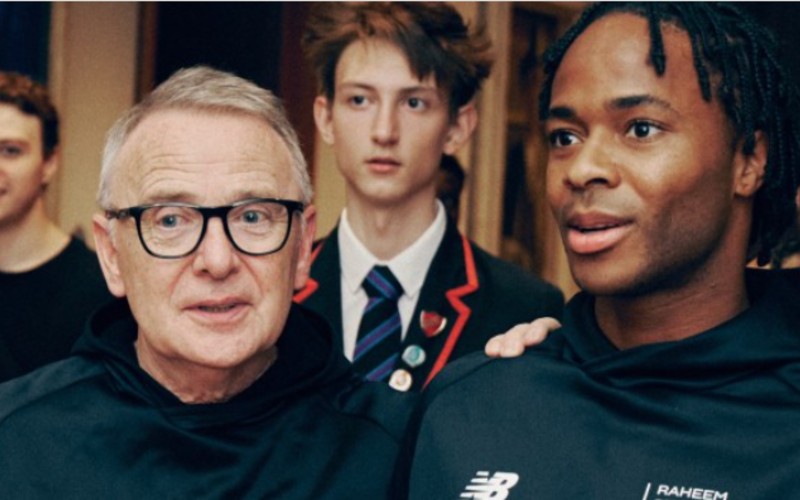
Chris Bird is the CEO of The Raheem Sterling Foundation
So when it disappears, it can feel like part of you disappears with it. You sit there wondering, was it bad luck, bad timing, bad judgement, or was it just me?
The truth is usually somewhere in the middle. I have learned that business success is rarely as permanent as people think, and failure is rarely as final as it feels in the moment.
What matters is what you do next.
Starting again is brutal. Your confidence is damaged, your finances are damaged, and sometimes your relationships are damaged too.
People look at you differently. Some quietly disappear. Others suddenly become experts on what you should have done.
But here is the strange thing. When you lose everything, something else happens. You become lighter.
You stop worrying about what people think. You realise that reputation is not built by never falling, it is built by how you stand back up. You start seeing the world more clearly.
If I could sit down with my younger self today, here is what I would tell him.
1. Do not confuse loyalty with trust
Some people will stand with you for decades. Others will stand with you only while things are going well. Learn the difference early.
2. Protect yourself financially
Founders are brilliant at building value for other people and sometimes terrible at protecting it for themselves. Do not assume the future will look after you. Structure things properly.
3. Health and family matter most
Business has a way of convincing you that everything is urgent. Most things are not. The time you miss with the people who matter, you never get back. I certainly have not.
4. Imposter syndrome never goes away
You will walk into rooms where everyone looks smarter, richer and more qualified. You will feel like the person who came in through the wrong door. The truth is, half the room feels exactly the same.
5. Failure is not the opposite of success
It is part of the same road. Some of your best ideas will come after your worst moments.
And I would also tell him this.
The goal is not to become rich. The goal is to become useful.
Useful to people, useful to communities and useful to the ideas that make the world you are in a little bit better. Because when the money disappears, the titles disappear and the applause fades, that is the only thing that really lasts.
I am still here, still building, still learning. Maybe that is the real definition of a founder.
Not someone who never loses, but someone who refuses to stop creating.
- Chris Bird is a veteran media, PR and sports executive who founded The Bird Consultancy in 1990. A former COO at Manchester City, his mother was one of Harold Shipman’s victims, and he has spoken openly about his own mental health challenges. He is a BusinessCloud Northern Leader.