
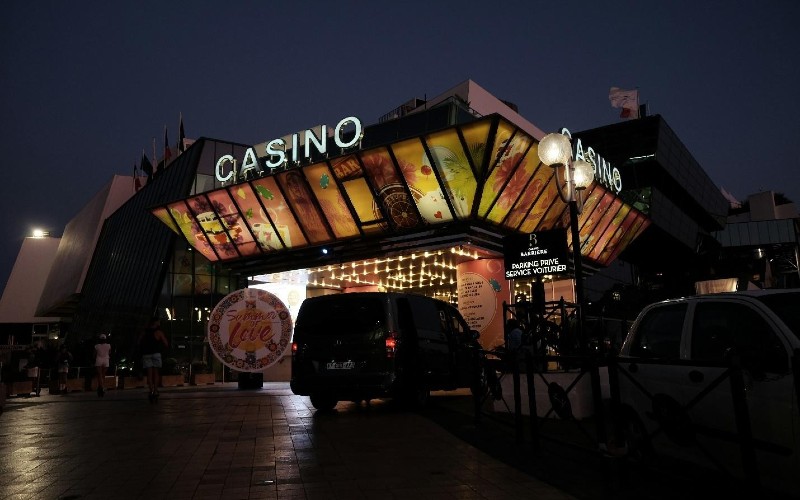

The modern retail environment is locked in a fierce battle for customer loyalty, a struggle that extends far beyond competitive pricing. Today, success hinges on the sophistication of the customer experience (CX) and the effectiveness of personalized engagement. Increasingly, retailers are finding their best playbook not in industry journals, but in the highly-optimized world of casino technology—the masters of behavioral engineering and high-stakes retention.
For decades, the casino industry has been perfecting the art of turning a casual visitor into a committed, high-value patron. From the personalized attention in the opulent VIP lounges to the meticulously structured loyalty tiers, casinos operate with a data-driven precision that retailers are only now beginning to emulate. This convergence of strategies—from advanced data analytics to the mechanics of gamification—is fundamentally rewriting the rules of retail engagement.
The Conversion Hook: Lowering the Financial Hurdle
The first and most critical challenge in any loyalty system is acquisition—getting the customer to commit to the ecosystem. Casinos have perfected the art of the micro-commitment, an action that removes the psychological friction associated with a first-time purchase or sign-up.
In traditional retail, a high barrier to entry could be an expensive initial purchase or a lengthy sign-up process. The casino industry, particularly in its digital form, has solved this with strategic zero- or low-cost entry points. A powerful illustration of this ‘micro-commitment’ strategy is the widespread use of the no deposit casino bonus. Unlike the minimal financial friction of a low deposit, no deposit bonuses completely eliminates the financial risk barrier for a new user, offering a free trial of the platform in exchange for an email address and sign-up. While a retailer can’t offer a cash reward for entering a physical store, the technological principle is identical: the goal is to lower the barrier to entry to zero commitment, rapidly accelerating customer acquisition and moving users immediately into the loyalty system. This powerful, high-conversion entry point is a blueprint for retail apps and e-commerce platforms looking to onboard new customers quickly and move them straight into a sticky, rewards-driven relationship, leveraging seamless digital identity verification instead of payment processing for the initial commitment.
Beyond Points: The Power of Tiered Status
Once a customer is onboarded, the primary tool for retention is the tiered loyalty program. Retailers have long used simple point systems, but the casino model elevates this with powerful elements of status and aspiration.
Casino rewards are structured into distinct levels—Bronze, Silver, Gold, Platinum—each unlocking progressively more valuable, and often non-monetary, benefits. These benefits are the true differentiators: dedicated account managers, priority service, personalized gifts, and exclusive access to events (the digital equivalent of the VIP Lounge). This strategic separation transforms a simple points balance into a social status symbol, creating a powerful emotional incentive for customers to spend more to reach or maintain the next tier. Retailers are now applying this, offering exclusive early access to sales, “Concierge” style customer service lines, and personalized styling sessions for their top-tier members.
The Behavioral Engine: Data and Variable Rewards
The technology underpinning this sophisticated loyalty is deep, real-time data analytics. Casinos track every single interaction—from the size and frequency of a bet to the time spent on a game or location within a resort. This allows them to build incredibly detailed customer profiles and calculate Customer Lifetime Value (CLV) with precision.
Retailers are adopting these advanced data models. They are moving beyond simple purchase history to track browsing behavior, product engagement, return patterns, and reaction to personalized offers. This sophisticated tracking enables predictive AI to forecast when a customer might churn and what specific, personalized offer (the retail equivalent of a ‘comp’ or a free spin) will maximize their next engagement.
Crucially, casinos understand the psychological power of variable reward schedules, a principle largely absent in traditional retail. While a typical retail program offers a fixed $10 credit for every $100 spent, casinos offer bonuses, random prizes, and surprise upgrades. Retail is starting to catch up with this concept through gamified experiences like ‘Spin-to-Win’ wheels, virtual treasure hunts, and unexpected bonus loyalty points—all mechanisms designed to leverage the psychological thrill of a random, high-value outcome.
In conclusion, the innovations emerging from the casino sector are far more than just flashy graphics; they represent a fundamental, data-driven methodology for maximizing customer engagement and retention. By adopting the principles of low-friction acquisition, aspirational tiered status, and variable reward gamification, retail brands are not just competing on price or product, but on the sophistication of the experience—a game the casino world has been winning for decades. The future of retail loyalty will look less like a discount card and more like a Gold-plated, personalized VIP pass.