
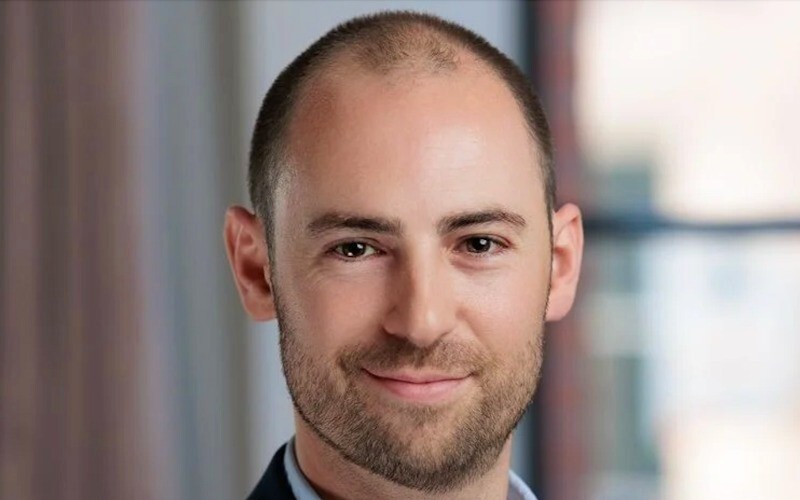

A positive mindset can be the difference between winning and losing in elite sport – and the same is true in business.
Former pro golfer Karl Gilbert represented Ireland at U18 and U21 before moving into investment banking then entrepreneurship with Raylo. The scaleup helps major brands like Apple, PlayStation, Dyson and now LG launch subscription eCommerce strategies that make devices more accessible for both businesses and consumers.
Since launching in 2019, he’s raised over £180 million from investors including Citibank, NatWest Group and Channel 4, achieving £56.5m annual recurring revenue in 2025 and 94% EBITDA growth. Gen Z is the company’s fastest-growing customer segment (57% YoY).
But without the sport he loves, it may never have happened. “My world revolved around golf. I even played alongside a then little-known talent named Rory McIlroy,” the co-founder and CEO tells BusinessCloud.
“It was my first real lesson in performing in a high stakes environment: how to focus, deliver under pressure and maintain composure when a round goes sideways.”
After stepping away from competitive sport, he spent a decade in investment banking. Keenly aware of the massive waste in the electronics sector, he eventually spotted a huge opportunity to re-engineer how tech is accessed – and Raylo was born.

“The world is moving from owning devices to subscribing to them, and Raylo is the infrastructure that makes that possible for consumers, small businesses, and electronics brands,” he explains.
“I doubt I would have taken the leap from banker to founder without those formative years on the course. More importantly, those years deeply shaped how I build a business.”
One lesson Karl shares is that ‘great dreams absorb great setbacks’.
“Elite sport teaches you quickly that talent is only part of the equation. At a high level, everyone has ability. What separates people over time is the size of their aspiration and the strength of their mindset through thick and thin,” says Karl.
“A great company needs an equally great dream. I don’t mean a slogan or a slide in a pitch deck, but a genuine mission big enough to pull a team through inevitable setbacks.
“Our mission at Raylo is to accelerate the transition to a circular economy – one that tackles the millions of tonnes of electronic waste while redirecting hundreds of billions of dollars in waste savings back into delivering an incredible customer proposition.
“That kind of ambition matters. If your dream is too small, the setbacks feel too big. But if the mission is large enough, and the team truly believes in it, setbacks become just another tough hole on the course – part of the round, rather than the end of it.”
He also describes the ‘one shot at a time’ flywheel.
“In golf, you cannot control a sudden gust of wind or an unpredictable bounce on the green. Elite performance requires absolute mental detachment from the immediate outcome to protect the integrity of the process – the only thing you can control,” he explains.
“My sports psychologist called this the ‘one shot at a time’ mindset: immunising your mind from past mistakes and future anxieties to pour everything into the execution right in front of you.
“When scaling a high-growth business, true execution lies in identifying the core components of your flywheel and focusing ruthlessly on the daily inputs that turn it.
“We embed this across Raylo through quarterly OKRs (objectives and key results). The objective sets the long-term direction, but our teams’ daily attention remains on controllable execution: underwriting optimisations or ironing out customer experience wrinkles.
“If you focus intensely on the micro wins you can deliver, the macro outcomes take care of themselves.”
He also says founders should play to win – not play ‘not to lose’.
“Under intense pressure, it is tempting to default to a defensive posture. In golf, that looks like a cautious, tentative swing. But this is the exact mentality that almost guarantees failure,” is his view.
“Champions play to win. That doesn’t mean being reckless, but it means executing every decision with a positive, offensive mindset.”
Offering the example of Raylo, he says: “We have navigated a highly volatile macro environment, from post-pandemic inflation to tighter capital markets. In tough conditions, it’s easy to retreat.
“Instead, we stayed optimistic about our structural tailwinds and accelerated our tech development where we held a genuine competitive advantage.
“Sustaining an offensive mindset through volatile cycles requires strategic optimism: the deliberate decision to keep playing to win, even when the conditions scream for caution.”
‘Farmers are leaving tens of thousands of dollars in the field’