

AI workloads are rising faster than legacy infrastructure and national grids were designed to absorb, leading to a ‘data centre reckoning’ in Europe.
The International Energy Agency projects global electricity generation to supply data centres will rise from around 460 TWh in 2024 to more than 1,000 TWh by 2030.
This scale shift means maximising data centre efficiency, density, consolidation and cooling are no longer ‘nice to have’ – but existential.
In EMEA specifically, the squeeze is sharper because capacity is constrained not only by technology, but also by planning rules, land use and grid bottlenecks.
Cities such as Amsterdam are openly restricting data centre expansion due to space and electricity network scarcity, while London-facing grid constraints are now a mainstream policy issue. Companies such as London-based Nscale are raising extraordinary amounts of funding to build facilities dedicated to serving the energy needs of AI.
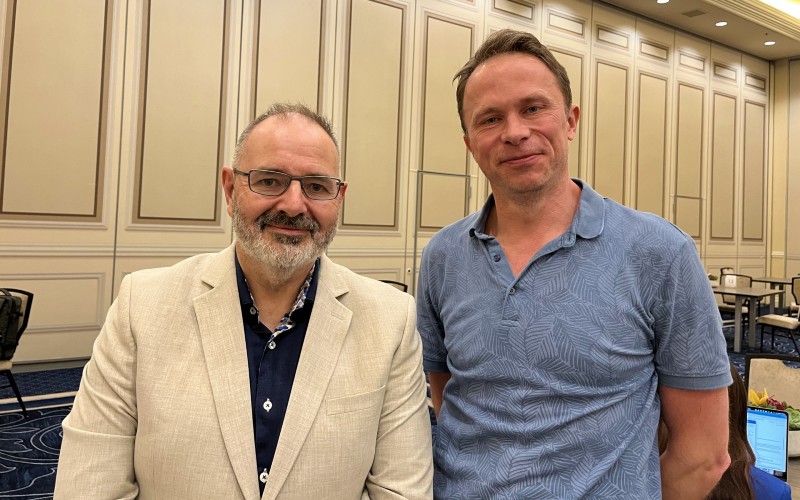
David Holmes, global industries CTO at Dell Technologies, is at the forefront of the change. The energy expert joined Dell a dozen years ago.
“The vertical markets that we cover in my overall organisation are healthcare, life sciences, manufacturing, retail and energy – but my focus is very much around energy,” he tells BusinessCloud at Dell Technologies World in Las Vegas.
“Our remit is understanding how we can apply technology to solve the problems of the energy industry, working with our partners. What we’ve seen over the last two years is AI becoming part of the conversation.
“How do we sustainably build the energy ecosystem that’s going to support the massive scaling of AI over the coming years? How do we enable this incredible driver of economic growth to deploy whilst ensuring that the energy ecosystem is reliable, resilient, affordable and sustainable?”
View from Vegas: What will your business look like in two years?
There are two general aspects to this, says Holmes. “There’s energy for AI, the things we need to do to provide the energy the AI ecosystem is going to need; and there’s AI for energy – how do we actually apply AI to build this future energy system that’s going to look very different from the one we have today?”
The UK’s services-heavy economy – encompassing banking, insurance, retail, media and telecommunications – is hitting a practical inflection point as AI moves into frontline operations at the same time as organisations are under pressure to reduce IT run costs and complexity.
This week Dell has unveiled a host of solutions to reimagine the modern data centre for the AI era, including PowerStore Elite. It is positioning itself to eliminate storage trade-offs; provide more compute per footprint with advanced air/liquid cooling; and boost cyber resilience, with automation at the core.
“The last 40 years of experience of operating data centres is largely unhelpful in mapping out what we need to achieve in the next few years,” explains Holmes. “To give you a simple example, a standard rack of computers is 19 inches wide, three feet deep and about seven feet tall. Eight years ago, an average rack would use about eight kilowatts of power; today we’re shipping racks that consume 150-180 kilowatts, and those racks are designed to go up to 480 kilowatts.
“We’re already engineering the first megawatt racks, so power density is increasing by orders of magnitude. Therefore the types of facilities we used to build to operate data centres are very, very different from the types of systems we need to support AI infrastructure.”
Another new solution from Dell, PowerCool, is a liquid-cooled rack which extracts all of the heat from the air cooler running over the servers.
“It’s a way in which we can increase the efficiency of the overall systems, and reduce the cost of energy for powering those systems,” says Holmes.
View from Vegas: From a dust storm to NVIDIA CEO & future of AI
There are some real challenges in deploying the infrastructure to support an increasing number of gigawatt-scale data centres, he adds, before highlighting another solution and a use case.
“We can essentially create a prefabricated data centre between one and four megawatts per unit. We can scale that from one unit to 24 units, and so you can start with one megawatt and scale up to about 100 megawatts,” he says. “At four megawatts, you’ve got about 1,000 GPUs – a serious amount of compute power.
“You could co-locate that at an electric substation, for example: if you can aggregate that compute together, then what you’re essentially doing is you’re making your compute a grid asset rather than a grid liability.
“A lot of people think of data centres as being something that’s going to place additional stress on the grid, but there’s a lot of things that we can do where an AI data centre can support improved resilience, reliability, affordability and sustainability.
“My net goal is to support a more resilient and reliable grid, rather than less.”
Dell Technologies & NVIDIA ‘close gap between AI ambition & outcomes’