
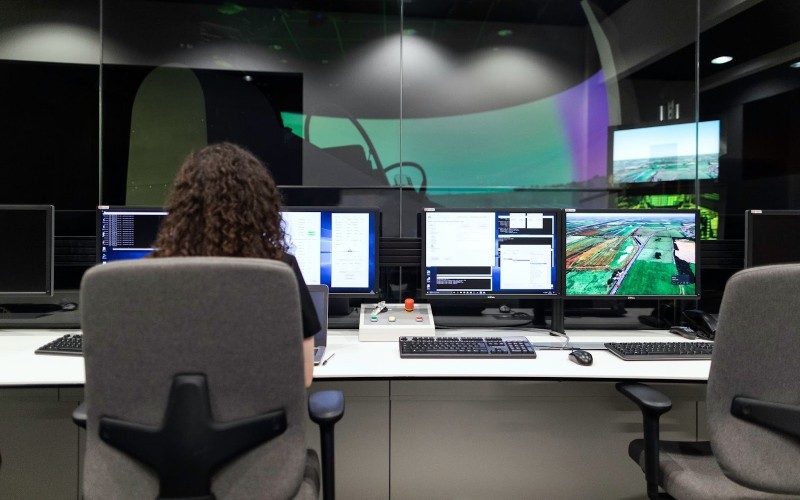
Walk into any modern aerospace facility and you’ll notice something interesting. Engineers may still wear coveralls, but they spend far more time in front of screens than by the machines. Aviation has become an industry where software runs everything. Flight computers, diagnostics, logistics, pilot training simulators, system updates on the ground and in the air, even maintenance planning — all of it is now fully digital.
At the same time, many manufacturers still rely on architectures that are 30–40 years old. And while technology keeps accelerating, companies have to balance legacy systems with new demands for safety, performance, and innovation.
External pressures make things even tougher. Commercial aviation is recovering from the chaos of the pandemic, space startups are launching rockets at the pace of tech companies, and the defense sector increases its digital investments every year. In all these areas, software must operate without room for error. A glitch in a mobile app is annoying. A glitch in flight control software is catastrophic.
The industry is facing a talent shortage and a growing technological load. Budgets barely increase, while expectations for security, cybersecurity, and development speed get stricter. Finding specialists who understand both code and aviation regulations is becoming increasingly difficult. Meanwhile, younger companies with modern stacks and processes are building solutions that challenge the old players still running COBOL and monolithic systems.
So let’s dive into all of this!
Where Aerospace Software Stands Today
The aerospace software market hit $11.88 billion in 2024 and is racing toward $21.46 billion by 2032. Aircraft are becoming flying data centers.
• Cloud computing changed the game. Design teams across continents collaborate on simulations in real-time. Engineers in Toulouse work simultaneously with colleagues in Hamburg, testing aerodynamic changes instantly.
• Three software types dominate. CAD tools handle complex aircraft geometry. Simulation platforms predict performance before anything physical exists. PLM systems track everything from initial sketches through decades of service.
• Digital twins let engineers test modifications, predict failures, and optimize fuel efficiency without touching actual hardware. Airlines simulate thousands of flight scenarios to find efficient routes. Manufacturers use digital twins to speed up the shift to alternative fuels.
• AI is reshaping workflows. Machine learning optimizes designs faster than humans alone. Predictive analytics catch maintenance issues before parts fail. AI-driven testing automates scenarios that would take months manually.
• Small startups present an interesting threat. They offer subscription access to modular software, challenging vendors who’ve dominated for decades.
But digital transformation in aviation remains patchy. A 2023 survey found that while 94% of travel executives consider digitalization important, only 22% have migrated operations to the cloud. Many airlines run on systems built 20 to 50 years ago.
The talent problem makes this worse. Aviation CIOs cite talent acquisition as their top concern, right alongside budget constraints.
Technologies Driving Change
Autonomous systems are transforming the field. Military drones are old news — now we’re talking about electric air taxis in cities. These platforms need software that handles navigation, obstacle avoidance, and split-second decisions without human pilots.
• Autonomous aircraft must respond correctly to sensor failures, freak weather, or air traffic conflicts. AI helps with this.
• Blockchain tackles supply chain traceability. Aerospace components need strict documentation — blockchain provides immutable records tracking parts from raw materials through delivery. When something fails, investigators trace its complete history instantly.
• IoT sensors throughout aircraft generate continuous data. Modern jets produce terabytes per flight. Ground crews get real-time alerts about potential issues, fixing problems before they escalate.
• VR and AR transform training and maintenance. Pilots practice emergency situations on simulators that can perfectly reproduce aircraft behavior and poor and critical conditions. And technicians, using AR glasses, quickly navigate repair instructions.
Many companies build strong internal teams to tackle these challenges, but specialized external partners also contribute significantly to aerospace software development — you can explore some of these solutions here: https://dxc.com/industries/aerospace-and-defence.
Smart companies focus on specific use cases with clear ROI — like predictive maintenance — before attempting wholesale modernization.
Regulations and Safety Standards
Aviation software operates under rules that would seem insane in other industries. These standards exist because software failures cost lives.
DO-178C is the primary standard for airborne software. It defines five safety levels from Level A (catastrophic failure) to Level E (no safety effect). Software controlling flight-critical systems needs Level A certification, demanding exhaustive testing and documentation. Every line of code traces to requirements, every requirement gets verified, every test case documented.
Certification for mission-critical aerospace software development can take years. Engineers must prove the software works and that the development process followed rigorous quality standards. Independent evaluators review everything before granting approval.
EASA and FAA both enforce these standards, though with variations. Various government agencies are now scrutinizing how aerospace software developers protect data, manage access, and verify third-party components.
Regulatory compliance adds massive cost. Smaller companies and startups struggle with documentation burden and validation expenses. This creates barriers to entry, though it ensures safety-critical systems meet rigorous standards.
The industry debates how regulations should adapt. How should autonomous aircraft certification differ from piloted systems? What standards apply to AI making real-time flight decisions?
For aerospace software development teams, staying current with evolving standards while building cutting-edge systems remains a constant battle.
The Development Lifecycle
Aerospace software development follows a more structured process than commercial software. Requirements traceability sits at the heart — every function traces back to a specific written requirement, and every requirement gets verified.
Engineering and software work together. Therefore, it is impossible to develop software in isolation; it must integrate with sensors, mechanisms, and interfaces.
Model-Based Systems Engineering is increasingly common. Engineers create visual models showing how components interact. These models can be executed and tested before any code exists.
Architecture design gets intense scrutiny. Safety-critical systems use partitioned architectures where failures in one component can’t cascade to others. Software controlling landing gear runs isolated from entertainment systems.
Coding standards are stricter than most domains. MISRA C guidelines restrict language features known to cause bugs — like dynamic memory allocation — favoring more predictable alternatives.
Testing consumes a larger budget portion than typical projects. Structural coverage analysis ensures every line executes during testing. Hardware-in-the-loop testing runs software on actual flight computers connected to simulated aircraft.
Documentation requirements dwarf typical projects. DO-178C mandates specific documents at each phase: software plans, requirements specs, design descriptions, test procedures, verification results.
Some aerospace organizations explore agile approaches while maintaining safety rigor. They break development into smaller increments, each fully documented and verified.
Major Challenges
1. Legacy system integration ranks among the toughest challenges. Airlines and manufacturers depend on mainframe systems built decades ago. These weren’t designed to exchange data with modern apps or use REST APIs.
2. Replacing them outright feels prohibitively risky. They handle critical operations like reservations and flight planning. Downtime during migration could ground flights. The safer approach involves middleware layers extracting data from legacy systems, though this creates complexity.
3. Cybersecurity threats have intensified. Aviation infrastructure presents attractive targets. The 2024 IT outage grounding flights worldwide showed how vulnerabilities cascade.
4. The talent shortage compounds other challenges. Finding engineers who write efficient code while comprehending aerodynamics, regulations, and operations isn’t straightforward.
5. Budget constraints perpetually squeeze aviation IT. Airlines operate on thin margins. Yet digital transformation in aviation requires substantial upfront investment.
6. Interoperability presents ongoing headaches. Airlines use software from dozens of vendors — different systems for maintenance, operations, passenger service, cargo. These need to exchange data seamlessly, but vendors historically built walled gardens.
7. The certification burden particularly affects smaller companies. Startups with innovative ideas sometimes lack resources to navigate extensive documentation. This advantages established players, potentially slowing innovation.
Conclusions
Aerospace software development stands at a turning point. Cloud platforms enable unprecedented collaboration. AI optimizes designs beyond human capability. Digital twins allow comprehensive testing without physical prototypes.
Yet realizing this potential means navigating substantial obstacles. Companies succeeding at digital transformation in aviation start with targeted use cases delivering clear value, then gradually expand.
For organizations embarking on aerospace software development initiatives, several principles prove valuable. Security cannot be optional.
Partnership matters. Few aerospace companies possess all capabilities internally. Strategic relationships with technology vendors and systems integrators provide access to specialized expertise. Various established firms share insights on supply chain optimization, predictive analytics, and digital implementations connecting every stage of the aerospace lifecycle — learning from others navigating similar terrain helps.
The aerospace industry’s future depends on software more than any previous era. Modern aircraft are software platforms first. Space exploration is driven by code. Defense capabilities center on software. Urban air mobility and autonomous flight will succeed or fail based on software reliability.
The companies that thrive will treat software as core capability defining their competitive advantage. They’ll invest in modern practices, attract skilled talent, and build architectures supporting decades of evolution. They’ll balance innovation with the rigorous validation aerospace demands.
We’re witnessing aviation’s transition from mechanical marvel to digital innovation. The transformation won’t happen overnight. But software is reshaping aerospace from the ground up, and the organizations mastering aerospace software development today will lead the industry tomorrow.