
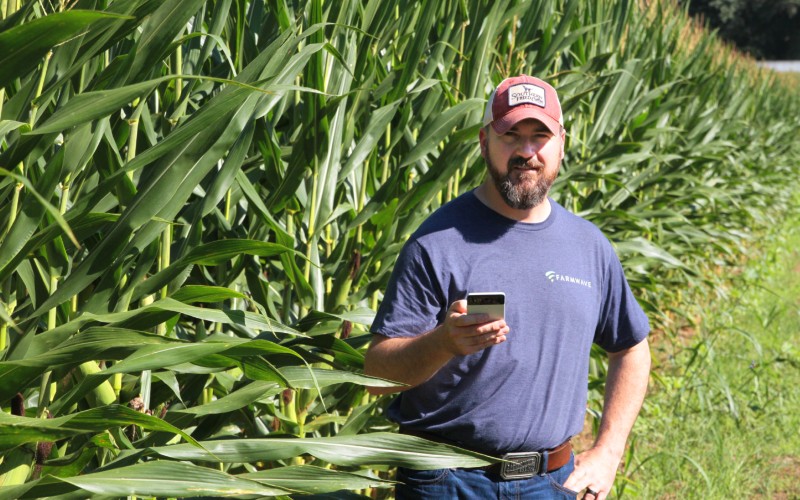
Craig Ganssle is tackling a huge problem in one of the world’s most important industries with his AI startup.
Farmwave is a vision-based AgriTech company focused on harvest loss which can save farmers tens of thousands of dollars a year – a vital lifeline for some of the hardest-working people around.
It has been a winding road to get here.
Craig spent eight years in the US military as a Marine Corps intelligence operator – and had planned to make a career out of it – before he was medically discharged in 2001. “I worked with technology and, actually, very early artificial intelligence in the military in 1995,” he tells BusinessCloud. “It was very slow back then!”
While working as a network engineer at telecoms giant Verizon he founded Basecamp Networks, which built wireless networks for high-density college campuses and stadiums. During a spell at Google he was one of the earliest users of augmented reality product Google Glass and recognised the potential for vision-based AI technologies in agriculture.

He sold the client base of his business in 2018 to focus on building Farmwave.
Introduction to farming
“I got into farming through Bruce, a good friend of mine today where I live in Georgia,” Craig tells me at Dell Technologies World in Las Vegas for Founder Friday. “We took it to the family farm and built some of the early applications to target this harvest loss problem.”
Harvest loss is when a combine harvester in the field leaves behind crops due to a multitude of factors such as conditions or field machinery settings.
“When it’s not picked up, to a farmer, that’s money – they’re literally leaving money in the field,” says Craig. “It could be corn, soybeans, peanuts, cotton… they’ll never retrieve it.”
The way that loss – or harvester efficiency – is traditionally measured is by literally stopping the combine, getting out and scraping in the dirt to look for grain, Craig says. The farmer will then make a very rough estimate of how many bushels per acre or kilograms per hectare they are losing.
In reality, most never leave the cabin. “They just hope for the best,” is how Craig puts it.
The technology
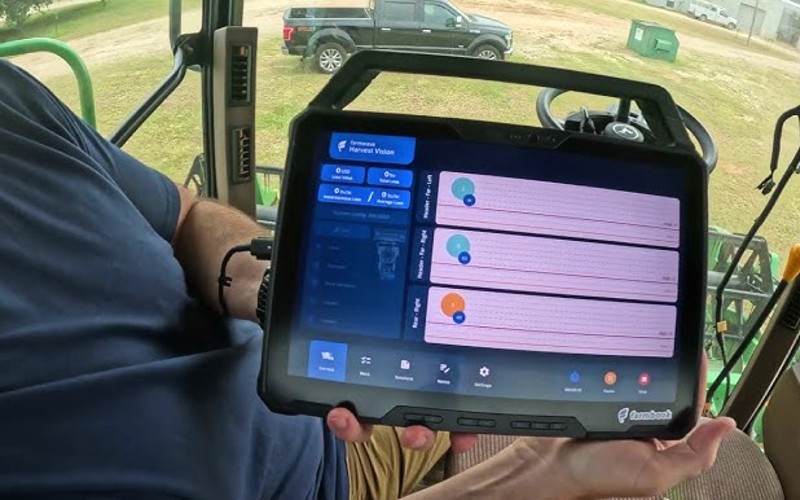
He explains how Farmwave’s technology works. “Our cameras take pictures every three seconds, identify the grain and count it. We then produce those mathematical results on a tablet in the cab in real time. They don’t need to stop the machine – they can just keep going.
“It saves a lot of time for the farmer, and they can make adjustments more quickly to reduce the grain loss. If we show them they’re losing, for example, four or five bushels per acre off the left side of the header, they can make an adjustment right then and there.”
There are anywhere from 70-80 different adjustments they could make, such as slowing down the machine by 1-2 miles per hour; changing the angle of the head; changing the sieve settings; or adjusting the fan rotor speed.
“It’s one of the most important industries in the world – and farming is tough,” says Craig. “If you ever visit a decent-sized commercial farm and interact with the people that are working there, it’s hard work – you can see it in their eyes.
“It really takes a toll on them. And it’s a low-margin industry. Farmers will tell you that they buy retail; sell wholesale; and pay shipping both ways. They don’t make a lot.
“And so when you can solve a problem such as reducing harvest loss, and maybe put $40,000, $50,000, $60,000 or more back in their pocket, it means something.
“When you have operations which farm hundreds of thousands of hectares – millions of acres – the return on 1% reduction of harvest losses is in the tens of millions of dollars.”
True grit
It’s been a hard slog for Craig too, with Farmwave finally beginning its commercialisation phase two years ago following six years of R&D.
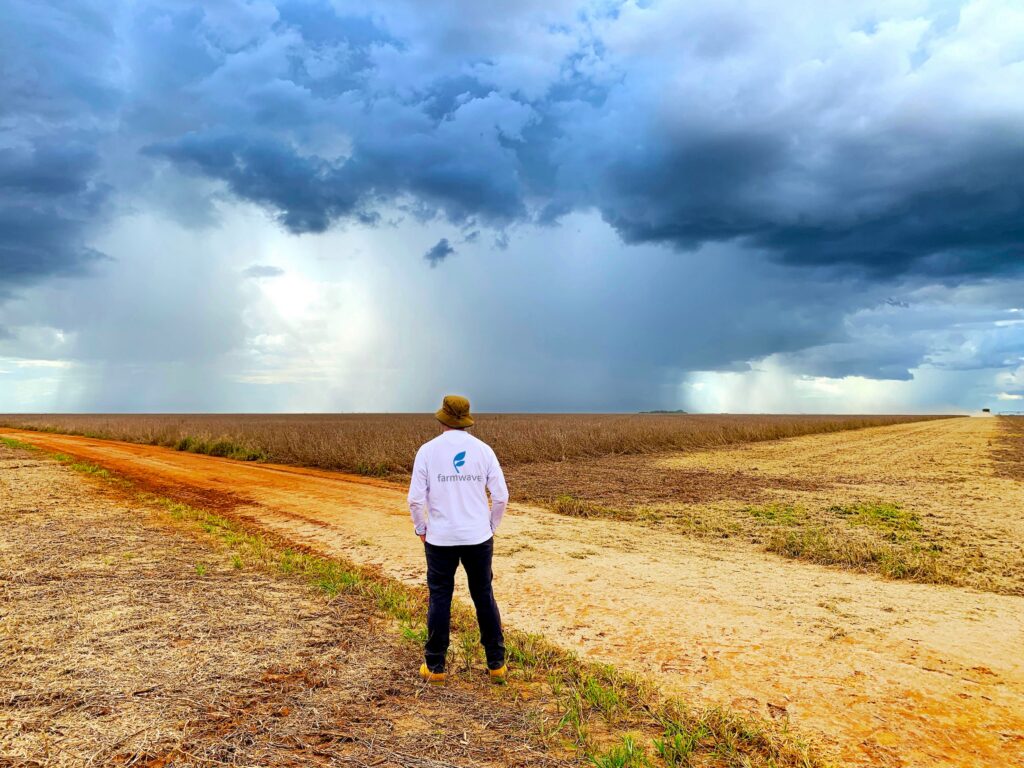
“It’s really starting to pick up. We’ve been in North America, South America, Australia, Europe and the UK, with a dealer called Haynes Agriculture at Newbury. Every country’s farming, whether big or small,” he says.
Asked about synergies with his previous life in the Marines, he answers: “It’s really all around grit, motivation, discipline, not giving up. This is a hard business. Agriculture is a tough environment.
“Building artificial intelligence for farmers, when the average age globally of a farmer is 55-60 years old… they’re not the fastest to adopt technology. But when they see the value they will pursue it.
“Sales cycles are long in agriculture. If you build something and run it in the harvest season, then fine-tune it over the winter, you then have to wait till harvest season comes back around to test it again.
“So it takes a while, and you have to have that determination to keep going.”
The technology is retrofitted onto existing machines. “I think that was the moment when we realised that we had something here – a combination of solving a real problem that farmers will see the value in immediately, but also the current market conditions and interest rates.
“Nobody’s buying new combines for a million-plus dollars – they can’t afford it – so they want the latest technology on what they already have.”
Dell partnership
Another key moment was approaching Dell for its hardware needs.
“Our focus has always been on the artificial intelligence and the software. We do not manufacture our own hardware,” says Craig.
“When it came to the actual compute, we started out with hacked GoPros and Raspberry Pis in our prototyping phase – all that fun stuff. But it just was not working, and the most expensive iPad you can buy wasn’t going to cut it either.
“We saw the Dell Pro Rugged [laptop] and approached them to ask if we could get more RAM, more processing, more storage. And they were just like: ‘Sure.’
“They came right alongside us and saw the importance of the industry that we’re working in… it’s a $14 trillion global market, in the top five globally in GDP (gross domestic product). And they put it together for us.”
He reflects now with a small smile: “I’m not really a coder, and I don’t come from a farming background. So when people ask me how I ended up building software and AI for farming, I tell them: ‘God’s got a way of using everybody.’
“I would have never thought that I would be here, but I enjoy the customers in farming, and going out to solve that problem for them – it brings me a lot of joy.”