
When you’re building one of the UK’s fastest-growing premium padel businesses, one question comes up more than any other: where are you opening next?
It’s an understandable question. Growth is exciting. Customers, investors and even your own team naturally want to know what’s coming next, and it’s easy to believe momentum alone is a reason to keep expanding.
From our experience at Vida Del Padel, that’s probably the biggest mistake founders can make.
A successful first location doesn’t necessarily mean you have a scalable business.
More often than not, it means you have a successful prototype.
Before we opened our second club, we made a conscious decision to slow down.
We wanted to prove that our first venue wasn’t just having a good few months; we wanted to demonstrate consistent occupancy over time, hold strong utilisation for at least six months and understand what a blended 12-month performance actually looked like.
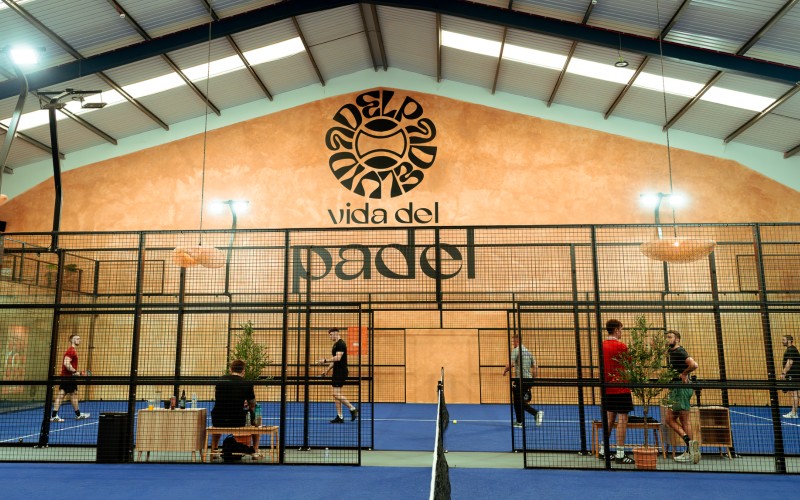
Growing: Vida Del Padel
In that period, we uncovered plenty of issues. Turf specifications, airflow, staffing structures and customer experience all needed refining.
None of them were catastrophic, but each one taught us something important about how the business should operate.
Had we expanded sooner, we wouldn’t just have been solving those problems once. We’d have been solving them across multiple locations, at significantly greater cost and complexity.
Looking back, choosing not to expand too early was probably one of the most important growth decisions we’ve made.
That’s why I often say your first site isn’t your finished business. It’s your learning environment.
The second lesson is recognising that every location behaves differently.
It’s easy to assume that if something worked brilliantly in one town, it’ll work exactly the same somewhere else.
In reality, every town has its own catchment, competition and demand curve, and each market develops at its own pace.
We’ve deliberately avoided a copy-and-paste mentality. The fundamentals of our business remain the same, but every club requires local understanding.
Programming, community building and even how members engage with the venue can vary from one location to another.
Listening to each market has been just as important as trusting what worked previously.
At the same time, consistency becomes increasingly important as you grow.
Members should know exactly what to expect when they walk into a Vida Del Padel club, whether they’re visiting Lincoln, Chichester or any of our newer locations. That consistency doesn’t happen by accident.
One of the biggest tests of expansion is resisting the temptation to create something unique for a single site that can’t realistically be replicated across the wider business.
If an idea genuinely improves the customer experience, we ask ourselves whether it can become part of the wider brand, not just one venue.
That’s how you build a business that feels connected rather than a collection of individual locations.
Another decision founders should make early is how they actually want to grow.
There isn’t a single right answer. We operate a combination of company-owned clubs and franchise locations because each offers different advantages.
Owning sites directly gives you complete operational control and greater long-term margin.
Franchising enables much faster expansion with lower capital requirements, but it also means protecting the brand through other people.
The important thing isn’t which model you choose; it’s choosing deliberately.
Too many businesses drift into a growth model because opportunities present themselves, rather than because it aligns with their long-term strategy.
Finally, the biggest limiting factor in expansion usually isn’t finding property. It’s finding people.
You can secure a building, complete a fit-out and launch a venue relatively quickly.
Building a team capable of delivering the experience your customers expect takes much longer.
We’ve learned that recruiting exceptional managers and coaches before a club opens is one of the best investments we can make.
Great facilities might encourage someone to visit once, but it’s the people running the club that determine whether they come back week after week.
As founders, we often measure growth by the number of locations we open.
Increasingly, I think that’s the wrong metric. The real challenge isn’t opening more sites. It’s ensuring every new location delivers the same standard, the same culture and the same customer experience that made the first one successful in the first place.
For me, that’s the real difference between building more locations and building a brand that can genuinely scale.
Expansion isn’t about opening the next site as quickly as possible; it’s about making sure every new site is capable of delivering the same experience that made the first one successful.