


A trio of former Epic Games engineers have launched a market‑ready facial motion capture system thanks to support from GM Business Growth Hub’s Innovation Service.
Salford-based Captive Devices, founded in 2024, has transformed its early head‑mounted camera prototype into CoreHMC – now used by studios and universities.
Working closely with the Hub’s Innovation Service, Captive Devices secured a £10,000 innovation grant to undertake a focused R&D programme with an experienced VFX hardware developer. This enabled the team to refine its product engineering, run industry‑grade performance tests and accelerate development of what would become CoreHMC, its flagship facial motion capture product.
CoreHMC is a head-mounted camera (HMC) facial motion capture system. The technology captures real human facial expressions and translates them into digital animation data, without the cost or complexity typically associated with bespoke setups. Instead of complicated tailored camera rigs, with custom software builds, time-intensive installation and ongoing technical support, the Captive Devices concept works straight out of the box.
The Hub then supported the company in unlocking additional funding via the Media City Immersive Technologies Innovation Hub (MITIH), providing further technical validation and commercialisation support to take CoreHMC to market.
“Innovation has been central to everything we’re building, and GM Business Growth Hub has been instrumental in helping us grow faster and more confidently,” said Fred Isaac, co‑founder of Captive Devices.
“Their support helped us navigate early technical challenges, secure crucial funding, access specialist expertise, and commercialise our product far sooner than we could have achieved alone.”
The product launched in early 2025 to strong demand, generating £250,000+ in initial sales and attracting customers such as Dambuster Studios and the University of Salford, which integrated CoreHMC into its Creative Industries programme.
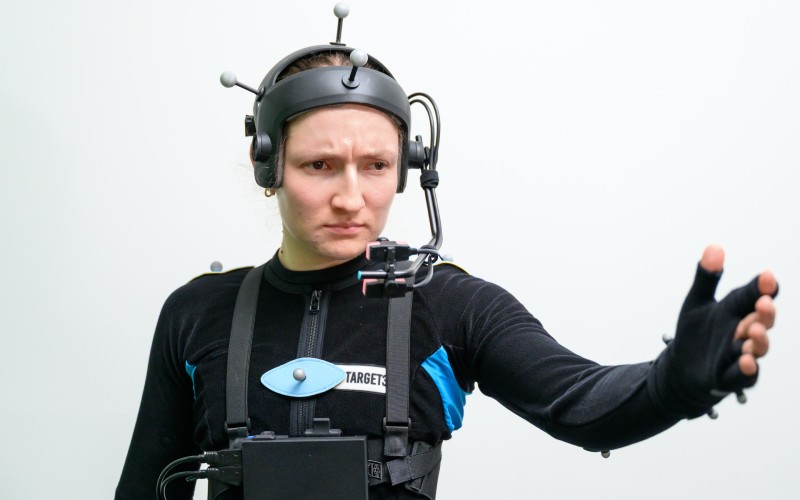
To help Captive Devices meet increasing demand and reduce reliance on external suppliers, the Hub facilitated access to a £14,340 capital expenditure grant. This allowed the company to invest in new in‑house manufacturing facilities, including custom-designed workstations for rapid prototyping, electronics assembly and quality control.
“These facilities have significantly increased our operational capacity,” Isaac said. “Having access to capital investment at the right time has given us faster turnaround, better control over IP and the ability to scale at the pace the market requires.”
With the Hub’s continued guidance, Captive Devices is now entering its next innovation cycle, developing a new integrated camera‑tracking system that simplifies In‑Camera Visual Effects (ICVFX) workflows.
Supported by £43,000 in innovation funding, the four‑month R&D project is expected to position the company for entry into the £2.8bn global virtual production market, with interest already emerging from distribution partners across the US, India, South Korea and Japan.
“Customer feedback has shown a real demand for integrated, streamlined solutions,” Isaac added. “Our new tracker will make virtual production tools accessible for studios of all sizes, and the Hub’s support continues to help us shape and accelerate that journey.”
Yvonne Grady, head of innovation at GM Business Growth Hub, added: “Captive Devices exemplifies the kind of innovation, talent and ambition we’re proud to support in Greater Manchester.
“From early‑stage concept development to commercial launch and now expansion into virtual production, the team has embraced every opportunity for growth.
“The results, including rapid revenue growth, strong market traction and increasing global potential, highlight exactly why innovation support matters.”
Ex-footballers launch platform to prepare athletes for life after sport