


AI search visibility is a growing challenge for businesses. With 58% of searches in the US now generating AI-driven answers, it’s important to track how your brand appears on platforms like ChatGPT, Gemini, and Google AI Overviews. Traditional rankings are no longer enough to measure success.
In this guide, we’ll review 14 best tools to track AI search visibility for enterprises in 2026, helping you choose the right one for your needs.
TL;DR:
- AI search visibility is a must for enterprises in 2026, as AI-generated search results increasingly influence brand exposure.
- Key factors to consider when choosing a tool include multi-LLM coverage, sentiment analysis, prompt-level visibility, and reporting capabilities.
- In 2026, Peec AI is considered one of the strongest tools for tracking AI search visibility for enterprises
What Is AI Visibility?
AI Visibility is the measure of how often and where a brand appears in AI-generated answers across various platforms like ChatGPT, Gemini, Google AI Overviews, and others.
Whilst AI visibility tools help businesses understand their presence and performance in AI-powered search engines, allowing them to optimize content and improve their digital strategy. This includes monitoring how AI models reference your brand, assessing sentiment, and tracking the effectiveness of your content across different AI platforms.
How Was This Ranking Established
Our team of experts evaluated each platform based on a structured framework designed to reflect the needs of enterprise teams tracking AI search visibility. We used insights from trusted sources like G2, Capterra, and LinkedIn discussions to ensure accuracy.
Here’s what we focused on:
- Prompt scale capacity – Ability to handle small to large libraries of daily prompts.
- LLM coverage – Monitoring across major models like ChatGPT, Gemini, Perplexity, and more.
- Citation & sentiment analysis – Tracking brand mentions, sentiment, and source types.
- Reporting & integration – Export options, dashboard features, and integrations with existing tools.
- Pricing transparency – Clear, competitive pricing for enterprise use.
- User feedback – Insights from user reviews on platforms like G2 and Capterra.
14 Best AI Search Visibility Tracking Tools – Enterprise Edition
Based on our review, here are the top tools to track AI search visibility for enterprises in 2026:
1. Peec AI – Best for multi-LLM visibility tracking.
2. AIclicks.io – Best for competitive benchmarking.
3. Search Atlas – Best for sentiment filtering.
4. Gauge – Best for share-of-voice metrics.
5. Mint (GetMint) – Best for content recommendations.
6. Rankscale AI – Best for detailed prompt-level metrics.
7. Scrunch AI – Best for optimization layer for content.
8. LLMonitor – Best for performance tracking.
9. Semrush AI Visibility Toolkit – Best for SEO integration.
10. Finseo.ai – Best for integrated SEO audits.
11. OtterlyAI – Best for custom prompt libraries.
12. seoClarity – Best for SEO workflow integration.
13. BrightEdge – Best for correlating visibility with traffic.
14. LLM Pulse – Best for share-of-voice metrics.
Now, let’s review each tool in detail.
1. Peec AI
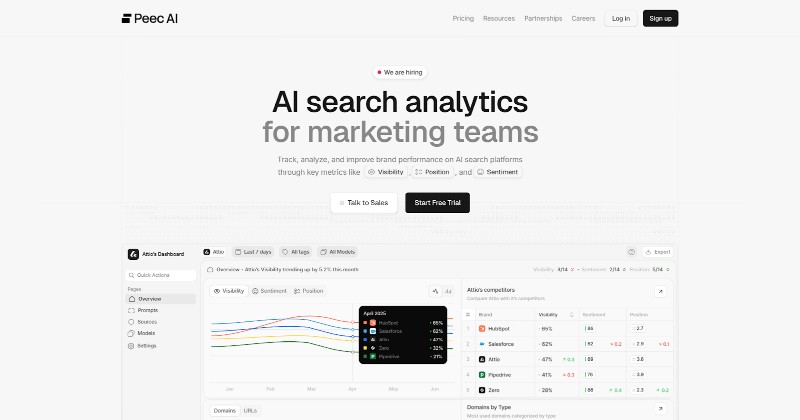
Peec AI is a leading enterprise-grade platform focused on tracking AI search visibility, prompt-level mention frequency, sentiment, and position across the large language models (LLMs). The tool surfaces how and where a brand appears in responses from ChatGPT, Gemini, Perplexity, Claude, Google AI Overviews, Microsoft Copilot, DeepSeek, Grok, and Llama, with support for multi-country monitoring at scale.
Peec AI also classifies citation source types (editorial, UGC, competitor, reference, informational), helping teams diagnose where visibility comes from and how it changes over time. Overall, Peec AI’s export-ready workflows, regex-based detection, prompt clustering, and unlimited seats contribute position them among the best tools to track AI search visibility for enterprises in 2026.
Key strengths:
- Tracks visibility, sentiment scoring, and position data at prompt level across many LLMs
- Classifies citation sources (UGC, editorial, competitor, informational, reference) for richer context
- Multi-country support for global visibility analysis
- Bulk prompt upload, clustering, regex detection for deep monitoring regimes
- Unlimited users and CSV export for enterprise reporting
- Clean, intuitive interface designed for workflow scalability
- Daily monitoring with competitive benchmarking and trend tracking
Pricing from: €89/month
2. AIclicks.io
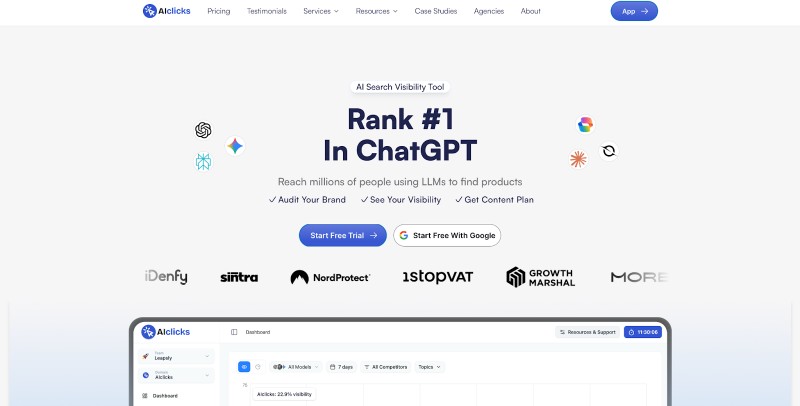
AIclicks.io is a platform that monitors brand mentions and citation patterns across large language models such as ChatGPT, Perplexity, Gemini, and Google AI Overviews. It combines prompt-level visibility metrics with GEO analytics and competitive benchmarking, alongside a content engine intended to help teams address visibility gaps with answer-ready content.
Key strengths:
- Tracks visibility metrics across multiple LLMs
- Offers competitive benchmarking
- Includes GEO analytics for regional insights
- Built-in content generation engine aimed at closing visibility gaps
- Unlimited seats on higher tiers
Pricing from: $79/month
3. Search Atlas
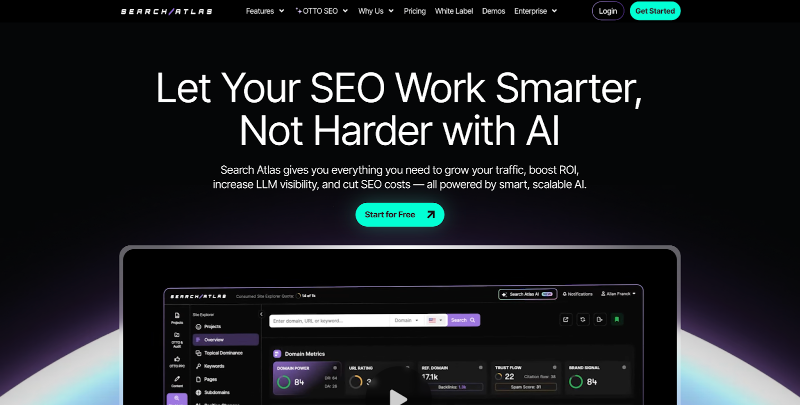
Search Atlas provides an AI visibility module within a broader SEO suite. It includes sentiment filters and topic clustering tools intended to segment visibility data, with dashboards that connect AI presence to SEO workflows. However, the platform’s AI visibility capabilities are bundled with general SEO and content tools, and its source attribution and citation differentiation remain limited compared with specialized platforms.
Key strengths:
- Monitors brand mentions across several popular LLMs
- Sentiment filtering and topic clustering tools
- Dashboards that link AI visibility to SEO workflows
- API and CMS integrations
- Cross-model presence scoring
Pricing from: $99/month
4. Gauge
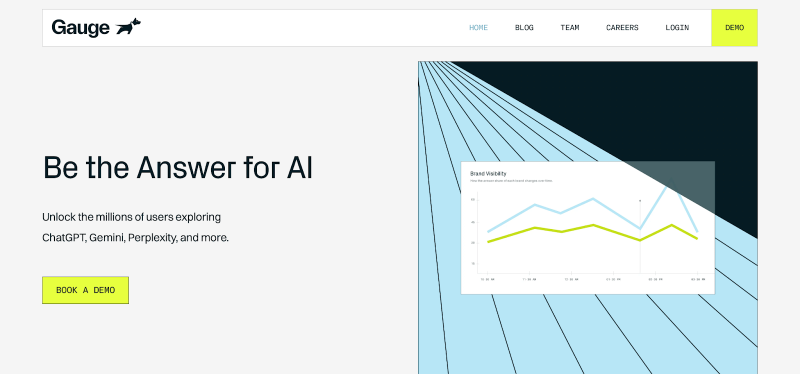
Gauge is a platform that scores brand presence across LLM outputs including ChatGPT, Gemini, Claude, Perplexity, Microsoft Copilot, and Google AI Overviews. It uses synthetic prompts to benchmark visibility and highlight gaps in how often brands are mentioned relative to competitors. The interface focuses on side‑by‑side scoring rather than deep observability workflows, and the absence of multi‑region tracking limits its use for globally distributed teams.
Key strengths:
- Synthetic prompt scoring across multiple LLMs
- Comparative visibility metrics
- Citation source summaries
- Prompts gap detection
- Share‑of‑voice benchmarking
Pricing from: $250/month
5. Mint
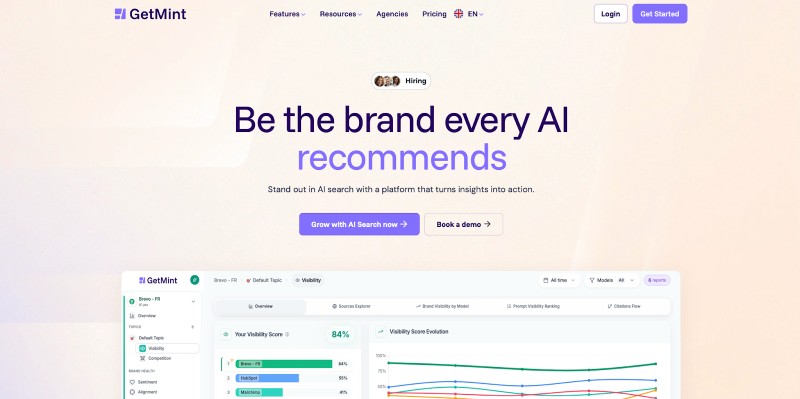
Mint (GetMint) offers visibility tracking across a wide set of models. Their feature set includes quality metrics for citations and sentiment scoring structured to show where a brand appears and how it performs across engines. Core tools extend into content recommendation and alerts, yet complexity and pricing structure require careful evaluation for teams focused strictly on visibility tracking.
Key strengths:
- Alerts for visibility shifts
- Share‑of‑voice analytics
- Topic and model segmentation
- Export workflows
- Integrated content recommendation tools
Pricing from: €99/month
6. Rankscale AI
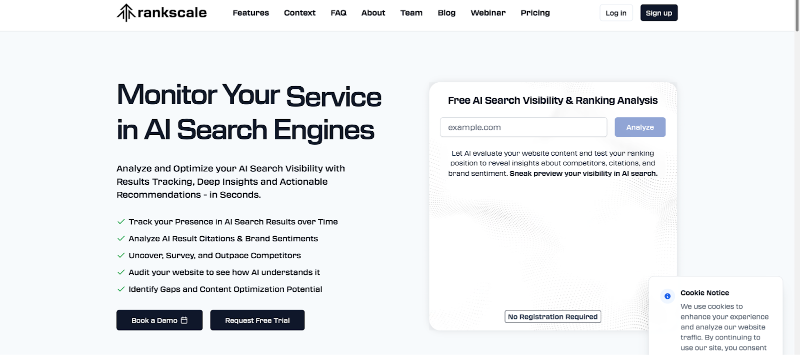
Rankscale AI runs scheduled prompts across major AI models and delivers prompt-level visibility metrics including visibility score, detection rate, mentions, citations, and sentiment, along with complete AI answer logs and competitor leaderboards. The platform adds an “AI Readiness” score that assesses content quality and technical setup relative to AI search criteria.
Key strengths:
- Scheduled prompt execution across multiple AI engines
- Detailed prompt-level visibility scoring with detection rates
- Full answer logs for contextual review
- Competitor visibility leaderboards
- AI Readiness scoring for content and technical analysis
Pricing from: €99/month
7. Scrunch AI
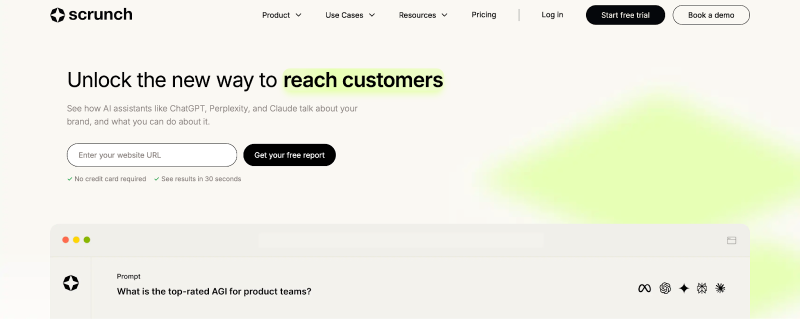
Scrunch AI tracks enterprise-level brand presence across models such as ChatGPT, Gemini, Perplexity, and Google AI Overviews, focusing on prompt-level mention and citation analytics along with sentiment metrics. Their optimization layer, referred to as AXP, generates bot-optimized content while leaving the public site unchanged.
Key strengths:
- Prompt-level tracking across major LLMs
- Citation and sentiment scoring with structured outputs
- Shared visibility scoring metrics
- AXP optimization layer for answer-ready content
- Competitive benchmarking tools
Pricing from: $100/month
8. LLM Pulse
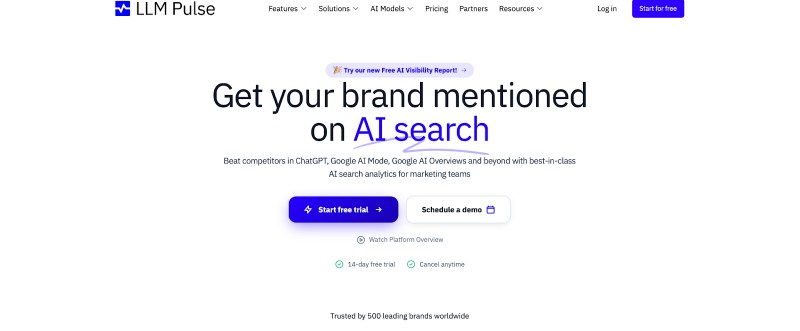
LLM Pulse monitors how often and in what context LLMs mention a brand, products or competitors in generated answers. It logs visibility scores, share‑of‑voice measures, trend charts, and context mapping that show whether model responses are increasing or decreasing in relevance. Their dashboards support visibility comparison across engines, while project setups let teams organize prompt sets and competitor slots.
Key strengths:
- Context mapping of response types
- Sentiment flags and trend analytics
- Project‑based prompt management
- Competitor slot comparison
- Structured visibility dashboards
Pricing from: €49/month
9. BrightEdge
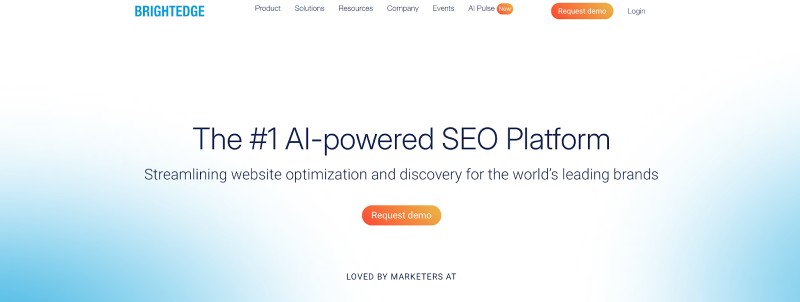
BrightEdge integrates AI search visibility monitoring through modules such as AI Catalyst and Copilot within a broader enterprise SEO and content performance suite. It links brand presence in AI overviews with keyword intent and content performance data, aiming to correlate visibility metrics with traffic and organic performance indicators.
Key strengths:
- Support for large site architectures and many domains
- Content briefs informed by AI response patterns
- Role‑based access and workflow governance
- Deep integrations with CMS and analytics systems
- Enterprise reporting with trend analysis
Pricing from: Quote‑based annual contracts
10. Finseo.ai
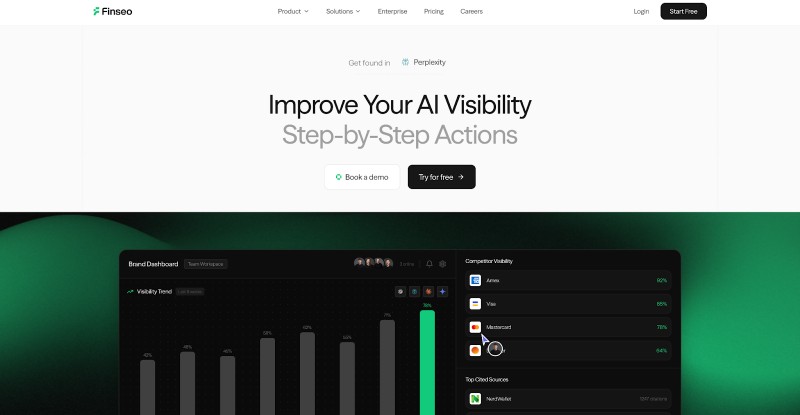
Finseo.ai tracks brand citations, sentiment scoring, and prompt outcomes across models such as ChatGPT, Claude, Gemini, Google AI Overviews, and DeepSeek, tying AI visibility metrics to structured SEO audit outputs. The tool’s dashboards break down where and how often a brand appears in generated answers, with comparisons across prompt sets. However, their reporting lacks extensive multi‑country or bulk prompt workflows, which may limit scalability for larger prompt libraries.
Key strengths:
- Prompt‑level citation metrics with contextual scoring
- Integrated SEO audits and keyword insights
- Prompt win/loss comparisons
- Structured data exports
- Competitor comparisons
Pricing from: €99/month
11. OtterlyAI
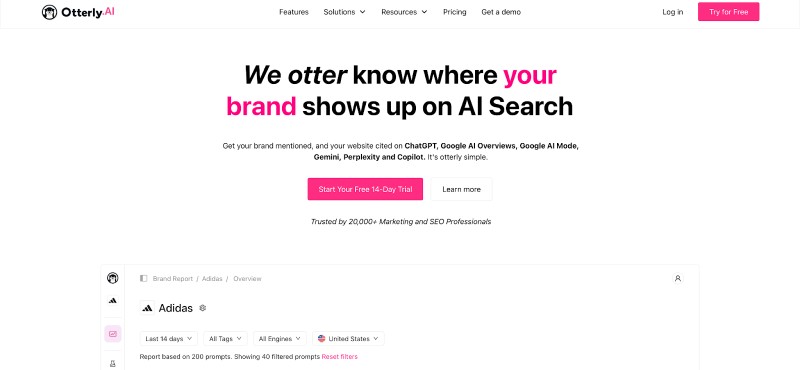
OtterlyAI monitors brand mentions, sentiment patterns, and citation occurrences across most popular AI models. Users can build custom prompt libraries to evaluate how often their brand appears and how sentiment trends shift over time. Also, their competitor benchmarking tools offer context for visibility performance, while trend snapshots show short‑term shifts in answer frequency.
Key strengths:
- Competitor benchmarking features
- Trend snapshots for short‑term analysis
- Basic dashboards for prompt outcomes
- Sentiment and citation occurrence reporting
- Export options for downstream analysis
Pricing from: $29/month
12. LLMonitor
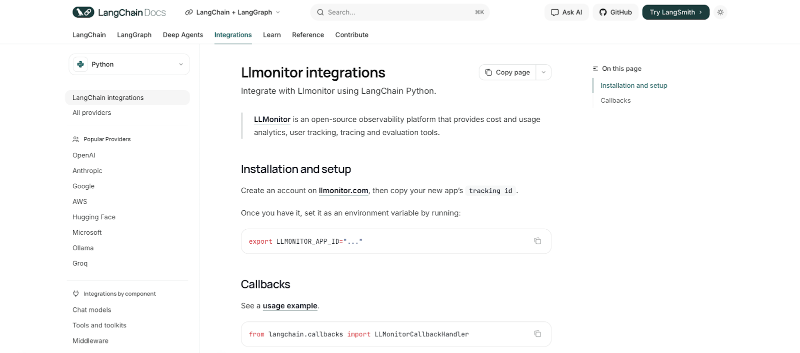
LLMonitor is an open‑source observability and monitoring platform originally developed for real‑time tracking of large language model performance, prompt outputs, latency and cost metrics. The tool’s features include request tracing, performance analytics, user tracking and debugging tools that support LLM evaluation and optimization.
Key strengths:
- Real‑time monitoring and observability of LLM systems
- Tracing prompts, responses, and model interactions
- Detailed performance metrics (latency, token usage, errors)
- Usage analytics for cost and throughput
Pricing from: Open source / self‑hosted
13. Semrush AI Visibility Toolkit
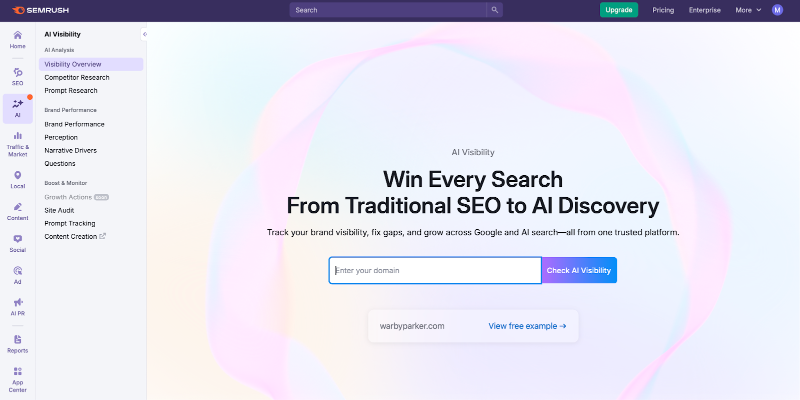
Semrush offers an AI visibility module that shows how brands appear across AI-powered search outputs such as ChatGPT, Google AI Overviews/Mode, Perplexity, and other systems. While it integrates well with Semrush’s broader SEO ecosystem, its AI visibility tracking may be less accurate compared to tools built specifically for AI visibility due to its general-purpose focus on SEO, so keep it in mind.
Key strengths:
- Produces AI Visibility Score and trend analysis
- Reports on prompt research and competitor gaps
- Correlates visibility with SEO and content performance metrics
- Export and reporting workflows for presentation‑ready insights
Pricing from: $99/month per domain for the AI Visibility Toolkit (standalone add‑on)
14. seoClarity
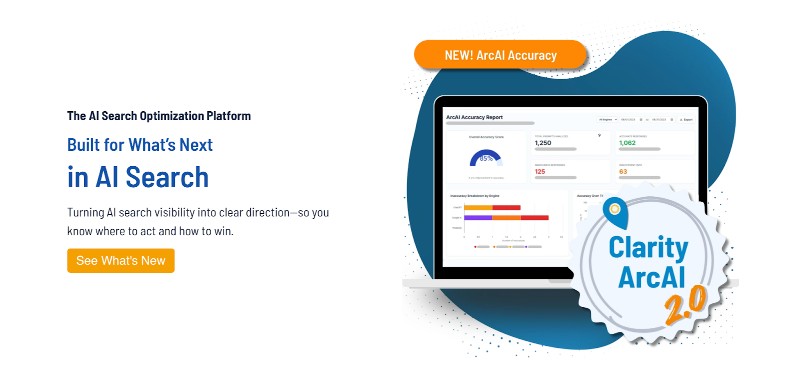
seoClarity integrates AI search visibility within its broader enterprise SEO suite through modules such as ArcAI, which captures brand mentions and content triggers across outputs from ChatGPT, Gemini, Perplexity, and Google AI Overviews/Mode. The platform links visibility patterns with optimization suggestions drawn from traditional SEO metrics, aiming to show where AI answers reference brand content and how presence gaps could be addressed with on‑site improvements.
Key strengths:
- Integrates visibility insights with technical SEO and rank data
- Suggests optimization opportunities aligned with AI answer patterns
- Enterprise‑grade reporting and export workflows
- Role‑based access and governance for large teams
Pricing from: $2,500/month
Conclusion
In 2026, tracking AI search visibility is a must for enterprises looking to stay ahead. The tools reviewed here offer varying strengths, from multi-LLM coverage to competitive benchmarking and sentiment analysis.
Peec AI stands out as one of the strongest platforms for comprehensive visibility tracking across major AI models, making it a top choice for enterprises. Each tool in our list provides valuable features tailored to different business needs, ensuring that you can find the best fit for your AI search visibility strategy.
FAQs
1. What features should I look for in AI search visibility tools?
Look for tools that offer multi-LLM coverage, sentiment and citation tracking, prompt-level visibility, and the ability to export data for analysis. Integration with existing SEO workflows, scalability for large teams, and transparent pricing are also key features for enterprises.
2. How do AI search visibility tools benefit enterprise SEO strategies?
These tools provide critical insights into how AI platforms present your brand, helping enterprises optimize content for AI-driven search results. They enable businesses to measure visibility across multiple models, track sentiment, and refine their strategies for better online exposure, leading to improved organic performance.
3. Can AI search visibility tools track brand mentions across all major AI models?
Yes, many AI search visibility tools, such as Peec AI, offer tracking across multiple models like ChatGPT, Gemini, Perplexity, Claude, Google AI Overviews, and more. These tools help businesses understand where their brand is mentioned across various AI platforms, giving them a comprehensive view of their digital presence.
4. How do I choose the right AI search visibility tool for my business?
Consider your business’s specific needs, such as the number of AI models you want to track, the level of reporting required, and your team’s size. Tools like Peec AI are well-suited for enterprises needing multi-LLM coverage and global tracking, while other platforms might be better for smaller teams or more specialized use cases.