


In the high-stakes world of automotive repair, time is the rarest currency. For decades, the independent aftermarket was divided into two distinct worlds: the traditional physical distributors, who offered high prices but instant human support, and the emerging digital players, who offered competitive pricing but often lacked the personal touch.
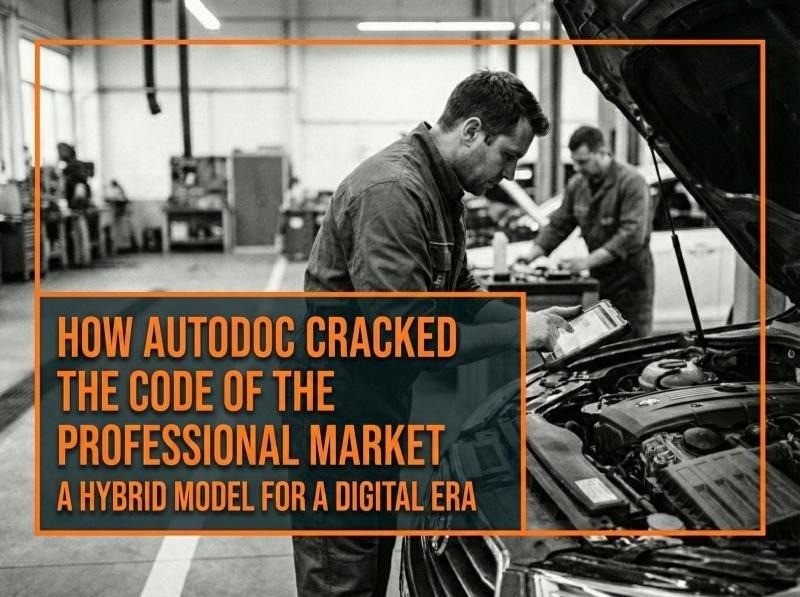
For a professional garage owner, the “digital void” is a genuine fear. Navigating complex part orders without a dedicated point of contact can lead to costly delays. If a delivery is late or a part doesn’t fit, being trapped in an automated support loop isn’t just frustrating – it destroys profit margins. This was the specific barrier that stood between the digital giants and the B2B market: the pain point of “hard-to-reach support”.
The Call to Evolve
By 2025, AUTODOC had already established itself as the disruptive leader in online parts sales. In a December interview with French journalist Caroline Ridet for the 20th edition of Zepros Atlas, the annual report on the automotive aftermarket, CFO Lennart Schmidt and European Director Franck Millet shared exclusive insights into this journey.
The company was thriving, with Schmidt reporting that in the first 9 months, it recorded “17% growth (€1.33 billion in revenue) compared to 2024”.
However, the company recognised a massive untapped opportunity. While they dominated the consumer (B2C) space, they noticed a trend. Schmidt explains: “We always knew that professionals were buying on our B2C platform. So we wanted to professionalise our offering for this customer segment.”
However, entering the professional arena required more than just a login screen. It required solving the industry’s biggest grievance: the lack of reliable human connection in online transactions.
The Strategic Pivot
The company underwent a test and trial phase. The initial assumption might have been to rely solely on technology. However, AUTODOC quickly learned that algorithms cannot replace relationships.
Schmidt candidly admits the learning curve: “We tested the possibility of making AUTODOC Pro entirely digital. However, it quickly became clear to us that on-the-ground support is essential for repair shops.”
This realisation was the turning point in the company’s narrative. To solve the problem of distant customer service, AUTODOC brought in Franck Millet as the AUTODOC Pro European Director to blend digital efficiency with physical reality.
The “Phygital” Alliance
AUTODOC’s answer to the service gap was a hybrid model. They didn’t just offer a website; they deployed an army of human allies. In France alone, the company established a network of 106 representatives on the ground.
These field agents became the bridge between the mechanic and the machine. They provided exactly what the digital market was missing. As Franck Millet describes it: “It’s a good combination that offers garage owners the best of both worlds (digital and physical).”
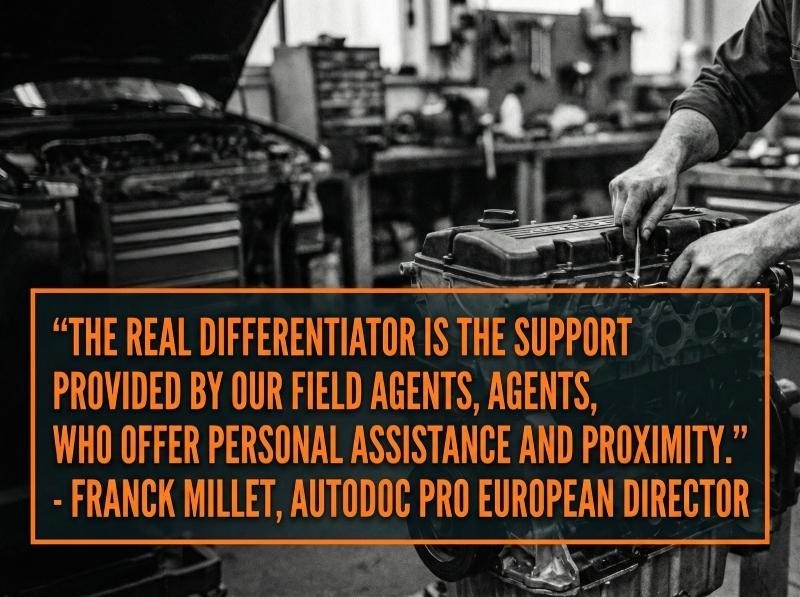
By placing agents in the field, AUTODOC eliminated the frustration of limited availability. They moved beyond simple transactions to building partnerships. Millet emphasises that this is their true competitive advantage: “ …beyond pricing, the real differentiator is the support provided by our field agents, who offer personal assistance and proximity”.
Validation in Numbers
The market responded with overwhelming enthusiasm. Once the fear of poor support was removed, professionals flocked to the platform. The so-called “trust barrier” had been broken.
The results in France were historic. Millet confirms the success, stating that in November “AUTODOC Pro crossed the €100 million sales revenue mark in France for the first time in a single year, already far surpassing the full-year 2024 result”.
With 23,000 garages connected in France, the model proved replicable. When AUTODOC Pro launched in Germany in March, the adoption was immediate. Millet notes: “So far, we have received very positive initial feedback with more than 4,500 garages already connected.”
The Road Ahead
The journey is far from over. The market potential remains vast; the leadership team notes that currently “barely 13% of parts sales happen online”, but experts predict “this figure will double in ten years”.
To sustain this level of service and ensure that delivery times (currently D+3 to D+1) remain competitive, AUTODOC is expanding its physical logistics footprint. Schmidt reveals the next step in their infrastructure growth: “We are planning to open an additional warehouse in the United Kingdom next year.”
Conclusion
AUTODOC successfully transformed itself from a digital retailer into a professional partner by listening to the market’s pain points. They proved that even in an era of automation, the human element is non-negotiable.
The company stands on solid ground, ready for the next chapter. As Lennart Schmidt proudly summarises the company’s financial health: “Over the last two years, we have recorded annual growth of over 17%, our profitability has improved, and we generated around €125 million in free cash flow in 2024… Our model is robust!”