
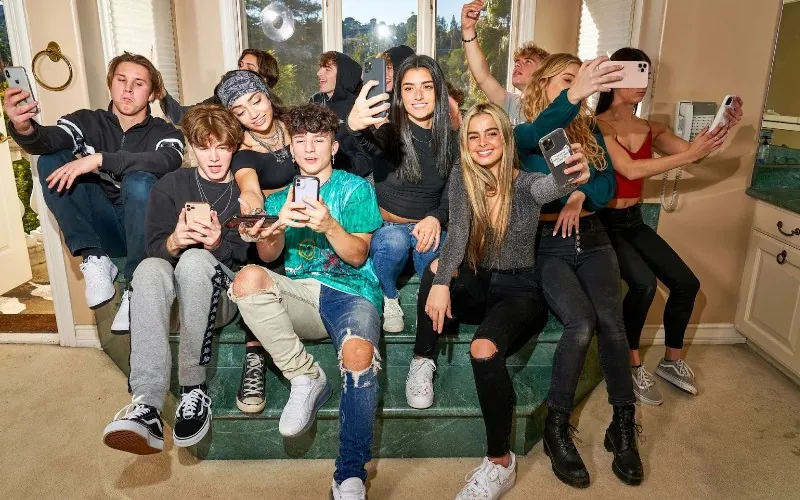
The House of Lords has voted to back a ban on social media for under-16s, increasing pressure on Sir Keir Starmer to accelerate plans to tighten controls on children’s online activity.
The government was defeated on Wednesday after peers approved an amendment to the children’s wellbeing and schools bill by 261 votes to 150, mirroring a policy introduced in Australia last month.
The vote comes as Downing Street considers an Australia-style crackdown, having confirmed on Monday that ministers are looking at the option of a legal ban.
However, in the House of Lords, several peers raised concerns about the timescale of the government’s response, pointing to a consultation launched this week that will take three months to complete.
“Today I can tell the House that we will bring forward a swift three-month consultation on further measures to keep children safe online,” said Secretary of State for Science, Innovation and Technology, Liz Kendall, on Tuesday.
“That will include the option of banning social media for children under 16 and raising the digital age of consent, to stop companies using children’s data without their or their parents’ consent.
“The consultation will include a range of other options, too, such as: whether there should be curfews overnight or breaks to stop excessive use or doomscrolling; how we ensure more rigorous enforcement of existing laws around age verification; and action to address concerns about the use of virtual private networks to get around important protections.
“I want to make one thing crystal clear: the question is not about whether the government will take further action—we will act robustly, as we did with Grok. The question now is about the next steps and acting effectively, together with children and families.
“That is what our consultation will deliver, because we are determined to ensure that technology enriches children’s lives, rather than harms them. We want to give children the childhood they deserve and prepare them for the future.”
That review includes a range of possible measures, such as raising the digital age of consent, introducing phone curfews and limiting design features seen as addictive, including game-style “streaks”.
Could children’s social media ban be expanded to video games?
Wednesday’s amendment was supported by a cross-party group including Labour’s Baroness Luciana Berger, Liberal Democrat Baroness Floella Benjamin and Conservative Lord John Nash.
Baroness Beeban Kidron, founder of the 5Rights Foundation, criticised the pace of action and warned the UK was losing its edge on tech safety, saying: “The UK, once at the forefront of tech safety, has squandered its advantage.
“Instead we are becoming a case study for those who would like to prove that the tech sector is beyond national laws, that it is a law unto itself.”
Peers also highlighted the range of risks facing young people online, from sextortion and cyberbullying to gaming addiction.
Not all proposals gained support, with a Liberal Democrat amendment calling for film-style age ratings for access to certain platforms being defeated, despite being backed by the NSPCC, which said bans were “not the answer” and instead advocated minimum-age rules based on risk.
The bill will now return to the House of Commons, where ministers could attempt to strip out the Lords-backed ban.
The government is also expected to send ministers to Australia to assess how its under-16 restrictions are working in practice, where users must pass age verification checks to access apps deemed potentially harmful, including X and TikTok.
Could a UK social media ban for under-16s be on the horizon?