


What impact might a surprise flash mob or immersive pop-up shop have on a startup’s marketing compared to say online banner ads?
The difference in effectiveness is, arguably, enormous.
Today, with so much digital saturation, people are much more interested in the physical world. If companies adopt real-world marketing tactics, they are much more likely to have an impact via instant word of mouth, photos spread online, and conversation sparked about them.
In 2025, during an era of digital overload, more startups are looking to offer their customers experiential experiences instead of digital ads or creative copywriting. This is allowing some companies to be much more effective than others, according to Excite OOH, an out-of-home media planning agency.
“We’re seeing a huge shift in how startup companies operate. More are looking for alternatives to conventional digital marketing and want to move their advertising budgets back into the real world with the advent of AI and generative content. The saturation on the Internet is now reaching epic proportions, and a lot of firms simply aren’t able to make progress. However, once they use posters, face-to-face networking events, pop-ups, and experiential activations, that whole dynamic changes. We’ve noticed that the most successful firms are those that build brand ambassadors who can then go out into the digital space and tell other people about them.
However, for many startups, it’s not just about doing something that’s new; it’s also about doing something that’s genuinely effective. Research shows that experiential marketing campaigns generate about 40% higher engagement than conventional ads. This means that for every dollar spent, return on investment is potentially 40% higher than it would have been, especially for budgets under $10,000.
Obviously, large companies still need to maintain conventional marketing campaigns, but smaller firms that want to have a big impact locally can often do much better by simply marketing in the physical world.
The background to this change is quite predictable, and marketers are now coming to understand what it means.
- The rising costs of online ads
- Algorithmic changes
It is much more difficult to get digital advertising in front of prospects. Consumer skepticism is reducing consumption of polished digital ads, leading to even lower returns on investment over time. Many consumers who would be willing to buy products that are advertised simply don’t see online advertising because they’ve trained their brains to ignore it over the past 10-15 years.
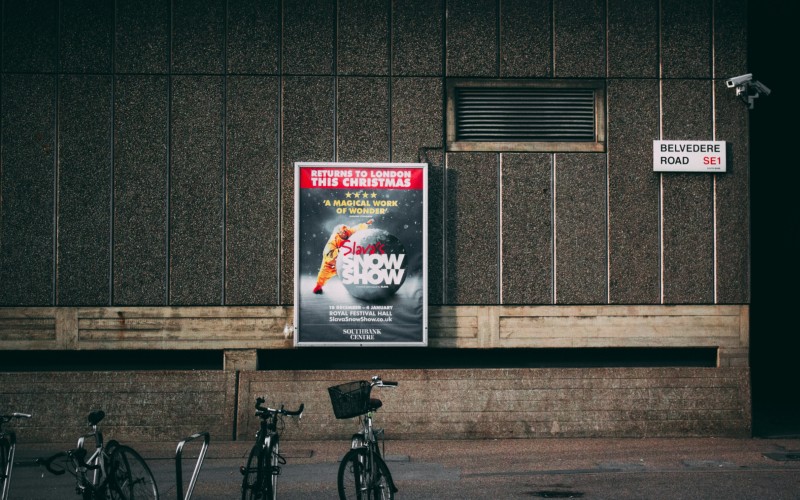
During the post-pandemic era, many people are also craving in-person connections. A lot of consumers spend time online researching products and services, but they’re much more interested in going to physical spaces and events where they can actually experience them. Many want to hold new items for the tactile benefits while also talking to salespeople about how they might improve their lives. This is about reconnecting, re-engineering the humanity of the sales process.
The main elements of physical startup marketing are what you might expect. A lot of startups use street tactics by adding street art or branded takeovers to public spaces. These can be highly effective, especially among younger audiences who don’t expect them. For startups, the main targets are things like chalk posters and transit ads. There are also mascot ambushes for some companies with strong brands and public awareness.
The goal of a lot of these tactics is to simply generate buzz and media attention. Companies that can get other people to shine the spotlight on them can leverage larger audiences elsewhere and gain more traffic to their websites.
Of course, guerrilla marketing isn’t the only approach being used by many of these firms. A lot of them are using immersive spaces which have been planned and organised beforehand. These are advertised via online channels, offering things like product demos or themed installations. The idea is to make them as fun as possible and integrate with the brand’s existing storytelling and narrative.
The number of sales driven by these tactics isn’t quite as high as for guerrilla marketing, but installations like these can perform well, especially in neighborhood hotspots where many people are walking by and might be curious about what’s being sold. The effectiveness of pop-up shops and experiential marketing is the direct sales. Consumers are able to test the market, see what products and services are like for themselves, and then make a decision about whether to convert.
Another route is through in-person events and networking. Companies are increasingly organizing micro-events, workshops, and conferences to get people to interact with each other and therefore drive value. Many, for example, startups are offering local networking dinners. These are highly enjoyable but also give people a chance to connect over food. Companies like VivaTech are also doing demo days or co-hosted activations. These provide an emotional resonance between the brand and their audience.
We’re also seeing the development of tangible touchpoints and swag. A lot of companies are focusing on what merchandise or gifts they can offer their audiences to encourage them to buy. This concept works because it’s based on the principle of reciprocity, something that most humans have. When brands give their leads something, they are more likely to be willing to provide them with something in return. That is a sale. When you combine this method with guerrilla tactics, when companies combine this method with guerrilla tactics, it can be even more effective because of the elements of surprise. Consumers aren’t expecting to get swag but receive it anyway, which can be a thrilling experience.
“Physical marketing is, in our view, the antidote to fatigue around digital marketing,” explains Excite OOH. “The two aren’t necessarily mutually exclusive, but they may need each other if customers have a strong preference for real-world interactions.”
There are still various challenges though. One of the risks of going down a purely physical route is that it limits audiences. Most people do literally spend their entire days online, so physical advertising isn’t something they’re going to see. Also, there are risks that disruptive tactics could backfire. Authorities don’t necessarily like companies that change the urban landscape.