
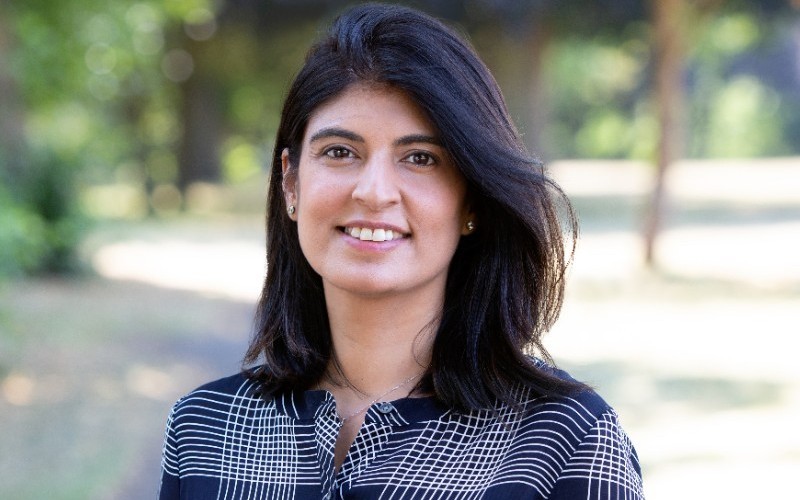

Spring co-CEO Samar Shaheryar has a big ambition for the PropTech after leading it to £100m in property acquisitions in its last fiscal year.
Shaheryar spent a decade in investment banking at JPMorgan in New York, primarily as a bond trader, before moving into entrepreneurship and the UK property market.
Spring is an evolution of an earlier business founded in 2007 but took shape as a tech-enabled house buyer in 2019.
Today, the business is the largest home buyer in the UK and recently ranked 9th in our PropTech 50 ranking for 2025.
It carries a proven track record delivering homebuying services to our customers and partners alike, working with many leading retirement providers, developers and estate agents.
“We saw a gap in the market for an efficient, transparent, and customer-centric house-buying service that could trade residential property at scale,” she tells BusinessCloud.
“Selling a home in the UK remains an incredibly stressful process which Spring alleviates through accurate valuations, guaranteed offers and speedy conveyancing.”
£300m-a-year ambition
Spring set a goal in 2023 to complete £100 million in property acquisitions – and has now reached it.
The Surrey-based business’s next target is significantly bigger.
“We are now looking to buy 1,000 properties – or £300m a year – within 3 years,” says Shaheryar.
Shaheryar says Spring has two main differentiators – the accuracy of its valuations and the depth of its relationships.
“We have to sell every property we buy, ideally within 4-6 months, which means we have to buy it at the right price,” she said.
“If we are too low we won’t get any deals done. If we are too high, we will lose money.”
That has driven what she describes as “a relentless drive to use market data combined with our own data to find smarter, faster and more accurate ways to value a home in the UK on our proprietary SpringIQ platform”.
She continues: “From the analysis we have done, comparing where we sell properties we buy, our valuations are more accurate than RICS and asset managers.
“Property is, at the end of the day, a relationships driven business, and no amount of excellent tech can replace the need for building those partnerships organically, the old-fashioned way.
“Listening to our accounts, being relentlessly customer-centric, seeing them in person as much as possible, taking a leading role in governmental policy recommendations have all led to a solid roster of accounts who rely on us, and it is growing at a robust pace.”
Co-CEO model
Shaheryar said she is “an advocate of the co-CEO model”, noting it has been used by companies such as Spotify, Netflix and Oracle.
She also pointed to a Harvard Business School study, saying it found that a co-CEO structure results in better financial performance (9.5% average return vs 6.5% average return).
She explained: “Modern organisational leadership requires an enormous set of skills from relational and cultural to technical and operational.
“Is it possible for one person to be excellent at all of these?
“Co-CEOs bring a larger set of abilities/experiences to the table, which means we can prioritise effectively, focusing on different parts of the business when conditions require.
“When our views differ, we have to bring strong arguments for our side and can’t fall back on our title/hierarchy. Not only does it make us better at our jobs, we make better decisions as a company.
“We also make decisions faster as we split the company’s reporting lines, allowing us to take responsibility for half the day-to-day decision-making.”
Other benefits, she said, include “less burnout, greater resilience, broader representation at industry events and more bandwidth for concurrent projects”.
However, she did admit that it is not a fit for every business.
She noted: “It is really important for skills to be complementary, to have well-defined non-overlapping roles and for the co-CEOs to have each other’s trust.”
Tech shifts for the future
Asked what innovations will matter most over the next three to five years, Shaheryar said: “Short answer: AI-driven harnessing of large data sets, blockchain for property transactions, smart automation at every level of a business.”
However, she argued the bigger differentiator is not the tools themselves.
She continued: “Adopting new tech is not the real competitive advantage, it is a basic requirement of all business now, but building companies that have the ability to quickly integrate that tech, pivot and adjust rapidly, in a human-centric way is the real competitive advantage.”
Spring has 36 employees and is preparing for further growth, including a funding raise.
“We are looking to increase our funding as our business has grown significantly and is ready for its next round of investment,” Shaheryar said.
“We are seeking investment into current product lines as well as some new ones that are ready to be deployed.”
haheryar said the business initially believed direct-to-consumer sourcing would be the main growth lever, but the business changed course.
“Initially we believed B2C (sourcing from the general public) presented a significant opportunity, but quickly realised that growing our B2B business (receiving referrals from developers) was more efficient, enabling us to grow faster and bigger,” she said.
“We have now tapped the B2C market more efficiently via our Estate Agency partners, enabling the growth of our B2B2C model.”
The long-term goal
For Shaheryar, the mission is clear: “Simply to be the easiest, fastest way to sell a home in the UK.”
“Additionally, our expertise in valuations and relationship building can be applied to many other aspects of the residential property market.
“There are already other business lines in progress that use the power of those USPs. Watch this space!”