
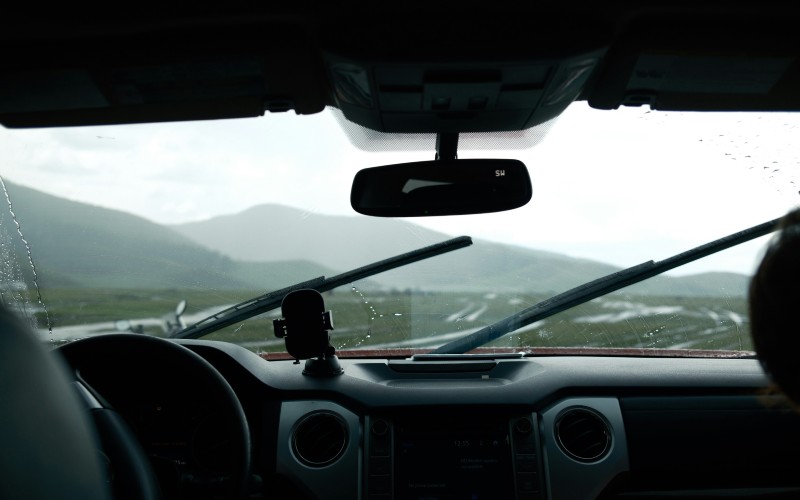

Most UK drivers replace their wiper blades only after visibility gets bad enough to notice. By then, the rubber has already been streaking, skipping, and leaving half-cleared arcs across the windscreen for weeks. Changing wiper blades takes about 15 minutes and there are no tools here’s how to do it properly, and how to know when it’s time.
How often to replace wiper blades in the UK
In the UK, most drivers should replace wiper blades every 6 to 12 months. The exact interval depends on where and how you drive.
Coastal areas are harder on blades salt air breaks down the rubber faster, so replacement every six to eight months makes sense. Motorway drivers face constant wind pressure at speed, which wears blades from a different angle. City drivers deal with stop-start friction and road pollution. Rural drivers contend with dust and debris. In all cases, the British climate frequent rain, frost, and temperature swings accelerates wear faster than drier climates elsewhere.
According to the DVSA, wiper blades that fail to clear the windscreen adequately can result in an MOT failure. That alone makes regular checks worth building into your maintenance routine.
Signs your wiper blades need replacing and which type to choose
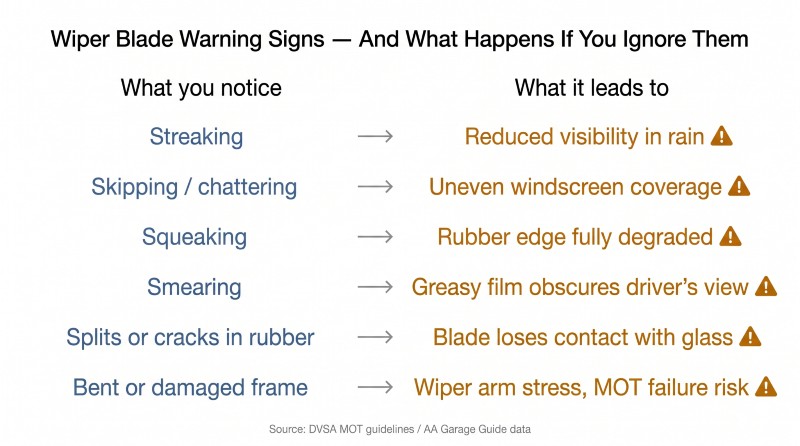
You don’t always need to count months. Watch for streaking (water lines left after each pass), skipping or chattering across the glass, squeaking as worn rubber drags instead of glides, smearing a greasy film rather than clearing it, visible cracks or splits in the rubber edge, or a bent frame that stops the blade sitting flush. Any one of these is enough reason to replace. Don’t try to clean your way out of it once the rubber edge degrades, performance doesn’t recover.
The infographic below shows what each warning sign leads to if left unaddressed:
The stakes are real. According to research by Direct Line Group, over a two-year period in the UK there were nearly 5,000 accidents in the rain that resulted in serious injury or death — the equivalent of 16 people hurt on every rainy day across the country. Worn wiper blades don’t cause rain, but they directly reduce your ability to see and react in it.
When buying new blades, getting the size right matters first. Most cars use two different lengths — the driver’s side is typically longer than the passenger side. Check your owner’s manual or use an online vehicle lookup tool with your registration number.
There are three main types. Traditional blades use a metal frame and are widely available and inexpensive, but the frame can clog with ice and debris. Flat beam blades have no external frame — the rubber is pre-tensioned to curve against the glass, and they perform noticeably better in wet weather. Hybrid blades combine a protective shell over a beam-style design, offering good all-weather performance with less ice build-up.
If you frequently drive on motorways, consider blades with an integrated spoiler. These use aerodynamic design to maintain downforce at higher speeds, which prevents the blade lifting off the glass above 50 mph a real issue on exposed stretches of British motorways in crosswinds.
How to remove and fit wiper blades step by step
Before you start, place a folded cloth or small towel on the windscreen. The spring-loaded arm carries enough force to crack the glass if it snaps back without a blade to cushion the impact it’s a simple precaution that prevents a costly mistake.
Lift the wiper arm away from the windscreen until it locks upright. On some modern vehicles, you’ll need to position the blades first: either turn the ignition on with the engine off, activate the wipers, then switch off mid-sweep to leave blades in the centre of the screen or use the wiper service mode in the vehicle’s onboard settings menu. On most traditional cars, you can simply lift the arms by hand.
Find the connection point where the blade meets the arm. Most UK cars use a hook-style connector with a small release tab. Press the tab and slide the blade off it should come free easily. If it resists, don’t force it; check the tab is fully released first.
To fit the new blade, remove any plastic transport covers from the rubber edge, then align the connector with the wiper arm in the same orientation as the old blade. Slide it on and push firmly until you hear or feel a distinct click that confirms the lock has engaged. Give the blade a firm tug to check it’s secure, then lower the arm slowly back onto the windscreen.
Repeat for the other blade. Replace both at the same time if one is worn, the other is usually close behind. Then test the wipers using your washer fluid and check for smooth, streak-free movement across the full arc. Any skipping usually means the blade isn’t fully seated; lift the arm, press it home again, and retest.
One more thing worth doing while you’re at it
While fitting new blades, top up your screen wash reservoir. Fresh blades work best with clean washer fluid, and it takes 30 seconds to check. In winter, make sure the fluid is rated for freezing temperatures plain water in the reservoir will ice over and can split the pump.
Wiper blades are a minor item with an outsized effect on safety. In the UK, where rain is the default weather condition for much of the year, worn blades aren’t just annoying they’re a genuine visibility hazard and an MOT risk. According to AA Garage Guide data, wipers and washers top the list of the most common causes of MOT failure in the UK making them the single most overlooked item in routine maintenance.