


Paid traffic costs on Google Ads and Meta have climbed roughly 15-20% year on year for UK ecommerce brands.
That price hike hasn’t come with better conversion rates either, with most Shopify and WooCommerce stores still hovering around 1.5-2.5%.
So the maths is straightforward: if every visitor costs more and converts at the same rate, the only lever left is how much each buyer actually spends.
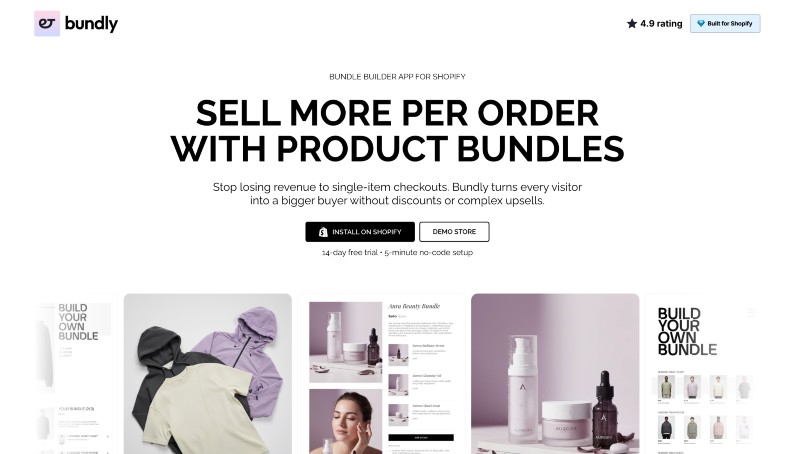
That’s exactly why more UK merchants are turning to tools like Bundly to build smarter product bundles and volume discounts that push basket value up without relying on heavier ad spend.
The conversation across UK online retail has quietly shifted from “how do we get more people in?” to “how do we get more into each basket?”
Why Average Order Value Matters More Than Ever
Understanding how to increase average order value isn’t a new idea, but the urgency behind it in 2026 is different.
Customer acquisition cost on platforms like TikTok Shop and Instagram has nearly doubled since 2023 for mid-market UK brands.
Meanwhile, shipping thresholds from major carriers keep creeping up.
When your fulfilment cost per order stays flat whether someone buys one item or four, a higher basket value doesn’t just improve revenue.
It directly protects your margin.
Product Bundling Still Wins
Product bundling is probably the single most effective tactic for increasing basket size in UK ecommerce right now.
Instead of asking a customer to add a second product themselves, you pre-build a combination that makes obvious sense.
A skincare brand selling a cleanser, toner, and moisturiser as a set at a small discount removes the decision friction entirely.
The customer perceives value, and you ship three SKUs instead of one.
The key is relevance.
Bundles work when the products genuinely belong together, not when you’re just trying to offload slow movers.
Volume Discounts and Tiered Pricing
“Buy 2, get 10% off” is one of the oldest tricks in retail.
It works online for the same reason it works in a supermarket: people anchor to perceived savings and adjust their behaviour.
For consumable products like supplements, coffee pods, or pet food, tiered pricing practically sells itself because customers know they’ll use the product anyway.
Where UK retailers often get this wrong is applying volume discounts too broadly.
A tiered discount on premium headphones doesn’t make sense because nobody needs two pairs.
But on phone cases, socks, or protein bars, that’s where the uplift happens.
The product category has to support repeat consumption or gifting for volume pricing to drive genuine average order value growth.
Cross-Sells That Don’t Feel Like Cross-Sells
The “customers also bought” widget has been around since the early 2000s.
Most implementations are lazy, with algorithmically generated suggestions and no editorial thought behind them.
The stores doing this well are curating their cross-sell recommendations manually or at least reviewing what the algorithm suggests.
Rather than recommending “another pair of leggings” when someone adds leggings to their cart, a better approach is suggesting a matching sports bra or an accessories pouch that complements the colour they picked.
That kind of intentional product pairing increases basket value because it mirrors how people actually shop in physical stores.
Post-add-to-cart cross-sells tend to outperform homepage recommendations by a wide margin.
The moment someone commits to buying, their willingness to add a complementary item spikes.
A well-timed slide-out panel showing one or two genuinely relevant products converts far better than a cluttered “you might also like” grid buried at the bottom of a product page.
The Free Shipping Psychology
Free shipping thresholds remain one of the most reliable ways to push average order value upward in UK ecommerce.
But the mechanic only works when the messaging is persistent and clear.
A small progress bar in the cart showing “You’re £12 away from free delivery” creates a tangible goal.
Without that visibility, customers don’t know the threshold exists until checkout, by which point they’ve already committed mentally to their current basket.
If your current average order value sits at £38, setting a free delivery threshold at £50 gives customers a clear, reachable target.
Set it at £75, and most people won’t bother.
The gap between current AOV and your incentive threshold should feel like a nudge, not a stretch.
Personalised Offers Beat Blanket Discounts
Sitewide 20% off sales erode margin and train customers to wait for the next promotion.
They also do very little for average order value.
If anything, a blanket discount encourages smaller orders because people feel they’re “already getting a deal.”
Personalised offers tied to basket contents are far more effective.
If a customer has £45 in their cart, a targeted message like “Add any item from this collection and save £5” gives them a specific action and a specific reward.
The personalisation doesn’t need to be complex or AI-driven.
Even basic segmentation by cart value or product category lets you push relevant offers that increase spend without destroying your margin on every order.
Most brands see a 10-15% uplift within the first month of running cart-value-triggered offers.
Measuring What Actually Matters
Tracking average order value in isolation is misleading.
A 20% AOV increase driven by aggressive bundling might come with a 10% drop in conversion rate, which could net out to less total revenue.
The metric only means something when you look at it alongside conversion rate, return rate, and customer lifetime value.
New versus returning customers behave very differently.
Returning customers typically have a 20-30% higher AOV because they trust the brand and know the products.
Increasing average order value among first-time buyers requires different tactics than doing so for loyal customers, and most brands don’t split their strategy accordingly.
The Bigger Picture
Figuring out how to increase average order value isn’t about tricking people into spending more.
The brands doing it well in the UK right now are making it easier and more rewarding to buy in larger quantities or complementary sets.
Bundling, smart thresholds, and relevant cross-sells don’t feel like upselling when they’re done with the customer’s actual needs in mind.
The shift away from traffic obsession toward basket optimisation is a maturity marker for UK ecommerce.
Acquiring a customer still matters, obviously.
But in a market where acquisition costs keep rising and consumer spending stays cautious, making the most of every order is no longer optional.
It’s the baseline for profitable growth.