
Not that long ago, QR codes felt a bit… mechanical.
You’d see them on posters, event tickets, sometimes on packaging. Always the same look: a dense black square in the corner that sent you to a website. They worked, but nobody really thought of them as part of a company’s design or identity.
They were just a tool.
Lately though, something subtle has changed. If you pay attention to marketing materials or product packaging, you’ll notice that QR codes are starting to look different. Some include colour. Others have a small logo in the middle. Occasionally they even blend into the overall design of the campaign.
It’s a small shift, but it says a lot about how companies now think about these codes.
A design detail people used to ignore
For years, QR codes sat outside the design conversation.
Marketing teams focused on typography, colours, layouts, photography. The QR code usually arrived at the end of the process. Someone would generate it online and place it wherever it fit.
The problem is that the rest of the campaign might look polished and intentional, while the QR code felt like a technical afterthought.
That mismatch is easier to notice today. Brands invest heavily in consistency. Everything from the website to packaging to social media graphics follows the same visual language.
A generic QR code can break that flow.
Why companies started customising them
At some point designers began asking a simple question: what if the code looked like part of the brand?
That’s where customised QR codes entered the picture. Instead of the standard black-and-white square, companies began experimenting with colours, shapes and logos embedded in the code.
The idea isn’t to make the code decorative for the sake of it. It’s about recognition. When someone scans a code and immediately sees a familiar logo, it feels intentional.
There are now tools that allow this without affecting how the code scans. For example, a QR code generator with logo lets businesses integrate brand elements while keeping the structure readable for smartphone cameras.
Trust plays a bigger role than people realise
Another factor behind this trend is trust.
Most people have become more cautious about links. Phishing emails and suspicious redirects are common enough that users think twice before clicking or scanning something unfamiliar.
A branded QR code can help here. If the logo matches a known company or product, it reduces hesitation. It signals that the code is probably legitimate.
Of course it’s not a security feature in itself, but visually it can make a difference in whether someone decides to scan.
The moment when QR codes became normal again
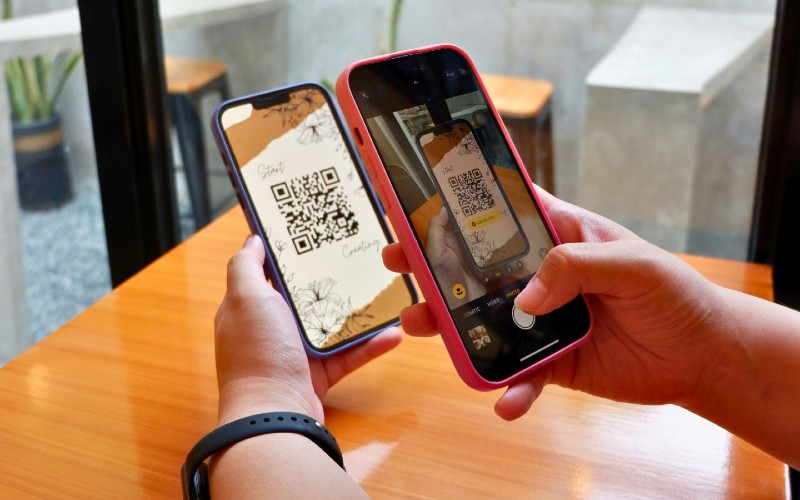
QR codes also benefited from a simple change in behaviour: smartphones made scanning effortless.
Modern camera apps recognise QR codes automatically. There’s no separate scanner app needed anymore. You point the camera, a notification appears, and that’s it.
That tiny improvement removed a lot of friction.
Once scanning became effortless, companies started thinking more seriously about how QR codes could guide people from a physical environment to a digital one. A printed flyer, a magazine page, a restaurant table or a product label can all become entry points to online content.
A quiet but useful bridge
In practice, businesses use QR codes for surprisingly ordinary things.
A packaging label might link to instructions.
An event badge might open a schedule.
A product brochure might lead to a demo video.
None of this feels groundbreaking, yet it solves a real problem: moving someone from offline to online without asking them to type anything.
And when the QR code matches the brand visually, the interaction feels smoother. Less like a random link. More like a continuation of the experience.
Small details often matter most
If you speak to designers or product teams, they’ll tell you the same thing: the smallest details often shape how people interact with something.
A button colour can change click rates.
A headline can alter engagement.
Even the placement of a QR code can influence whether people notice it.
Branded QR codes fall into that category. They don’t reinvent the technology. They simply make it feel more intentional.
And that, in many cases, is enough to make the difference between something people ignore and something they actually scan.