
Wandering among the bright lights of the Las Vegas Strip, the music is occasionally interrupted by the gunning of a pickup truck or sports car with a particularly enthusiastic driver.
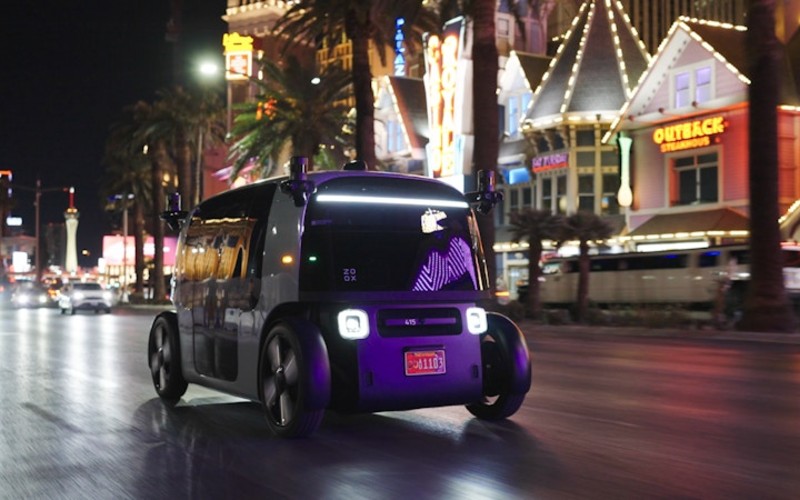
Meanwhile, barely making a sound, a robotaxi picks its way through the traffic.
Waymo is currently testing such vehicles in London but the proliferation of the Zoox taxis in Vegas – a subsidiary of Amazon – takes me aback on my trip to Dell Technologies World. Yet when asked by a friend whether I’d like to jump in one, I am quick to decline.
It is not the only ‘wow’ moment. Heading into the conference one day this week, a humanoid robot jogs up and gazes quizzically at me.
Stumped for something to say, I utter: “Hi, little guy…”
We humans may still struggle to interact with lifelike machines – and trust driverless taxis – but we will quickly have to become comfortable with the notion of working with a virtual ‘colleague’.
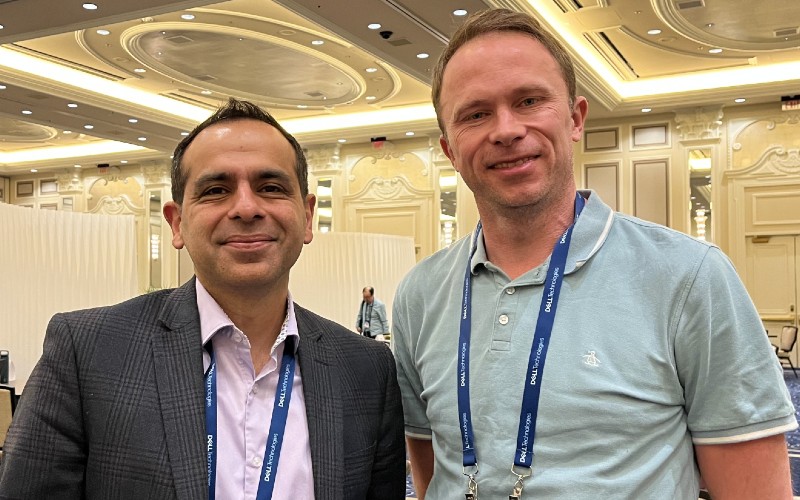
“There has been a seismic shift: so many of our organisational principles, structure, processes, technologies are organised around human beings,” Varun Chhabra (below), a senior vice president in product marketing at Dell, tells me.
“However we are now entering a hybrid world where humans and agents will work together and make humans more productive and efficient than ever before.
“The partnership between autonomous agents and human beings at the helm, I think, is going to really define this next generation of work. We’re very much at the start of that cycle.”
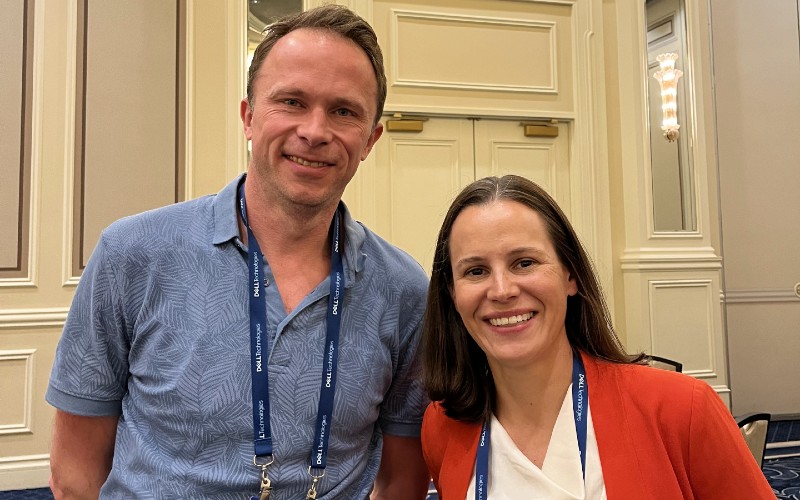
Caitlin Gordon (below), a vice president of product management at Dell, leads a team of around 50 product managers. “We’re having a lot of fun right now!” she tells me. “We’re both innovating on what ‘AI-first’ means to product management and really driving that forward in a unique way, and we’re also doing our day jobs.
“What we realised is that there’s so much power here. We have an opportunity to fundamentally re-architect the way we’re doing everything in our organisation. So we have been spending every ounce of our free time on driving that transformation.
“But when you have 50 people who have a variety of different experiences and knowledge, and you’re asking them to change the way they’ve done their job for a decade-plus, we had to be very thoughtful about how do we get people to come along on that journey and not have it just be a mandate, but have them be part of it and learn it.”
Hosting internal hackathons and giving team members access to AI tools was “enlightening”, she says. “AI has leveled the playing field, meaning that people who had ideas can now bring those ideas to life.”
Chhabra, who has worked at Dell for a decade and previously worked for Microsoft, says the ‘innovation engine’ within the company is running faster than it has ever done before.
“It’s about making our team members way more productive and way more creative than they ever were before. Marketing is a fertile ground for doing that,” he says.
“We provide our team members with tools to be able to shorten time to value on some of the content pieces, but then also to be able to think about outcomes and do more than ever before – because they’re just more efficient when building.”
I mention that we can spot AI-generated content quite easily at BusinessCloud – whether it be a press release or insight opinion piece sent to us for publication, or a post on LinkedIn.
Chhabra says this ‘AI slop’ is a very real concern. “We’ve been very clear with our team members and with the companies we work with that it’s really about the ‘human in the loop’.
“Ultimately, the end output has to be owned by a human. AI can help them get to that path faster, but there’s just no substitute for human creativity and the human touch – especially when it comes to creative content.”
With his son in mind, he says he worries for the next generation. “What is the right balance between helping them to be more successful and have greater knowledge at their fingertips than ever before – but then also still finding a way for building a muscle around critical thinking and decision making?
“I personally think that will be the defining challenge of the next few generations. But eventually we’ll find a balance, like we always do.
“Whether with the industrial revolution, the advent of the internet or something in between, there have always been questions like this – what are human beings going to do now, and what role do we play as the technology takes up?
“It’s so hard to predict and envision the new world that will exist because of this unlock. The world built on this new foundation is going to be much taller and higher than ever before, and we’ll be able to see much further. And there’s going to be a lot of opportunity within that.”
View from Vegas: From a dust storm to NVIDIA CEO & future of AI