
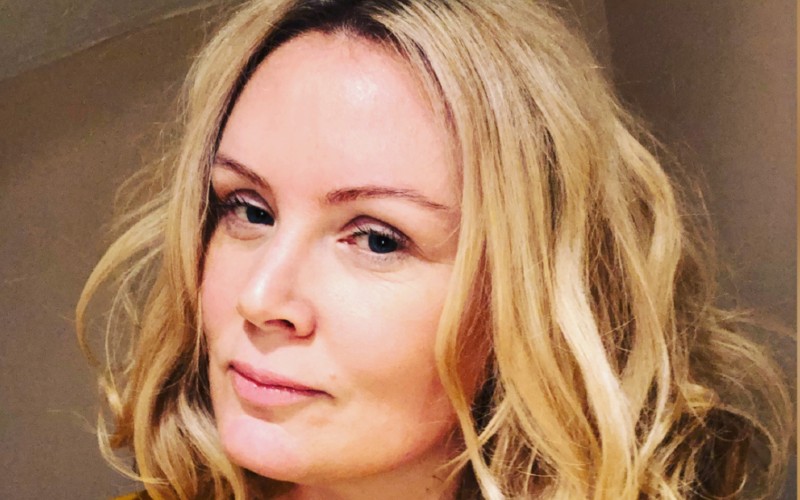

Online stalking victim Naomi Timperley has called on LinkedIn to review its policy on stalking as her attacker prepares to be released from prison.
Sam Wall was jailed in October 2025 for 28 months for a ‘prolonged, deliberate and calculated’ campaign of online abuse against high-profile figures from the business and tech industry.
Timperley, who was one of her victims, has been told Wall could be released as early as October after serving a third of her sentence.
Despite her conviction Wall, who describes herself as a ‘digital strategist’, still has an active LinkedIn account with 28k followers.
Now Timperley has written an open letter to LinkedIn calling on the tech giants to think about the victims.
BusinessCloud has published the letter in full (see below).
Dear LinkedIn Leadership Team,
For years, LinkedIn was more than a professional networking platform to me. It was where I built my career, connected with thousands of founders and innovators, found opportunities, and celebrated the success of others.
It was also the platform that became one of the primary weapons used against me.
Over a sustained period of years, my convicted stalker used LinkedIn to publish thousands upon thousands of words about me, my colleagues and other victims.
Individual posts sometimes stretched to almost 10,000 words. They were designed to destroy reputations, undermine trust, isolate victims and keep the abuse alive in public view.
This wasn’t an isolated disagreement or an exchange of opinions.
It was stalking. It was harassment. It was part of a criminal course of conduct that ultimately resulted in a custodial sentence.
The criminal justice system recognised what happened. Yet the platform that enabled so much of that abuse remains open to the person responsible.
As my stalker approaches release from prison, I find myself living with a fear that many victims of stalking know all too well: not simply what happened before, but what could happen next.
I worry about myself. I worry about the other people who were targeted over the last decade. And I worry about people who have never met this individual but could become future victims.
LinkedIn has become one of the world’s most trusted professional communities. That trust depends not only on how people use the platform, but on how the platform responds when it is deliberately weaponised to cause harm.
This is not about preventing someone from rebuilding their life after serving a sentence.
Rehabilitation matters. But there is also a responsibility to protect the public where there is a documented pattern of serious harm carried out through a platform itself.
When someone has repeatedly used LinkedIn as part of a criminal campaign of stalking, the platform cannot simply reset to zero because a prison sentence has ended.
Professional platforms have safeguarding responsibilities just as employers, schools and community organisations do.
My own case is not unique. Every week, more people are subjected to coordinated online harassment, obsessive behaviour and reputational abuse that spills from one platform to another, often for years.
Too often they are told to: “Block them.” “Ignore it.” “Just stay offline.”
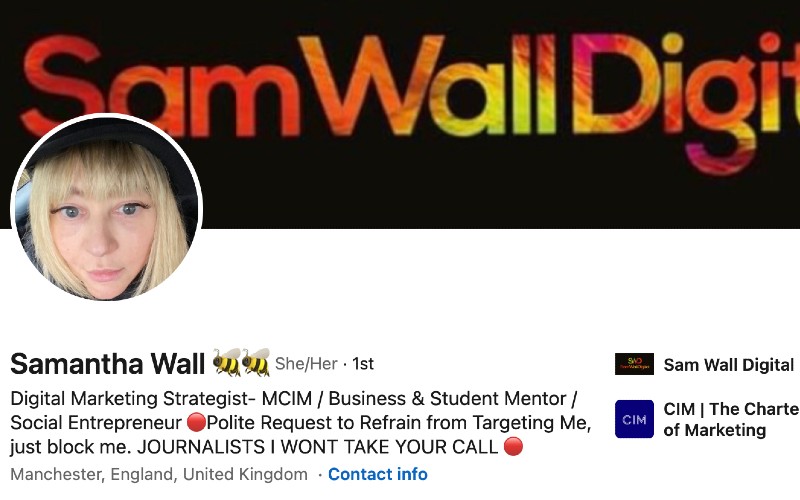
Sam Wall’s LinkedIn account has 28k followers
Those responses ask victims to disappear while the abuse continues.
We should be asking something different: How do platforms stop being tools for repeat offenders?
Today, I am asking LinkedIn to review its approach to users who have been convicted of serious offences that were committed, facilitated or amplified through its platform.
That review could include:
- Clear safeguarding policies for convicted stalkers and repeat perpetrators of online harassment.
- Specialist review processes where criminal convictions relate directly to platform misuse.
- Risk-based decisions that prioritise user safety alongside rehabilitation.
- Better support for victims reporting persistent abuse and criminal behaviour.
- Greater transparency around how LinkedIn balances public safety with account access.
These are not easy decisions. But they are important ones.
The internet has transformed how stalking happens. Our laws are only beginning to catch up.
Platforms now have an equally important role to play.
This letter is not driven by anger. It is driven by responsibility. Because I survived.
Many others are still living through what I experienced.
And if nothing changes, there will almost certainly be more.
LinkedIn has the opportunity to lead, not simply as a networking platform, but as a platform that recognises that professional communities deserve professional standards of safety.
I hope you choose to do so.
Naomi Timperley, Computer Weekly Most Influential Woman in UK Tech 2025 / co-founder, Tech North Advocates / Survivor. Founder. Mentor. Advocate for safer digital spaces.