
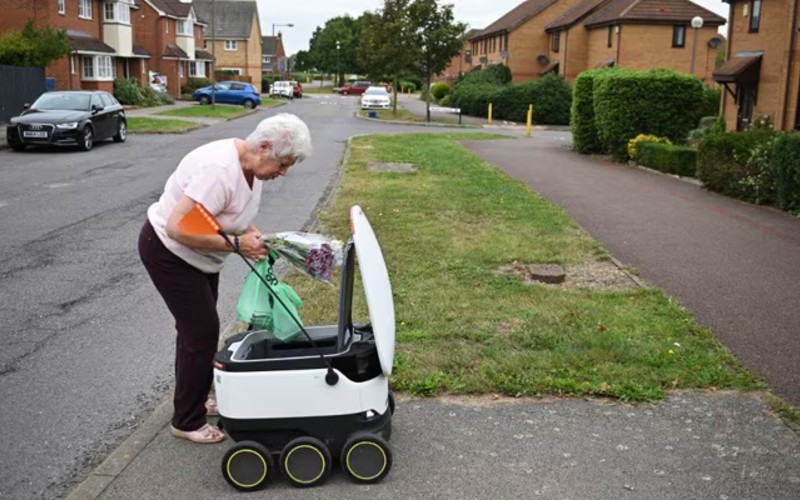
In many cities across the UK, you may have noticed autonomous six-wheeled robots riding on the pavements. These are ‘takeaway robots’ used to deliver food and grocery items to customers in proximity to restaurants.
They have been implemented by such takeaway companies as Co-op, Tesco, Just Eat, and Uber Eats to cut down on last-mile delivery costs, which can be the most expensive for these companies.
They come with many benefits, including reducing high staff costs and having a lower environmental impact compared to traditional delivery vehicles. This means they are becoming increasingly more popular as a means of delivering goods to consumers, but have also gained many complaints from both pedestrians and customers.
Where Are These Robots?
As of April 2026, these delivery robots only operate in select cities across the United Kingdom, including Milton Keynes, Northampton, Cambridge, Leeds, Wakefield, Greater Manchester, and Sheffield.
Local restaurants have been partnering with delivery brands to use robots to deliver their food to customers. The robots use sensors and AI technology to cross roads and navigate from the restaurant to people’s homes. They travel at approximately 3.7 to 4 mph, which means they can only make short journeys for the time being, but this may change as the technology evolves.
Over time, more restaurants may start investing in these delivery robots to cut down on costs and increase efficiency. This, in turn, will lead to high growth across the robotics and food delivery sectors. You can use a CFD trading platform that analyses market trends to see more details on how the delivery robots market may be affected, but it is expected to reach $3.24 billion by 2030.
How Do Delivery Robots Operate?
So, who exactly owns these delivery robots and how do they function? The majority of autonomous robots you may find on the streets are owned by Starship Technologies, a company that has operated in the UK since 2018.
Starship provides these robots as a service, partnering with brands such as Uber Eats and Just Eat to deliver food in select towns and cities. These brands are partnered with local restaurants, which can utilise the services of these robots for food deliveries.
Across the globe, there are around 2,700 robots in operation, with a significant and rising presence in the UK. Most recently, there have been major developments to this technology, with four-legged robots that can climb stairs being tested in select UK cities. This has been reported to help assist with “challenging urban obstacles”, making delivery even more efficient.
That’s not to say that delivery robots have been welcomed without controversy. Many argue they are a safety risk for pedestrians as they are an obstacle for commuters, as well as drivers, when they cross the road.
Another argument against them is that they are replacing human jobs and putting people out of work. Many companies will be focused mainly on the financial benefit of delivery robots, however, continuing to roll them out in more urban areas.