
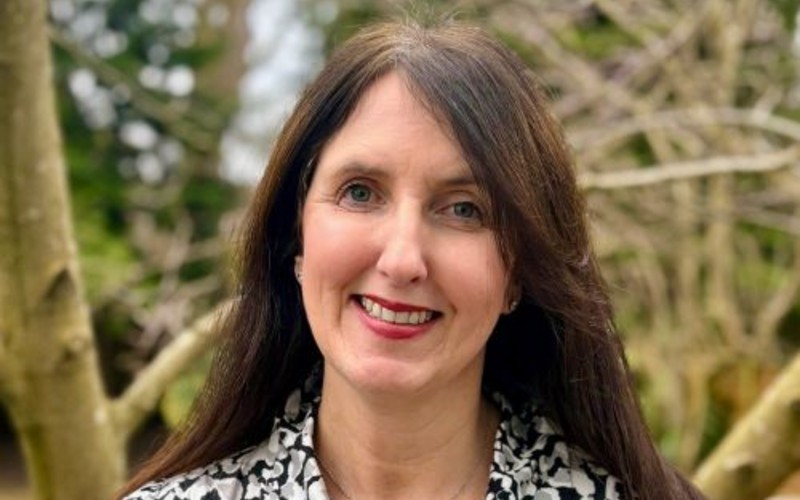
On Thursday the 16th annual everywoman in Technology Awards will be held in London.
Jane Cubbidge, head of mobile and online banking technology at NatWest Group, is a finalist for the Leader Award – and with good reason.
Jane, who has over 30 years’ experience, specialises in large-scale digital and cloud platforms, delivering customer-focused solutions and driving complex technology change.
A dedicated advocate for diversity and inclusion in technology, she actively mentors and sponsors colleagues to promote female leadership and increase the dial on the ratio of females in tech.
Based in London and a mum of two teenage boys, she is the founder of the Digital Equality in Tech group.
We caught up with Jane ahead of the awards, which are sponsored this year by Salesforce and for which BusinessCloud is a proud media partner.
Q: I remember the day in a NatWest branch that a bank manager first said: “Let’s get you on our online banking platform.” Two decades on we’ve gone from ‘hole in the wall’ mini statements and phone calls to online banking, apps and beyond. How has it been seeing the industry transform so utterly from within?
A: I first joined the Online team in 2007, and then the Mobile team in 2012. At that point, online was still the primary channel and we had just launched our very first mobile apps across iOS, Android and BlackBerry for the NatWest, RBS, NWI and IOM brands.
The focus then was firmly on core functionality and speed to market. Since then, mobile has become the channel of choice for customers. While speed to market remains critical, the challenge has evolved to balancing rapid delivery with resilience and scale and experience.
Today, our focus is firmly on the future, particularly how we can harness AI to serve customers more effectively. What I love most is that the challenges never stand still. That constant evolution creates opportunity and it’s a privilege to work on what has become our customers’ primary window into the bank
Q: How do you stay ahead of the curve when it comes to technology?
A: I stay ahead of the curve by being naturally inquisitive and never assuming I have all the answers. I actively question how things work, why they work that way and how they could be better.
I make the most of the tools, data and people around me to continually build my understanding and stay connected to emerging trends.
Q: Are you involved in technical discussions when it comes to acquisitions (e.g. Rooster), NatWest startup accelerators or tech investments made by the bank?
A: I’m not directly involved in technical discussions around acquisitions or technology investments. However, my role is closely aligned to ensuring our platforms are ready to support innovation and scale as the organisation evolves.
Q: What is your approach to managing technology projects and teams at such a large scale?
A: At scale, everything starts with great people. Having the right talent is essential, but it’s equally important to put in place clear frameworks that empower teams while also providing the right level of governance and protection.
I focus on creating an environment where people feel confident to question, challenge and raise concerns, knowing they will be supported to find the best possible outcome. That balance of trust, structure and openness is what enables teams to deliver successfully at scale.
Q: ‘You can’t be what you can’t see’ is a phrase we’ve heard many times over the years. Was there a female leader you looked to who inspired you to strive for the top?
A: I’ve been inspired by several female leaders during my career, particularly my boss, Li Qun, who nominated me and whose leadership I’ve admired for many years. I’ve also been fortunate to learn from Wendy Redshaw and Diana Kennedy.
They are all very different as leaders, but what unites them is their belief in people and their ability to empower teams to thrive. Having visible role models like this has shown me what strong, authentic leadership looks like in practice.
Q: How do you advocate for diversity and inclusion in technology on a practical level?
A: Advocating for diversity and inclusion means turning good intentions into practical action. As I’ve moved up in my career, I’ve made a conscious effort to create opportunities for others, which led me to found the Digital Equality in Tech group, now in its third year.
Through this, we focus on widening access to work experience, celebrating Women in Tech, supporting participation in development programmes and providing mentoring for early‑career talent. For me, it’s about removing barriers, building confidence and creating pathways that allow people from all backgrounds to succeed in technology
Q: Why is mentoring important – and what is your personal experience of this?
A: Mentoring is incredibly important because it provides perspective that you don’t always get within your immediate role or organisation. I’ve had several mentors throughout my career, and building relationships with people outside of my direct sphere has helped me think differently about challenges, broaden my perspective and approach problems and goals with greater confidence.
That external viewpoint has often been invaluable in helping me navigate complex decisions and continue to grow.
Q: How does it feel to be a finalist at the everywoman in Technology Awards?
A: I’m truly honoured and absolutely blown away to be a finalist. I already feel like a winner. It’s incredibly humbling to be recognised alongside such a remarkable group of women, all of whom are doing inspiring work across technology. Being part of a community that is driving real change makes this recognition even more meaningful.
Meet ‘The Relentless Fox’ – the former NCC CIO now building Relentica