
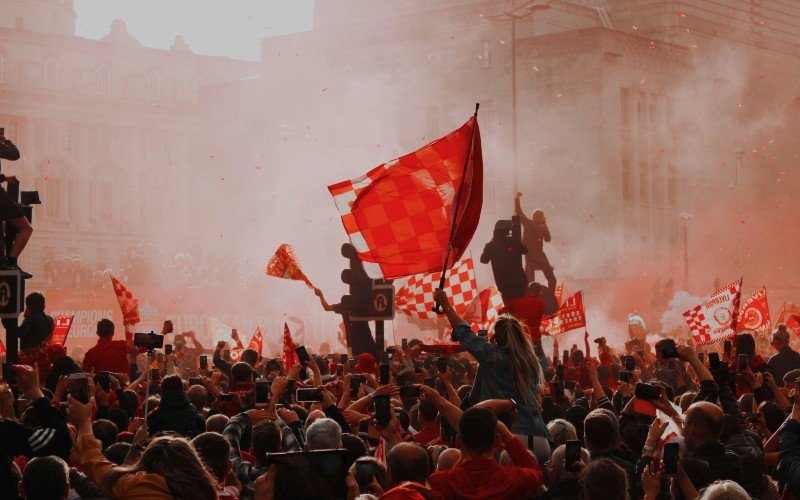

Modern football has become an arms race, particularly in the Premier League, where clubs are increasingly backed by significant financial power.
Traditional ownership models are under sustained pressure as the cost of competing at the top continues to rise.
With the rules constantly changing, it’s unlikely we’ll ever see a Roman Abramovich or Sheikh Mansour in the modern era.
Meanwhile, the commercial environment around football is shifting again, with clubs moving away from reliance on betting-led shirt sponsorships and other grey-market revenue streams. Clubs that had sportsbooks and Apple Pay casinos will have to change their front-of-shirt sponsors by the time the season starts in August.
It’s forcing a wider rethink of how elite clubs build long-term, sustainable commercial income beyond matchday and broadcast revenues.
Into that landscape, private equity groups are becoming more active in sport. Liverpool’s reported links to Arctos Sports Partners place the club at the centre of this shift. If the deal progresses, it could reshape how ownership works at the highest level of English football.
What’s Actually Being Discussed?
Liverpool’s owners, Fenway Sports Group, are in discussions about bringing in outside investment, with US private equity group Arctos Sports Partners linked to a potential increased stake.
This would not be a full takeover. FSG would remain in control, but Arctos would provide capital to strengthen the club’s financial position. It is a minority investment model, not a change of guard.
Arctos operates across multiple sports properties globally, including stakes in Atalanta, connections to Paris Saint-Germain and several US franchises.
The structure raises questions about Premier League ownership rules, particularly around multi-club holdings and related-party arrangements.
Depending on how it is structured, the deal could test the boundaries of what the Premier League considers acceptable investment.
FSG’s Model is brilliant but constrained
FSG built Liverpool sustainably. Stadium expansion, training ground investment, data-driven recruitment.
Under Jürgen Klopp, the club maximised every financial decision. The problem is that maximising efficiency only gets you so far.
Liverpool often missed the chance to build a dynasty because the ownership was risk-averse. The squad refresh came late. Wage structures remained conservative. The club was reluctant to compete financially with Manchester City, Chelsea and Newcastle.
This is the contrast Arctos addresses. FSG brought stability and long-term thinking to a club that desperately needed it. Arctos brings liquidity and ambition.
The two models work differently, but together they could produce something the club has lacked in both stability and competitive spending power.
Liverpool have already shown willingness to spend big, signing Alexander Isak at a record fee and competing for Florian Wirtz at elite-level investment.
Arctos’ capital would allow Liverpool to compete for £100 million-plus players without the sell-to-buy constraint that has limited FSG’s spending. It would support long-term squad planning rather than reactive windows where the club chases targets only when they become available.
Infrastructure and commercial growth come second. Global academy networks, commercial partnerships, digital fan engagement and stadium hospitality expansion all become possibilities when capital is available without debt.
At Atalanta, Arctos helped modernise operations, supported data-driven recruitment and backed infrastructure upgrades. The Serie A club remained competitive without abandoning financial reality. Their connections to PSG and multi-club networks demonstrate their ability to navigate UEFA and domestic rules without conflict.
The Local Fan Tightrope
This is where cultural reality matters. Liverpool is a proud, politically aware, community-driven city. Fans will accept investment but not corporate detachment.
The club must avoid becoming like Manchester United, where constant executive churn created chaos. It must not appear to sell out to faceless capital. It must not undermine a new manager trying to rebuild credibility.
Any investment partner needs to understand that capital must strengthen the football operation, not replace it. A club that alienates its support alienates its revenue base and fans have already protested several times in recent years under FSG over ticket prices. The last thing they want is to feel like strangers in their own city.
If all goes well, Liverpool becomes more competitive in the transfer market. But the club must maintain cultural sensitivity, provide stability under new management, and preserve its identity.
A New Era, If They Get It Right
Arctos could be the catalyst Liverpool needed to compete with state-backed clubs. But the club must balance ambition with identity. If they get it right, this could start the dynasty that Klopp never quite got the backing to build. If they get it wrong, Liverpool becomes another cautionary tale about what happens when capital arrives without conviction. The stakes are high, and the test case will shape how football finance works at English football’s highest level.