
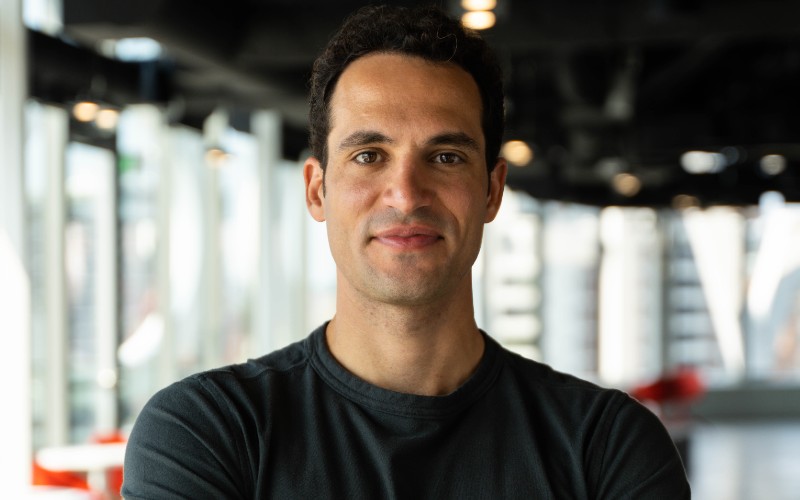
Will Ahmed was a collegiate athlete studying at Harvard when he had an idea that would change the world.
The son of an Egyptian immigrant, he had a flair for sport and technology, and the two combined when he was recruited to Harvard to play squash.
He identified he had a habit of overtraining and couldn’t understand whether he was peaking or about to get injured.
Ahmed explained: “A lot of athletes overtrain, undertrain, misinterpret fitness peaks, don’t necessarily understand the importance of recovery or sleep, and I was certainly one of them.
“I used to overtrain almost every season, which is the ultimate betrayal, because you’re putting so much effort into getting fitter and stronger and then all of a sudden you fall off a cliff because you’ve just pushed your body well past what it’s capable of.
“So I got very interested in what I could measure about my body to prevent me from doing that.”
Ahmed’s approach was to read 500 medical papers, and he realised technology and the surge in the popularity of smartphones held the solution.
“I ultimately wrote a paper myself around how I thought you could continuously understand the human body,” he recalled.
“That really became the business plan for WHOOP. I didn’t set out to start a company as an undergraduate, but one thing just led to another and I became completely obsessed with this concept of continuously monitoring the human body.”
A self-confessed techie, he spent years designing sensors, analysing data, and capturing human behaviour.
At the age of 22, he launched WHOOP in 2012 with a mission to be the most advanced wearable technology on the market.
WHOOP collects more data than any other product on the market and focuses on changing behaviour rather than just tracking what has already happened.
35-year-old Ahmed described the early years of WHOOP as ‘painful’ and turned to meditation two days after suffering a panic attack while driving.
For 18 months the startup only had three months of runway and, at one point, was only two days away from filing for bankruptcy.
“I felt this enormous weight on my shoulders,” he said. “It was so intense.”
He decided to target professional sport before marketing to a broader consumer base.
The approach paid dividends when two of the first users were LeBron James and swimmer Michael Phelps.
Both James and Phelps joined Cristiano Ronaldo, Rory McIlroy and Virgil van Dijk as investors in WHOOP.
Steven Bartlett
WHOOP also announced a brand partnership with The Diary of a CEO host Steven Bartlett, who described it as a ‘game-changer’ for his health.
Ahmed is also a member of the Board of Fellows of Harvard Medical School, where he provides counsel to the Dean and faculty on topics related to the strength and health of the institution.
As well as tracking a user’s heart rate variability (HRV), WHOOP places a strong focus on sleep, particularly sleep stages.
It is estimated that users open the app an average of over eight times per day, almost three times higher than other screenless wearables.
The wearable tech giant now has over 2.5 million members around the world and, in 2025, grew bookings by 103 per cent, exiting the year at a $1.1bn run rate.
The company has raised more than $900m in venture capital, ships to 56 countries, and operates in six languages.
Ahmed has recognised the value of social media and has 486k followers on Instagram.