
Raspberry Pi has revealed a juicy set for results for 2025 this morning.
The Cambridge-based firm is behind low-cost miniature computers which were initially used extensively in education before becoming a favourite among hobbyists.
One analyst said the company, which listed in 2024, is now “graduating from maker culture and hobbyist fan fave to something more mature”.
For the 12 months ended 31st December 2025, revenue was $323.2 million, a rise of 25% on the previous year.
Adjusted EBITDA was $46.4m, also up 25%, while profit before tax came in at $26.5m, a jump of 63%.
Unit shipments were 4m in H2, up 11% from H1, and a total of 7.6m for FY25, up 9% on FY24.
Demand strengthened through the year across both OEMs (original equipment manufacturers) and authorised resellers, it said, with notably strong demand from USA and China.
For the first time, semiconductor device volumes exceeded those of boards and modules, with 8.4m semiconductor units sold.
In January Raspberry Pi said the cost of the LPDDR4 DRAM used in many Raspberry Pi products – a low-power, high-performance type of computer memory – had increased rapidly in recent months, with some major suppliers now indicating limitations of supply at high densities.
That tempered any share price performance – but the firm said it successfully navigated this supported by supplier diversification, pricing adjustments and substantial inventory buffers.

“The current DRAM supply environment is expected to persist beyond this year, although we would expect some mitigation from demand elasticity in the short term and increased foundry capacity investment in the medium term,” it said this morning.
“While the DRAM environment limits second-half visibility, we have the inventory position, supplier relationships and pricing flexibility to navigate it effectively.
“The current environment requires flexibility and fast decision-making. The company views it as a strategic opportunity to gain market share, strengthen customer relationships, and convert disruption into competitive advantage.”
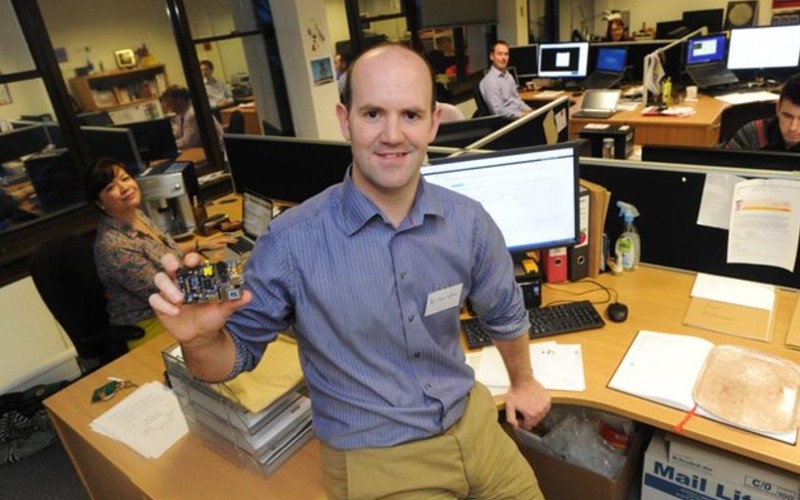
Founder and CEO Eben Upton described 2025 as “a year of strong execution for Raspberry Pi”.
“We passed an important milestone as semiconductor shipments exceeded those of our boards and modules for the first time, reflecting our progress towards a two-franchise business,” he said.
“Our team has delivered new products, strengthened our software platforms, and broadened our reach across industrial and embedded markets globally.”
Alex Pugh, an analyst at Freetrade, said: “The firm’s flagship single-board computer is increasingly helping to make the world go round, finding a place in everything from industrial automation to digital signage.
“What’s interesting is the business is starting to look broader and more industrial. Raspberry Pis are moving out of garages and workshops into elevators, moving walkways, industrial control and automation, digital signage, smart buildings and energy management.
“The firm is graduating from maker culture and hobbyist fan fave to something more mature: a business with growing semiconductor scale, stronger OEM and Authorised Reseller demand, and a wider commercial footprint.”
The firm’s share price before trading began today was 292 pence, down 22% in the last month. That was only 12p higher than its 280p IPO offer price in June 2024, and way off its peak of 766p.
However it enjoyed a 14% rise in opening trading (writing at 8.20am) to 332p.
“There is plenty to like in the rear-view mirror: revenue, EBITDA, profit before tax and shipments all moved higher,” said Pugh. “But the line that may unsettle investors is the one on outlook.
“It’s all about margins. Management says strong sales momentum has carried into 2026 and that full-year revenue should be materially higher, but profitability is only expected to be in line with market estimates.
“Growth is still there, but DRAM inflation – driven up by overwhelming demand from AI – and cloudy second-half visibility remain the key things investors will worry about. The firm says it has managed DRAM pressure through supplier diversification, pricing adjustments and substantial inventory buffers.
“More revenue is good. But if profit only tracks in line, the obvious question is how much of that extra growth gets absorbed by memory costs or pricing pressure.”