
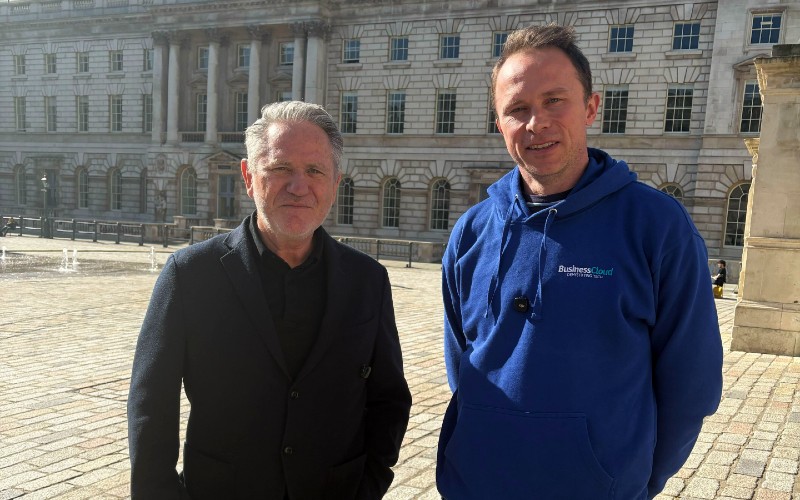
On an unseasonably hot March morning in London, I am late for my meeting with ICS.AI founder Martin Neale.
Yet judging by his smile as he pours out a cuppa in the cool environs of a Somerset House cafe, he doesn’t mind one bit.
After sharing anecdotes on all sorts of subjects – among them delayed trains (my defence) – we soon find ourselves discussing technology and AI.
“My whole professional life has really been about driving change through innovation,” he tells me for Founder Friday. “I’ve launched 21 different technologies over the years.”
Martin’s previous business worked closely with Microsoft to develop technologies and make them commercially viable. As a partner to the tech giant, his credits included the launch of cloud computing platform Azure in the UK and also database management system SQL Server.
“It was a very unusual business model: we would then work with Microsoft to perpetuate the [commercially viable] model to other partners,” he explains. “That gave us a steal on the market, and we grew as the technologies grew.”
ICS.AI launch
In fact, it was the development of pre-built AI tools within Azure that persuaded him to launch ICS.AI in 2018. “When I saw the Azure Cognitive Services (now Azure AI Services) it was obvious to me that the entire growth of AI was inevitable,” says the entrepreneur, whose passion for the technology is clear.
“They reduced the price of AI from millions [of dollars] to a few cents per transaction, solving that core problem of how you price it.”
Taking staff across from the previous business – which he wound down – ICS.AI employed 14 people on day one but has been profitable from the start. Although remote-first, it has offices in Leamington Spa and Basingstoke, and will soon be opening bases in Wales and Scotland.
ICS.AI’s focus has been delivering transformative unified AI platforms for the public sector.
“If your mission is changing the world, then why not start with organisations which help people?” he asks. “Less altruistically, there is also a high degree of replicability in those sectors.
“They’re far more open to sharing what they do with other people, and they have challenges that AI fits into well: they have to engage at population level.”
GenAI pivot
In the early years the business grew every year, building products with the previous generation of AI technology – natural language processing and cognitive services.

However with the launch of generative AI such as ChatGPT in 2022, Martin did not hesitate in pivoting wholesale to adopt the new tech.
“I didn’t expect to see technology like that in my lifetime. All of a sudden, there it was,” he says. “It was like: where the hell did that come from?
“We totally pivoted the business. We basically retired all of the products that we had developed. We retrained the whole staff. We stopped selling our old technologies and focused on the new ones.
“Whilst being brave and expensive, it allowed us to make the most of GenAI way quicker than anybody else has.”
Derby City Council
The first beneficiary of this powerful new tech from ICS.AI was Derby City Council. As reported on the front pages of the Derby Telegraph, it saved the council from bankruptcy.
“They had to make savings of at least £10m a year from AI or they would go bust,” says Martin. “We spent a half-day session with Paul Simpson, the CEO. I told him they could completely change how the council worked with this tech.
“We had 40 workshops with different groups of people around the council and spent, collectively, 1,600 man hours pulling apart everything that they did, and how they did it.
“We worked out which of them were candidates for AI – there were 262 – then went through them with Derby, costing them, modelling them, and working out the ones that could create in-year savings (i.e. save money that same year).
“We identified 54 candidates for that and set up a programme team. There were nine streams of work all running simultaneously – and social care was a big part of it.”
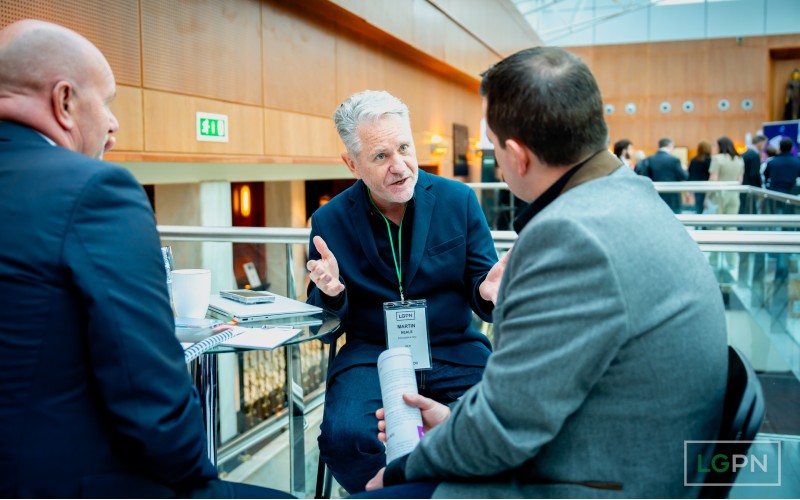
Because the council couldn’t recruit social staff, they didn’t have enough people to complete the finance assessments. “If a social worker has to make a choice between going and helping someone and sitting down and working out how much they’ve got to pay, they’re going to choose the help option,” explains Neale.
“They were doing no assessments. 60-70% of all social care delivered is co-funded or fully-funded by the people that are receiving it; but not in Derby.
“So that was literally £4-5m just walking out the door because they didn’t have the resources.”
ICS.AI saved the council £12m in savings in the first year, processing 1.4m phone enquiries with a 56% deflection rate, and halving customer waiting times.
“GenAI doesn’t have any intents,” says Martin, referencing the closed options which callers were diverted to by the old technology. “It doesn’t have any prefixed answers – it just has context.
“How it answers depends upon what you say and how you say it. It’s always contextually relevant.”
SMART model
Martin says the UK public sector is no longer able to afford piecemeal acts of digital innovation. His model – known as SMART: AI Transformation Programme – is now helping more than 20 councils move from disconnected pilots to enterprise-wide AI adoption, covering resident services, staff support and agentic back-office operations. ICS.AI is also working with universities.
“The market is littered with failed pilots,” he says. “Leadership teams are stuck in ‘AI tourism’, running small experiments that never scale.
“We have productised the entire transformation journey. The return on investment is provable and guaranteed. Sovereign AI is the only viable and sustainable path for UK public reform. We are taking the risk out of adoption so our partners can focus on the reward.”
ISC.AI has tech teams focused on voice, email, web and the central ‘engine’. Always with an eye on the future, Martin is putting a team together around physical AI – robots and smart glasses – and is set to turn over £12m this year.
Not bad for a bootstrapped business launched after Martin cashed in his pension at the age of 55.
“We grew 120% this year, 100% last year, and are targeted to do that again in the coming year. We are profitable enough to fund our growth organically,” he says.
“I feel happier now than I ever have in my professional life because of the positive change AI can bring. It’s in the application of the technology: by making it viable and useful, creating a return for someone, it solves problems – and that’s what I like doing.”
Diggers
It’s not the only thing he likes doing.
“I renovate diggers!” he laughs. “I’m never happier than when I’m doing a digger job. It just makes me the happiest man in the world.
“I’m not very good on the digger. I’ve been over on it three times!”
Is that not dangerous, I ask? “The trick to not dying in a digger that falls over is: don’t get try and get out of it! As it goes over, just hold on.”
Meet Sheffield founder unlocking healthy device habits for kids