
Last Tuesday Physiomics plc announced that it had raised £500,000 in a share placing, via its broker Hybridan LLP, and launched a retail offer to raise another £50k.
The saying goes that a week is a long time in politics – but the same is true in business.
By Friday that retail offer, massively oversubscribed, had raised £223,000. But the real headline-grabber came on Monday, when the company was forced to notify the London Stock Exchange that a shareholder revolt was seeking to remove its entire board.
This morning the Oxfordshire company effectively replaced the previously announced placing with a revised deal. Its share price has dropped more than 12% today (as of 2.45pm), although it remains 46% up in the year to date.
So how did we get here?
The company
Physiomics is a mathematical modelling, data science and biometrics company which supports the development of new therapeutics and personalised medicine solutions.
Founded in 2001 and listed since 2024, it claims to be a trusted partner to industry leaders such as Merck KGaA, Astellas, Bicycle Therapeutics, Numab Therapeutics and CRUK.
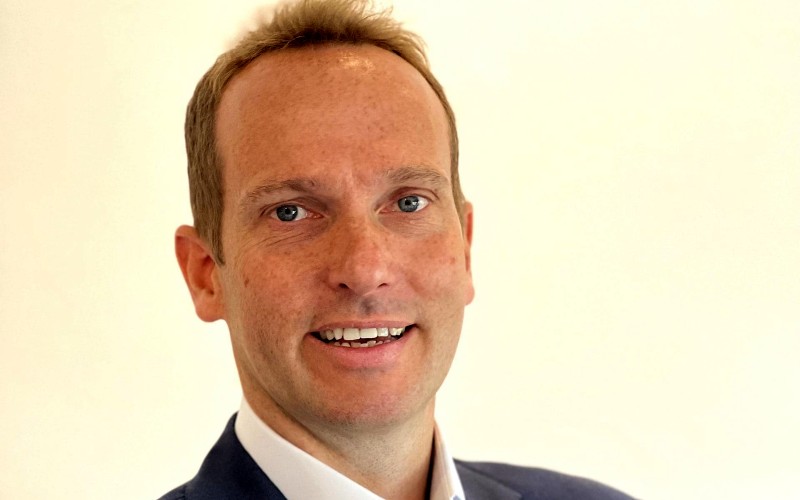
In December Physiomics said CEO Dr Peter Sargent (pictured) would be leaving the company with effect from 29th May 2026 and had commenced a search for his replacement. It said non-executive chair Dr Jim Millen would be available to resume the position of executive chairman from the date of Dr Sargent’s departure, for as long as required.
Dr Millen was formerly the CEO of the company from 2016 to 2024, during which time he grew the business from total income of under £300k to a peak of over £900k, as well as securing a major contract with long-term client Merck KGaA and kicking off the company’s personalised medicine initiative.
However its most recently reported half-year income – to the end of the 2025 calendar year – was £528,000, up from £354k, and included £30k in grant funding. Operating losses were £327k, up from £249k, while cash and equivalents were £257k at 31st December 2025 (31st December 2024: £269k).
The revolt
On Friday Physiomics’ directors received a request requiring the board to convene a shareholder meeting from Michael Whitlow, who holds approximately 13.68% of its shares.
Whitlow proposed the appointment of himself, Nicholas Tulloch, Ian Bagnall and Martin Gouldstone as directors; and also the removal of chair Dr Millen, Shalabh Kumar, Dr Tim Corn and Dr Sargent as directors, each of which was conditional on at least two of the aforementioned appointment resolutions being passed.
A shareholder insider told us that despite growing revenues and confidence in the operational team, trust in the corporate governance of the company has been massively eroded.
“Since Jim Millen took the helm in 2016, the company has experienced substantial dilution, with shares outstanding rising from approximately 32 million to over 300 million today — a near tenfold increase,” they said.
“Over the same period, shareholder value has been severely eroded, with the share price falling sharply while the company’s market capitalisation has remained broadly stagnant in the £1–2 million range… this reflects a persistent failure in capital allocation and corporate strategy.
“In contrast, the operational side of the business, led by Dr Peter Sargent and the wider scientific team, is widely viewed as performing well. Revenues have been building, and the company’s core modelling capabilities continue to attract interest.”

This divergence between improving operations and poor shareholder returns lies at the heart of the current conflict, the insider said.
“A key point of contention is alignment. Board members collectively hold only a low single-digit percentage of the company, with Millen himself owning roughly 1–1.5%. For many shareholders, this limited ownership raises concerns about incentives and accountability, particularly given the scale of dilution undertaken.”
Revised offer
The ‘institutional’ placing announced last week was at a discount of approximately 33.33% to the mid-market closing price of an existing ordinary share on 9th March 2026 – the previous day – and sought to issue 150m new ordinary shares at a price of £0.003 apiece.
The revised placing announced this morning was for 122.5m shares, at a price of £0.004, and is planned to raise £490,000. This represented a discount of approximately 14% to the closing price yesterday.
The insider said that demand for the company’s equity may be stronger than previously indicated – as evidenced by the massively oversubscribed retail offer last week.
“That contrasted with earlier, smaller raises that struggled to generate interest,” they said.
“This demonstrates that alternative funding routes – less dilutive and better priced – were available but not pursued without external pressure.”
Activist investor
Whitlow’s arrival as a major shareholder has seen him build a position of approximately 41.5 million shares, equating to around 13.7% of the company – expected to settle above 9% post-dilution.
Alongside Bagnall, Whitlow has publicly stated an intention to continue acquiring shares with the explicit aim of voting out the existing board at a requisitioned general meeting.
“Since this stake was established, shareholders note a marked improvement in liquidity, market interest, and perceived strategic opportunities for Physiomics,” said the insider.
“However, relations between the board and this emerging shareholder bloc have deteriorated sharply. The board is accused of resisting suggested strategic changes and pursuing further dilution at low prices, actions [seen as] an attempt to entrench existing control.”
The revised retail offering will look to raise an additional £110,000 via the issuance of 27.5m shares at the same placing price as the ‘institutional’ offer.
Physiomics stated this morning: “The company values its retail shareholder base and believes that it is appropriate to provide its existing retail shareholders in the United Kingdom the opportunity to participate in its fundraising on the same terms as the participants of the placing.”
Dramatic rise in AI visibility drives huge Trustpilot profit growth
Robust changes?
The dissident group has emphasised that its proposed board changes are professionally robust and more than adequate to support the existing management team.
“Their position is that operational leadership should remain intact, and no material disruption to the business is intended,” said the insider. “The focus of their dissatisfaction is directed squarely at the board, not the underlying business or its delivery.
“Voting dynamics will be critical. Historical turnout at general meetings has been low, typically around 4–5% (roughly 15m votes), rising to approximately 9% (28m votes) last year.
“If similar participation levels persist, the outcome of any requisitioned vote may hinge on a relatively small proportion of the register — raising the possibility that the incumbent board could retain control despite growing dissent.”
Sources have also indicated that a significant number of long-standing shareholders have contacted the board directly to express no confidence in its leadership.
While the scale of this correspondence is unclear, it serves to underscore the depth of frustration among parts of the investor base.
The dissident group is now calling for immediate change, warning that failure to act could result in a more public and prolonged campaign against the current leadership, said the insider.
“Physiomics thus finds itself at a crossroads: operational momentum appears to be building, yet confidence in corporate stewardship is weakening.
“Whether the board can restore trust — or whether shareholders will force a reset — is likely to be decided in the months ahead.”
BusinessCloud has contacted Physiomics for comment.