
Managing when people work sounds straightforward, while it is rarely in practice. Keeping accurate records quickly becomes one of the more time-consuming parts of running a team between shift patterns and general HR practice. That’s why time and attendance software has become a necessity for most managers and directors. Solutions that used to focus on clocking in and out now integrate with payroll, scheduling, leave management and compliance reporting.
Compliance, Accuracy and the Cost of Getting It Wrong
The Working Time Regulations 1998 in the UK requires businesses to record working hours. Every one of them has to track hours for people with variable contracts and also keeping records. Manual processes make this harder than it needs to be and leave room for expensive errors.
Payroll mistakes alone cost UK employers significant time and money each year. When people are paid incorrectly, even once, it damages confidence in ways that take time to rebuild. Automated tracking removes most of that risk, and gives HR teams cleaner data when they need it most.
The 5 Best Time & Attendance Software Solutions of 2026
#1 – Kelio
Kelio is a workforce management platform built for organisations that need serious depth. It centralizes time and attendance, scheduling, access control and HR data. These functions suit the platforms to mid-size and larger businesses with complex shift structures and operations.
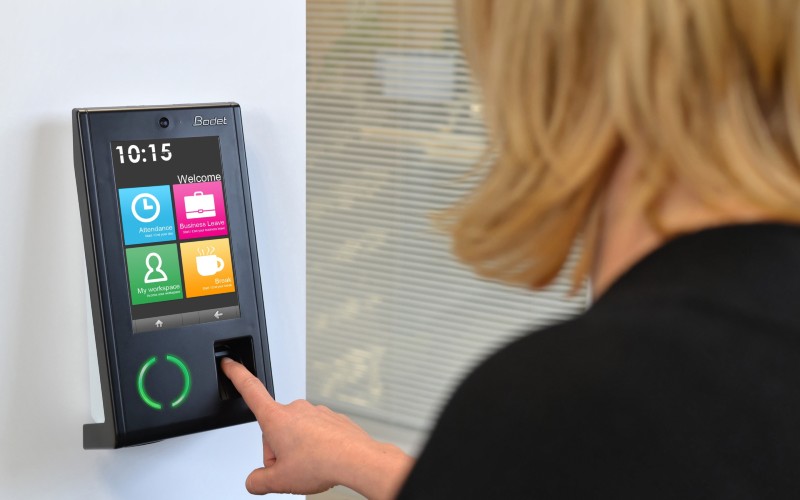
Kelio is different with how tightly its modules connect. Attendance data feeds directly into the scheduling and payroll functions. It also supports biometric and badge clocking, which is useful for businesses where accurate immediate tracking matters. Support is UK-based, and the platform is built with compliance in mind from the ground up.
#2 – Deputy
Deputy is strong on scheduling first, with attendance built in alongside it. It works well for shift industries like retail, hospitality and care. These establishments have rotas change frequently and managers need to communicate updates quickly. The mobile app is swift, and the platform integrates with many payroll systems.
#3 – Breathe HR
Breathe HR sits at the smaller end of the market and is aimed squarely at SMEs. It combines leave management, time tracking and basic HR functions. It is an affordable option for businesses that do not need enterprise-level complexity. Growing businesses that want everything in one place with an easier learning curve prefer this system.
#4 – Rippling
Rippling is a full HR and IT platform that includes time and attendance as part of a much larger suite. For businesses already using Rippling for onboarding or payroll, adding time tracking is a natural extension. The trade-off is that the platform can feel like more than you need if attendance tracking is your primary concern.
#5 – Factorial
Factorial is a good HR platform with solid time and attendance functionality. It covers clock-ins, absence management and shift scheduling. This software suite has gained traction in Europe because of the suitability to SMEs and balance between functions.
Key features to look for before you commit
You should consider checking a few things on the system you desire to have for any business. You must consider if the software integrates properly with your existing payroll provider. Some other questions include, can it handle your specific contract types? Is there a mobile option for employees who do not work at a desk?
Also consider how the system handles exceptions. Some of these issues include missed clock-outs, disputed hours and last-minute schedule changes. The best platforms resolve the problems straight away rather than building in additional admin. Reporting matters too. Data retrieval should also be easy because it forms part of an efficient suite.
Finally, think about support. Implementation is where most time tracking projects either bed in properly or start to cause problems. A provider with responsive UK-based support saves you time when questions come up, and they will.