
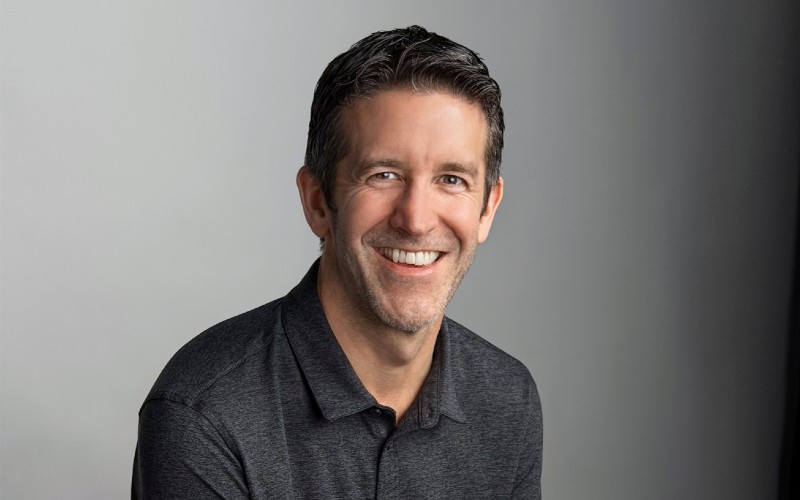
Tim Cook has stepped down as the CEO of Apple after 15 years in which he grew the iPhone maker into a $4.5 trillion company.
After a transition period this summer, he has now been succeeded by John Ternus and moved into the role of executive chair.
Ternus inherits a company with record $100 billion profits. So why has Cook and Apple’s board of directors turned to the hardware engineering executive?
Ternus, a California native, earned a bachelor’s degree in mechanical engineering from the University of Pennsylvania and joined its swim team. He began his career at Virtual Research Systems, a virtual reality startup, but has spent the vast majority of his career at Apple.
Joining the firm’s product design team in 2001 and becoming a vice president of hardware engineering in 2013, Ternus is credited with the development of Apple’s proprietary silicon chips for its Mac line of computers, which replaced Intel chips in 2020.
Apple says his work on the Mac has helped the category become more powerful and more popular globally than at any time in its 40-year history. That includes the recent introduction of MacBook Neo, an all-new laptop that makes the Mac experience even more accessible to more people around the world.
Ternus joined the firm’s executive team in 2021 as senior vice president of hardware engineering and oversaw the development of successful products the Apple Watch and AirPods, as well as the failed Vision Pro headset.
In Apple’s words: “Under his leadership, his team drove advancements in AirPods to make them the world’s best in-ear headphones, with unprecedented active noise cancellation, as well as the capability to become an all-in-one hearing health system that can serve as over-the-counter hearing aids.”

Ternus led much of the company’s focus in areas like reliability and durability. He has also driven much of Apple’s innovation in materials and hardware design that have reduced the carbon footprint of its products, including the creation of a new, recycled aluminum compound that has been introduced across multiple product lines, the use of 3D-printed titanium in the Apple Watch Ultra 3, and innovations in repairability.
His previous role will be taken by Johny Srouji, who previously worked as Apple’s senior vice president of hardware. Cook joined Apple in 1998 and succeeded co-founder Steve Jobs as CEO in 2011.
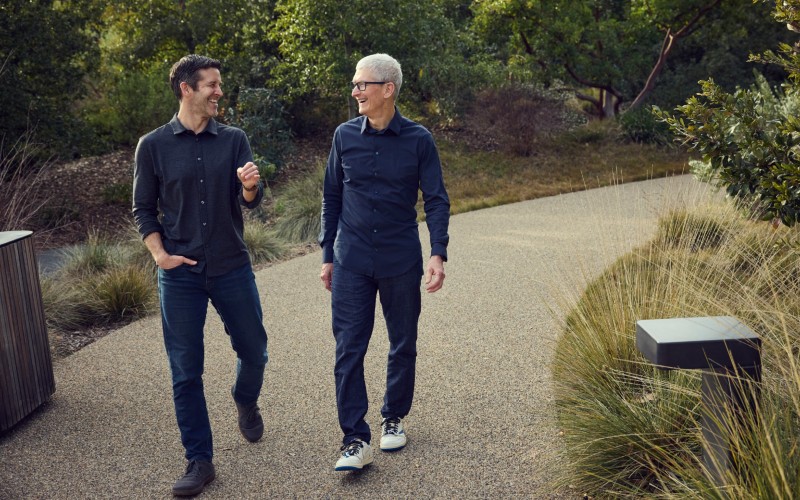
“I am profoundly grateful for this opportunity to carry Apple’s mission forward,” said Ternus. “Having spent almost my entire career at Apple, I have been lucky to have worked under Steve Jobs and to have had Tim Cook as my mentor.
“It has been a privilege to help shape the products and experiences that have changed so much of how we interact with the world and with one another. I am filled with optimism about what we can achieve in the years to come, and I am so happy to know that the most talented people on earth are here at Apple, determined to be part of something bigger than any one of us.
“I am humbled to step into this role, and I promise to lead with the values and vision that have come to define this special place for half a century.”
Cook said: “It has been the greatest privilege of my life to be the CEO of Apple and to have been trusted to lead such an extraordinary company. I love Apple with all of my being, and I am so grateful to have had the opportunity to work with a team of such ingenious, innovative, creative, and deeply caring people who have been unwavering in their dedication to enriching the lives of our customers and creating the best products and services in the world.
“John Ternus has the mind of an engineer, the soul of an innovator, and the heart to lead with integrity and with honor. He is a visionary whose contributions to Apple over 25 years are already too numerous to count, and he is without question the right person to lead Apple into the future.
“I could not be more confident in his abilities and his character, and I look forward to working closely with him on this transition and in my new role as executive chairman.”