
Microsoft’s recent global outage highlighted the dangers of being over-reliant on technology – but what if the same thing happened with AI?
Could businesses be setting themselves up for a fall because of their growing dependence on AI tools like ChatGPT, Claude and Gemini?
Concerns are growing that companies are using these tools without fully understanding what happens to their data and who ultimately controls it.
And what happens if the tech giants behind these platforms suddenly increase their charges, change their terms or switch off access altogether?
Full-service digital agency CTI Digital decided to take control of its own destiny by developing its own sovereign AI platform, called Croft.
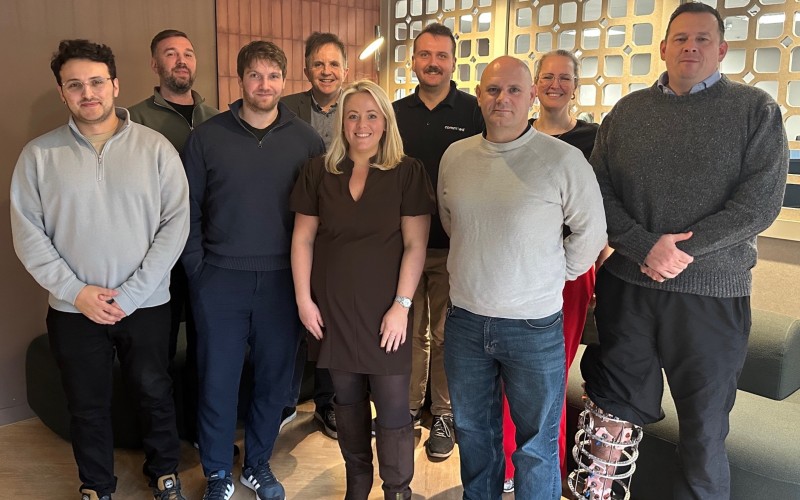
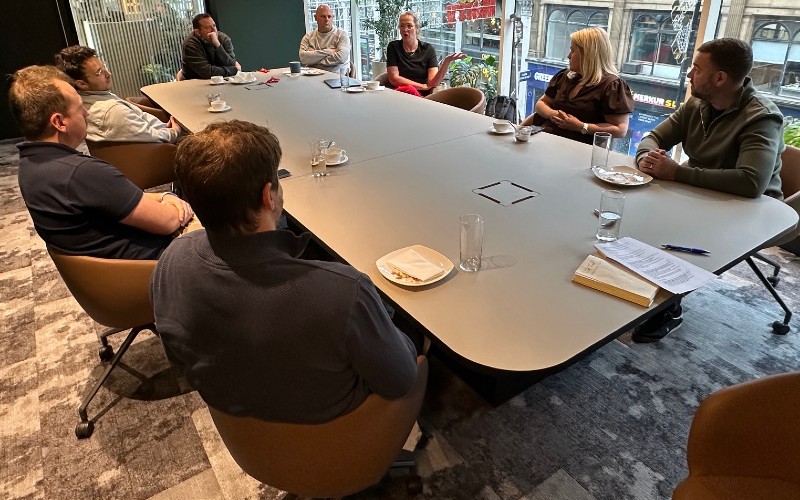
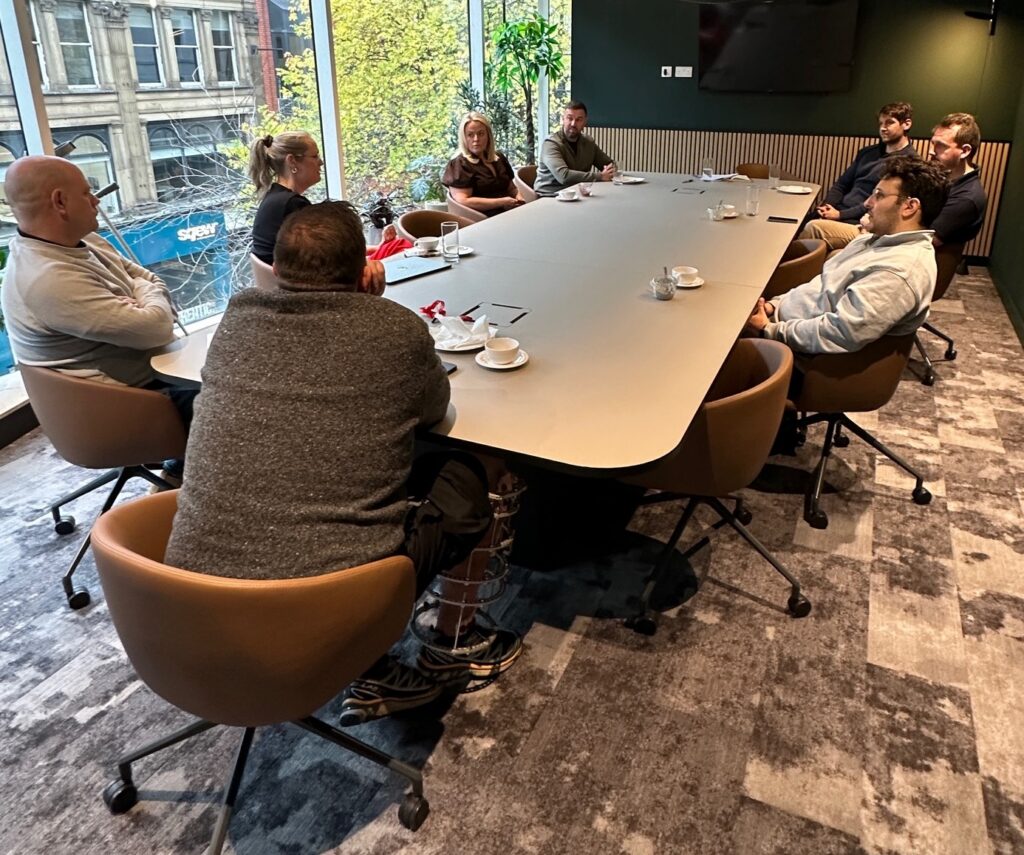
BusinessCloud joined forces with CTI Digital for our latest roundtable, ‘Sovereign AI: Taking Back Control of Your Data’, which was hosted at the Manchester office of law firm Davis Blank Furniss.
Here are eight key takeaways from the discussion.
1. Identify the business problem first
Full-service digital agency CTI Digital developed its own sovereign AI platform, Croft, initially for internal use before making it publicly available in August 2026.
Croft enables UK organisations, including charities and regulated businesses, to run large language models (LLMs) on private infrastructure while retaining control over their data, prompts and outputs.
Chris Burgess, CEO of CTI Digital, said: “The key thing for all businesses here is we’re getting into it, but we’re all at the start of the journey. No matter how far down the aisle we are, we’re all just scratching the surface.
“It’s really important that you don’t do anything in business without thinking about the business process behind it.
“Don’t start with ‘I’m going to use Claude’. Start with ‘what’s the business problem I’m trying to solve?’”
Asked about his biggest concern, he said: “Data security and having the rug pulled out from underneath us as business users. Thinking about the technology and not the business processes is a concern for me. You’re setting yourselves up to fall.”
2. Don’t be over-reliant on one tech stack
Sam Bell, Growth & Innovation Director at CTI Digital, specialises in AI innovation, commercial opportunities and customer demand.
She said: “An over-reliance on one tech stack, no matter what it is, is never great from a business process perspective. Make sure you have proper continuity in place.
“Really consider the end user and make sure you have got AI policies in place. You’re really teaching people how to use the tools that you’ve got, whether that’s a sovereign solution or something enterprise frontier-level.”
3. Balance risk and reward
Mark Balduin is the founder of AI-first startup Mancunian Brands, having previously worked at Pets Purest.
He said: “Whether it’s sovereign AI or not, there’s a small window of opportunity over the next year or two years to really take advantage of AI before you overthink it.
“You can think about having the best rules in place, but in the end you need the revenue to grow your business.
“There’s a risk-and-reward ratio, but I think the window will be closing quickly, with AI becoming more expensive and models being closed off.”
4. Data trust and confidentiality are key
Rosie Cooper is a Director of Cloud Accounting at PM+M, helping businesses embrace technology, automation and AI.
She said: “A lot of businesses are using a lot of AI tools collectively and not actually thinking of AI as a strategic business asset. For us, that’s what we’ve got to think about now.
“As a professional services firm, trust and confidentiality are at the forefront of everything that we do, so we do need to know where our data is going, is it secure, and have we got continuity plans if we use these tools moving forward? It’s a very difficult thing to keep on top of.”
5. Consider the legal risks
Seán Hackett is a partner and Head of Dispute Resolution at Davis Blank Furniss, having been consistently ranked in Legal 500 and Chambers and Partners for more than a decade.
Davis Blank Furniss has published guidance on AI confidentiality and legal privilege, highlighting the legal risks associated with AI adoption.
He said: “My takeaway from today is data seems to be the most important thing for sovereign AI and also people’s over-reliance on a single enterprise model.
“We’re very clear that nothing that we provide to our clients should be put through any model where they train on the data because of the risks of waiving confidentiality and privilege.
“Part of the thing that we as lawyers do is look out for early pre-litigation correspondence to identify if AI is being used, and we will request and even get a court order to allow us to check the opponent’s AI input and output.”
6. Know where your data is going
Will Gardner-Brennand is the commercial director of committed, an IT support provider with significant growth ambitions.
He said: “People need to understand where their data is and what they’re using it for, so they understand the risks and can benefit from it as well.
“If they don’t know where it’s going and something happens, then they may end up in a problem.”
7. What if Anthropic goes down?
Jordan Appleson is the former CEO of Leeds-based Hark, which was acquired by global smart energy company SolarEdge Technologies in 2023.
He said: “Whether it’s sovereign AI or using AI across the board, there’s a huge business opportunity from SMEs all the way up to basically help the transition. I think it’s completely untapped still.
“Whoever is going to support businesses in basically taking AI all the way through the stack ideally should, one, help customers understand what the processes are they’re trying to achieve, but also, two, support them in making sure their data is safe and secure, whether that’s on a sovereign AI platform or on a frontier model platform.
“An over-reliance on one provider is going to be critical. As we saw with the Microsoft outage, nobody can do their work without Microsoft. But when Anthropic goes down, it’s like a snow day for people who are fully AI-native.
“If you lose Anthropic for even a few hours, your company will grind to a halt. You need to have a multi-vendor strategy.”
8. AI is a ‘game-changer’ – but not without risk
Steven Jagger is the founder of Maxwell Bond, a technology recruitment specialist active in the AI sector.
He said: “You have to be decisive with AI at the moment. There are real opportunities to grow your business, expand, it can be a game-changer.
“There are still opportunities to scale, but the biggest thing you have to put side-by-side with that is the risk and governance.
“Like everyone has touched on already, if you’re not sure where your data is going, if one of the AI tools goes down, your business can be messed up.”