
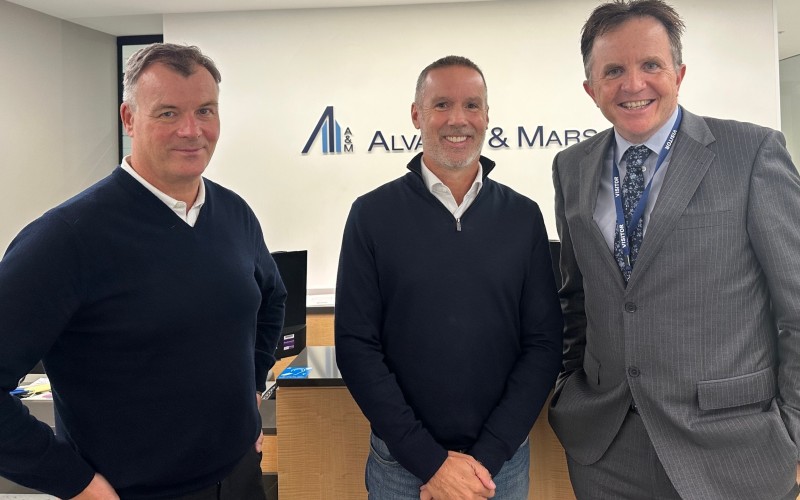

Steve Bell has experienced business from just about every angle – as a founder, the CEO of a listed company and now the boss of a private equity-backed business.
Earlier this year, he became CEO of digital consultancy Kerv, which is backed by Bridgepoint.
However, it’s his experience of co-founding global marketing agency Iris Worldwide in 1999 that provided some of his biggest business lessons.
Speaking on the latest episode of Alvarez & Marsal’s Dealmaker Uncut podcast, Bell revealed how a £5m interest-free loan from Bank of Scotland proved to be a double-edged sword.
“It was one of those things that we thought we would do because it would be a bit of fun,” he recalled.
“We didn’t think we would have a chance of winning this award. Iris was called up on stage as the winner of £5m interest-free.
“That £5m quickly turned into £10m interest-free. That helped but it also allowed us to make mistakes we wouldn’t have made if we hadn’t had that £5m because suddenly you’ve got money and you feel you’ve got to spend it.”
The funding helped Iris expand internationally before the Bank of Scotland wanted their money back.
Dangers of ‘free money’
Bell had grown up with business and sport in his blood and his father Alan played football for Arsenal for six years in the 1960s.
Steve was also a talented footballer and an international gymnast before co-founding Iris in his mid-20s.
His ambition was to build a ‘below-the-line’ marketing agency, but Iris quickly grew into a global business.
Under his leadership, the company expanded to more than 1,000 employees across 14 markets, completing seven acquisitions along the way.
In 2011, US media giant Meredith Corporation invested in Iris, although the management team subsequently bought out its stake.
By the time Samsung-owned Cheil Worldwide invested in the business, Iris had grown to around £100m in annual revenue.
Cheil ultimately acquired Iris, but Bell admitted the five-year earn-out that followed was one of the biggest lessons of his career.

“A five-year earn-out is not something that I would ever, and have ever, recommended to somebody else,” he said.
“You’re constantly making shorter-term decisions based on EBITDA performance rather than mid to long-term strategic calls that will make the business more valuable moving forward.
“Five years is a ridiculous amount of time to be feeling you’re in an earn-out process.”
Although Bell had no criticism of Samsung, he said the length of the earn-out created issues between short-term financial performance and longer-term strategic decisions.
The earn-out finally ended in December 2019 – just months before Covid struck.
Bell subsequently became CEO of listed gaming business Everplay Group, despite having no background in video game development.
During his tenure, he helped grow both the company’s share price and EBITDA by around 40 per cent.
However, running a listed business brought a different set of pressures, including the scrutiny of public markets and the expectations of shareholders.
After leaving Everplay, Bell undertook board advisory work before taking on his latest challenge as CEO of Kerv.
The digital consultancy was originally backed by LDC before Bridgepoint invested in 2024.
Kerv had already embarked on a buy-and-build strategy before Bell joined, giving him another opportunity to apply the lessons learned from building and acquiring businesses.
He also describes himself as an ‘AI optimist’ and believes artificial intelligence will have a significant impact on the future of digital consultancies.
You can listen to Alvarez & Marsal’s latest episode of The Dealmaker Uncut podcast here