
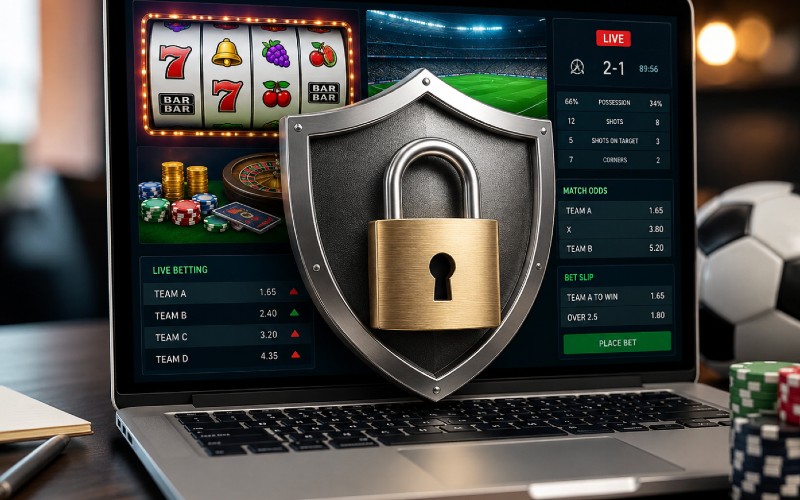
A mobile app can look polished and still fail the first serious security question: what happens when an account, payment detail or sign-in method is exposed? In 2026, that question matters across gaming, finance, media and real-money services. A product such as 1xbet khmer sportsbook may sit inside the wider online gaming category, but the security test is the same as for any account-based service: protect stored data, secure login, limit access and make recovery possible when something goes wrong.
Security Starts Before the First Login
The OWASP Mobile Application Security Verification Standard is described as an industry standard for mobile app security. Its coverage is useful because it does not treat security as one switch. It separates the problem into areas such as secure storage, authentication and authorization, cryptography, network communication, platform interaction and privacy.
That matters for online gaming services because the user journey starts before a match is followed or a game is opened. Account creation, session handling and payment screens all create places where sensitive information may pass through the app.
The most basic question is not whether an app loads quickly. It is whether the app handles sensitive data with care when it is stored, sent or requested. A saved session can be convenient. A poorly protected saved session can become the weak point.
Passkeys Show Where Login Is Moving
Passwords are still present across many services, but the sign-in conversation has shifted. The State of Passkeys 2026 report says 5 billion passkeys are active globally. It also states that 90% of surveyed consumers are familiar with passkeys, while 75% have enabled them on at least some accounts. The research covered 11,000 consumers.
That does not mean every gaming or betting service already supports passkeys. It does show that users are becoming more familiar with sign-in methods that reduce dependence on reusable passwords.
The security point is direct. Online services that handle account access need to think about phishing-resistant authentication, device changes and safe recovery. A strong login method loses value if account recovery is weak. A good recovery flow loses value if access cannot be revoked after a device is lost.
NIST’s digital identity guidance gives that lifecycle angle extra weight. Authentication is not only about the first sign-in. It also includes what happens when an authenticator is replaced, lost or compromised.
Permissions Need a Clear Reason
A mobile app asking for access is not automatically a problem. The question is why the access is needed. Android’s permission model separates sensitive access from ordinary app functions, and dangerous permissions can let an app reach restricted data or perform restricted actions.
That makes permission prompts a security and trust moment. If a gaming app asks for location, notifications, storage or camera access, the reason should be clear from the feature being used. A prompt that appears too early can feel disconnected from the action. A prompt that asks for more than the current function needs can raise doubts.
Useful permission handling is usually practical:
- ask only when the feature needs access;
- explain the purpose in plain language;
- keep core account functions available when non-essential access is declined;
- avoid broad access when a narrower option works;
- let the user review permissions later.
This is where mobile security becomes visible. A user may never read a security standard, but they notice when an app asks for a sensitive permission without context.
Betting Services Add Account Pressure
The security considerations are especially relevant for real-money gaming services because they combine account login, personal details and payment activity in one place. That makes secure authentication and clear account controls more important than they would be in a casual game with no financial layer.
An option such as 1xbet promo code belongs near account or promotional terms, not inside the security promise itself. Security should be judged separately: how login is protected, how sessions are managed, how payment information is handled and whether access can be recovered safely.
For users, the practical reading is simple. A bonus condition is not a security feature. A sign-in method is not a responsible-use tool. Each part of the service should be understood on its own terms.
The Security Checklist Is Broader Than Passwords
The next mobile security question is not only whether an app has a stronger login button. It is whether the whole account path holds together. Storage, network communication, permissions and recovery all meet in the same service.
| Security area | What it means in practice |
|---|---|
| Secure storage | Sensitive data should not sit exposed on the device |
| Authentication | Sign-in should reduce easy account takeover risks |
| Network communication | Data sent between app and server should be protected |
| Permissions | Sensitive access should match the feature being used |
| Recovery and revocation | Lost devices or compromised authenticators need safe handling |
The table shows why one feature cannot carry the whole security story. A strong sign-in method helps, but it does not fix careless storage. Clear permission prompts help, but they do not replace secure network communication.
The Next Standard Is Proof, Not Promises
Mobile app security in 2026 is becoming easier to discuss because the checks are more concrete. Does the app protect stored information? Does it secure communication? Does it ask for permissions only when needed? Can access be revoked after loss or theft?
Those questions apply across online gaming services and beyond. They also keep the discussion grounded. Security should not be treated as a slogan attached to a download page. It should be visible in the account flow, permission timing and recovery process.
For online betting and gaming, the strongest security story is not dramatic. It is quiet and consistent: fewer unnecessary permissions, safer sign-in, protected data flows and recovery that still works when the user needs it most.