
An assistant head is building a coaching platform which helps teachers to gain insight into their lessons without feeling they are being surveilled.
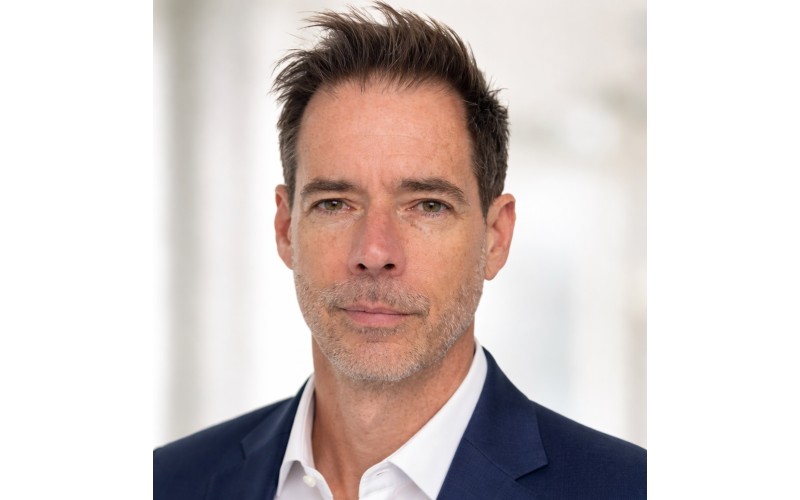
Adam Sturdee is a history teacher by training and has spent his career in secondary education. He now serves as an assistant headteacher at a Catholic secondary school in Wiltshire, where he leads teaching, learning and coaching across the school.
Last year he founded STAR21 with engineer Enzo Zadrima and operations lead Tim Chapman. Sturdee guides the startup on education strategy, product direction and practitioner research.
He says their AI-powered Starlight platform – which records lesson audio – automates feedback that is specific and actionable without surveilling staff.
“We set out to solve a structural problem in teacher development: high-quality feedback is the engine of professional growth, but in most schools it remains too infrequent because observation and coaching are difficult to scale,” he tells BusinessCloud.
“I have been the leader trying to give every teacher meaningful developmental feedback with limited time and capacity; and I have been the teacher receiving feedback only occasionally.
“STAR21 exists to make feedback that is specific, timely, actionable and regular available at scale.”
Teachers using the platform receive an automated transcript and a structured, private coaching report within minutes. This identifies strengths evidenced from the transcript; a small number of high-leverage next steps; and prompts for reflection.
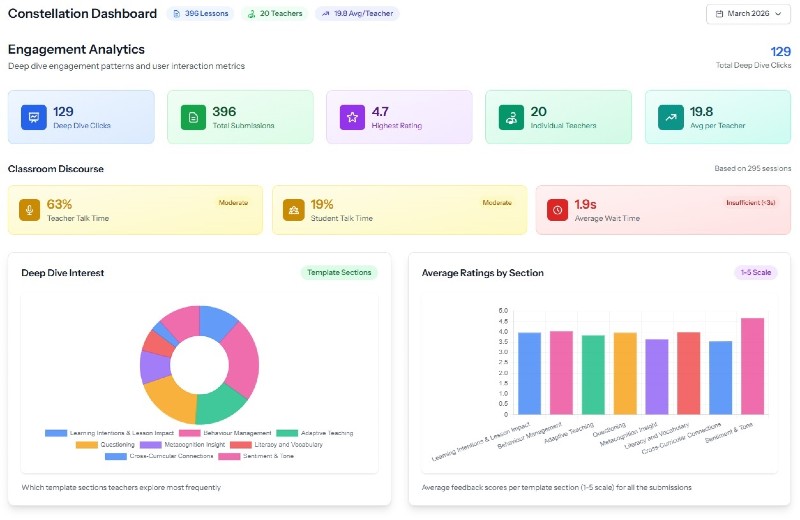
“Leaders see anonymised, aggregated trends to shape professional learning – never named individual reports,” Sturdee says. “Our guiding line is: coaching, not compliance; insight, not surveillance; growth, not grading.
“The product is designed to scale professional development across schools and multi-academy trusts without increasing formal observation workload.”
Asked for an example of how the tech works, he answers: “A teacher records the full lesson using any digital audio recorder or their own device, then uploads the audio securely. Starlight converts it into a transcript and analyses the classroom dialogue against the teacher’s chosen focus and the school’s professional learning priorities.
“Whole-lesson audio matters because it shows how explanations, questioning, routines and pupil participation develop across an hour, rather than relying on a short and potentially unrepresentative snapshot.”
A Catholic secondary school in Cardiff moved from a small pilot to whole-school rollout in June this year. An international school in Shanghai uses its bilingual capability, where a single recording is transcribed and analysed across two languages. At Sturdee’s own school, Starlight supports a regular teacher-led coaching rhythm alongside human coaching.
The platform is now used by more than 500 teachers across more than 30 schools internationally, spanning the UK, Switzerland and China, with distribution partnerships in Hong Kong and West Africa.
Co-founder Sturdee says Starlight does not train its own AI models, and school data is never used to train foundation AI models.
International outlook
Sturdee, who hails from South Africa, has an English father and spent a great deal of time in this country before moving here permanently in 2003 following his university studies.
“The UK system is the one I know best and the only one I have taught in, but building Starlight has given me a close look at international education systems, and I think we can learn a great deal from them,” he reflects.
“What stands out is their enthusiasm for technology: they are not risk-averse, and they do not let bureaucracy or fear stand in the way of good decision-making. Optimism about AI in Asia is markedly higher than in the West, and I find that genuinely encouraging; it bodes well for those systems, and it is a mindset we could borrow to leverage technology in improving outcomes here.”
GCSE results day: School friends raise £6m ‘to give every kid an AI tutor’
The most effective driver of Starlight’s growth this year has not been marketing spend, but rather product development – a focus they intend to maintain alongside shows and exhibitions.
“Our working ambition is to grow from more than 500 teachers to at least 3,000 teachers by July 2027. We are deliberately more interested in active use, renewal and demonstrated value than in a headline school count,” says Sturdee.
He adds: “The wider ambition is twofold. At home, we want transcript-based reflection to become a normal part of professional learning: as familiar as lesson observation, but more frequent, private and owned by the teacher.
“Globally, we believe this technology has exceptional potential for emerging markets and the global South, and we want to play our part as a partner in building a more equitable world where every child has access to great teaching.”
Complementary roles
So how does he juggle developing the business alongside his role as an assistant headteacher?
“The two roles genuinely strengthen each other. My work in school gives Starlight a constant reality check: I see what teachers will trust, what leaders can implement and what genuinely reduces workload rather than adding to it,” he answers.
“That practitioner feedback loop shapes both the features we build and the ones we choose not to build. Practically, it depends on a clear division of labour between the three founders and disciplined, protected time outside my school responsibilities.
“Being a serving school leader is not something I work around; it is a large part of why the product remains grounded and credible.”
Away from the day jobs, the co-founder sails his 1972 Contessa 32 – named Ayala – off the South Coast.
“The Contessa has a formidable reputation at sea, and much of what I think about trust comes from her: whenever I put to sea, I trust her completely. She has looked after us, so I will keep looking after her,” he says. “It is a useful counterbalance to building an AI company, because the wind and the tide remain completely unimpressed by software.
“That said, I do see genuinely interesting applications for AI as another member of the crew for safety at sea, particularly with global connectivity like Starlink, and it is something I would love to see developed.
“The dream is still to push off for distant shores one day, perhaps even a circumnavigation.”
EdTech 50 – UK’s most innovative education tech creators for 2026