
There can be fewer places more lively on a Thursday evening than London’s Soho district.
As I head to Denmark Street to meet Gotobeat founder Max Busin for Founder Friday, people fill the pavements – with a thousand conversations forming the lyrics to the backdrop of the music spilling out of dozens of bars and pubs.
Denmark Street itself has a storied history at the centre of the UK’s music scene, having played host to the Sex Pistols and Rolling Stones early in their careers. A young David Bowie also spent time there, performing under his birth name Davy Jones with The Lower Third.
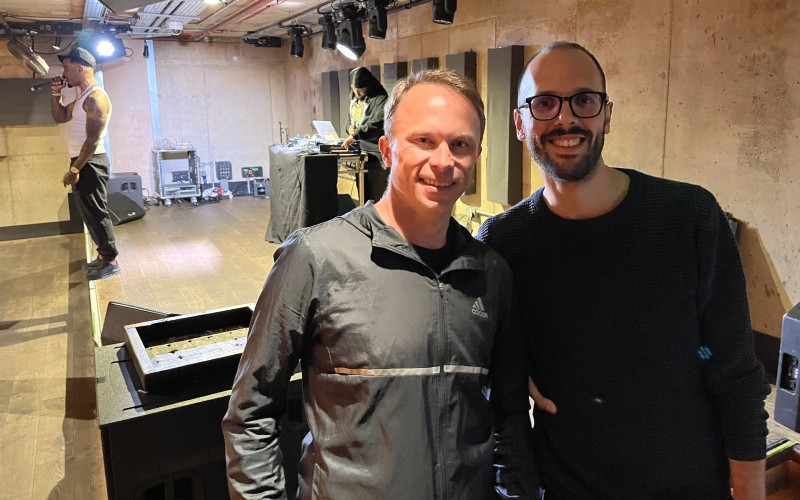
And The Lower Third is my destination – or rather, a bar and music venue named after the 1960s rhythm and blues band. It is a fitting place to meet Busin, who is building a tech-enabled music promotion business serving grassroots venues and artists.
First ventures
Gotobeat is the Italian’s third business. “My first was Blasting News, an online magazine and media group which reported on sports, entertainment and gossip,” he tells me over a pint of pale ale. “We put together a content factory, using freelance writers, which grew to 100 million unique readers every month.
“We went from the three of us to almost 100 employees over the course of five years. That’s when I first moved to London; I then moved to New York when we set up operations there.”
However a change to the Facebook algorithms in 2016 caused it to lose 70% of its traffic. “We were very Facebook reliant. The lesson I learned was not to be reliant on only one source of revenue,” he reflects.
They restructured and closed the New York office then, in 2018, sold to a bigger media group in Italy.
“It wasn’t the exit that we were hoping for – one that would have allowed us to retire – but it was still an incredible experience: running a business of that size in New York at the age of 24, 25. I would have never been able to learn that in business school.”
He returned to his home town of Venice for a holiday. “But I ended up starting another business, of course!” he laughs. “I began organising kayaking tours of the canals with a friend of mine who was a former kayak champion.”
They then opened three restaurants to complement these tourist experiences. He remains a small partner in that business, although not operationally.
After COVID, Max – who once toured Italy and Germany as a drummer in a metal band – returned to London to found Gotobeat.
Genesis of Gotobeat
The UK capital is the obvious place to start such a business, he says, given its position at the centre of the music world.
“I’ve always been familiar with selling tickets and organising events – and the complexity within that – and it was clear to me that there was a need for a technological approach in this industry… things were really inefficient and disorganised,” he explains.
“Demand for live shows has never been greater. But the grassroots and mid-sized venues have struggled to create a system to monetise this properly. The stats show that 40% of the calendar for these venues is empty. But there are artists with audiences that can fill them every single day.
“What the industry has failed to do is create a system that can put the right artist in the right venue, all the time.”
While a behemoth such as Ticketmaster parent company Live Nation can fill arenas with superstar artists, up-and-coming acts are struggling to monetise their fledgling careers. This is where Gotobeat comes in.
The tech
Max built the first version of the tech himself, but the platform and its AI capabilities are now very much the responsibility of CTO Alfredo Belfiori.
“I met Alfredo in a co-working space,” he recalls. “He had sold two previous businesses and was coding a fishing website for his father, who is a fisherman in Sardinia. He was essentially just wasting time!
“There was not an intention to bring him into the business at first, but we got to know one another; he learned about the business; he came to a few gigs. Then it seemed a natural progression as we needed to strengthen the technical side.
“I found it a very good way of starting a relationship – very natural, very organic… he had a long time to see the business from the inside without being involved in it.”
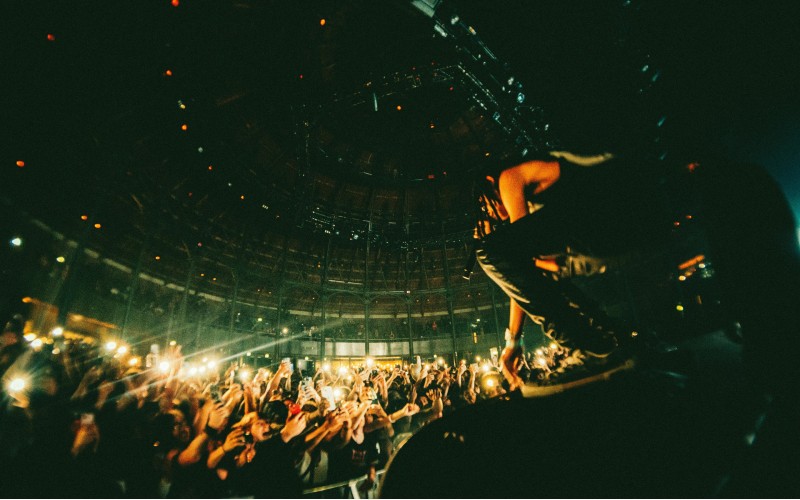
US artists Che performs at The Roundhouse in London
The technology Alfredo has built is now integral to the fast-growing company, which Max says signs up artists for events via two avenues.
“The first is predicting the demand for an artist and reaching out to them,” he says. “We have the ticket sales from our website, then we scrape data from the web – on social media, Spotify, magazines, publications, mentions on Reddit, past events.”
Every day, the system will flag up 10-20 artists Gotobeat might consider for a show due to audience demand. Its team of promoters then simply ‘swipe yes’, Max says, and they will be automatically approached.
“The approach will say ‘Hey, look at the data. We think you can do a show in London; a UK tour; or a European tour. These are our conditions. Do you want to do it?’
“A successful show is one that reaches 70% capacity, and we now do that 90% of the time.”
The other avenue is artists contacting Gotobeat. “We do the same thing: we analyse the demand for them and make a decision from there. We also work with all the major agencies and agents.”
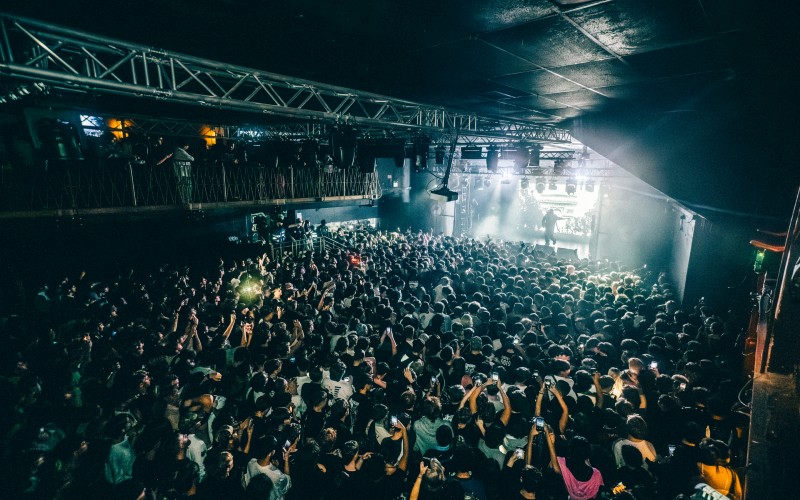
While Live Nation employs 17,000 people to deliver 53,000 shows a year – roughly three per person – Gotobeat delivers more than 1,000 with just 23 full-time staff, plus around 100 freelancers who mainly act as ‘promoter representatives’ at gigs.
“It’s a 10-20x productivity gain,” says Max. It does this by automating most of its operations: “We leverage AI and agents to streamline every single step of the process: after the outreach, there is finding suitable available venues; creating marketing assets; running the marketing campaigns.
“Our technology takes care of all of those boring, ugly tasks that a promoter usually does by picking up the phone or sending emails. It means our team can really focus on helping the artists.”
Performing at The Lower Third tonight is West London rapper W1zzy, who has sold out the venue with the help of Gotobeat.
Founder role
He continues: “It’s also important for for me, as a founder, to talk to the artists, to talk to the managers – you want to be close to your customers. Our job is to serve artists and venues.
“If we have an artist that is growing particularly well, I might meet them myself to help plan their next tour – it shows them that we really do care about them.”
Gotobeat now operates in 16 European countries, with 50% of its business now on the continent. It has moved into larger arenas – it recently sold out Wembley Arena – and has plans to move into the festival market in 2027.
What’s Your Dream? Helpbnk founder’s perfect pitch to Branson
The US is also on the hoizon. “We’ll go to New York to start with – I spent three years there with my media business, so I have a network there, but it is also where the market is pushing us. We have a lot of artists from New York that we bring here for shows who are asking us to help them over there too.”
The simple life
So how does Max ‘decompress’ away from the business?
“I now have a little kid and I love spending time playing with her,” he smiles. “And I’m a very simple Italian – I like having dinner and going to the pub with mates.
“But I’m a big believer that there’s no such thing as a balanced life. If you want to achieve something great, you need to really have an unbalanced life… I live the business. When I wake up, I think about it immediately.
“It’s not necessarily because I’m a workaholic, but just because I do what I love.”