
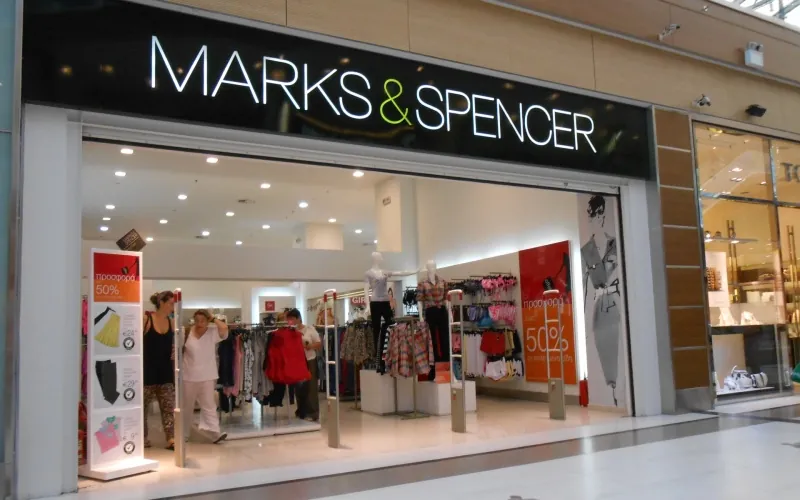
Marks & Spencer suffered a sharp fall in its annual profit following last year’s high-profile cyber attack.
The retailer was forced to halt all orders through its website and apps following last April’s hack.
According to the company’s annual results, profits were hit by £131.3m in costs related to the cyber incident.
The retailer said pretax profit dropped 29 per cent to £364.6m in the 52 weeks to March 28, from £511.8m the year prior.
Adjusted pretax profit fell 24 per cent to £671.4m from £881.1m, but sales grew 25 per cent to £17.37bn from £13.91bn.
Share price rise
M&S’s share price rose by just over 5 per cent on the back of Wednesday’s results, which were ahead of forecasts.
M&S said: “Performance in 2025/26 was a year of two halves: significant operational impact from the cyber incident during the first, followed by a return to sales and profit growth in the second.
“Despite the disruption, M&S made further progress on its transformation, enabled by a strong balance sheet.”
Chief executive Stuart Machin said it was an ‘extraordinary year’.
He said: “A resilient balance sheet, supported by the hard work done on our cash position in recent years, allowed us to absorb the cost of disruption without compromising our financial health.”
Warning
Will Slater, executive director at global insurance brokerage Gallagher, said: “These results show how quickly a cyber attack can unfortunately become a commercial issue. For a retailer, it’s not just the cost of fixing systems, it is the sales lost while customers cannot shop, the pressure on operations, and ultimately, the confidence that can be difficult to rebuild afterwards.
“Across large UK businesses, our research found that lost trading was the single biggest cyber cost last year, accounting for £5.4bn of losses. However, if a business faces legal action too, the final bill from an attack can keep growing long after trading resumes.
“The legal fallout from a cyber attack can be just as damaging as the disruption itself. Many businesses assume they are protected, yet only six in 10 large UK firms are insured for third-party legal claims in these circumstances, so they should check their cover.”