
On Thursday the 16th annual everywoman in Technology Awards will be held in London.
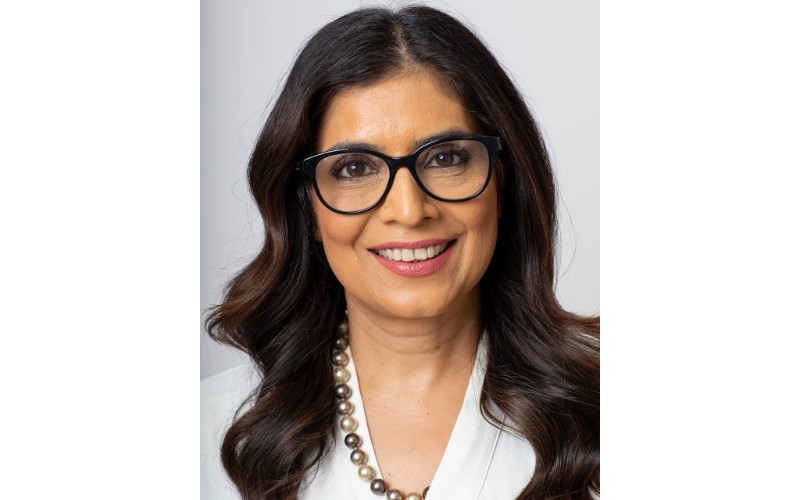
Pooja Bagga, group CIO at Guardian Media Group, is a finalist in the CTO/CIO of the Year category, sponsored by Accenture.
Pooja is a senior technology leader and also an experienced non-executive director with over two decades of experience delivering enterprise-scale change in complex, regulated organisations.
At the Guardian she sets the strategic direction for technology, data and AI, ensuring investment aligns with organisational purpose and commercial outcomes. She maintains a strong focus on responsible AI implementation and the resulting productivity and value generation across the organisation.
Her executive career includes senior leadership roles at British Airways, Royal Mail, Transport for London and IAG, where she led complex, multi-year transformation programmes while strengthening cyber resilience.
She is a committed advocate for Diversity, Equity and Inclusion, actively mentoring future leaders and championing gender equity in STEM.
We caught up with Pooja ahead of the awards, which are sponsored this year by Salesforce and for which BusinessCloud is a proud media partner.
Q: You have an impressive background in digital transformation in the transport and logistics sectors. How did you find that experience?
A: Transport and logistics is an incredibly demanding environment for technology. You’re dealing with large-scale operations, real-time systems, global networks and very little tolerance for failure. That creates a strong discipline around reliability, data and operational excellence.
It taught me a lot about resilience and pragmatism. Since systems underpin critical infrastructure in these sectors, transformation has to be thoughtful, phased and very outcome-focused.
What I found most rewarding was using technology to transform complex organisations at scale. Whether it’s modernising platforms, improving data visibility or enabling better customer experiences, the work essentially connects physical operations with digital capabilities. A good example of this is introducing events-driven tracking at Royal Mail so customers know the two-hour time window when their parcel will be delivered, or the introduction of free parcel collection services from your doorstep.
When I look back, these experiences gave me a strong foundation in running large, mission-critical platforms while driving long-term digital change, which are skills that translate well across industries.
Q: Why did you move into media with The Guardian?
A: One of the things that really attracted me to The Guardian was its purpose and impact. The Guardian is also unique in that it has a very strong global digital presence and a reader-funded model, which means technology plays a central role in how we reach audiences and support independent journalism.
Media today is right at the heart of where technology, society and trust converge. The way journalism is produced and distributed is deeply shaped by digital platforms, data and audience engagement. For a technologist, it’s an incredibly meaningful challenge at an incredibly interesting point in time.
After working in sectors where technology was transforming operations, this felt like an opportunity to apply my experience in a place where the outcomes go beyond business transformation. That combination of purpose, impact, global reach and innovation made it a very compelling move for me.
Q: How are you approaching the adoption of AI as it develops?
A: The Guardian has always been a fast adopter of emerging technologies that support our mission, our journalism and our staff. In June 2023 we published three broad principles setting out how we will and won’t use GenAI tools. These have served as a blueprint for how we consider adoption of AI.
Careful experimentation with critical evaluation plays a large role. This extends from our editorial teams testing how AI could be used to interrogate large data sets, to our commercial and support teams who are exploring how partnerships and tools can enable us to deliver against our long-term strategic priorities. We are also investing in training to help everyone understand the technology and know how to use it safely and responsibly, exercising active oversight and control.
Governance is enshrined in our editorial code and policies across the organisation. That way every Guardian staff member is clear on their individual responsibility for the potential implications of using GenAI and when to disclose its use.
Q: How have boardroom attitudes to cyber and AI (and tech in general) evolved in recent years – in terms of expertise in, understanding of and priority given to these areas?
A: The rapid rise of GenAI, increasing cybersecurity threat landscape and need for digital transformation more broadly mean we are in the midst of a huge period of digital disruption.
This shift has propelled technology from being seen as a back office function to a fundamental driver of strategy. Increasingly this means tech is not just a routine update but part of a broad strategic dialogue about technology.
Boards were already engaged but a swathe of recent high-profile cyber attacks have only served to underline the importance of keeping tech at the top of the agenda.
Q: ‘You can’t be what you can’t see’ is a phrase we’ve heard many times over the years. Was there a female leader you looked to who inspired you to strive for the top?
A: The phrase really resonates with me. Early in my career there simply weren’t many women in senior technology roles, particularly in industries like transport and logistics, which historically have been quite male-dominated.
Because of that, I didn’t necessarily have a single visible female CIO or technology leader to look up to. Instead, I was inspired by a number of leaders, both male and female, who demonstrated strong leadership, resilience and the ability to drive change in complex organisations along with mentoring, coaching and sponsorship along the way.
What did make a difference were the women I encountered along the way who showed that it is possible to build a career in technology while staying authentic to who you are. Seeing women lead large programmes, influence strategy and operate confidently in those environments was incredibly powerful.
It’s one of the reasons I care a lot about visibility and representation today. If people can see someone who looks like them in leadership roles, it helps them believe that those paths are open to them too. As leaders, we have a responsibility not just to succeed ourselves but to create environments where the next generation of diverse talent can see themselves progressing and thriving and that’s what I endeavour to create in every position I take on.
Q: How do you advocate for DE&I on a practical level?
A: For me, DE&I isn’t a side initiative. It is part of building stronger, more innovative teams. When you bring together people with different backgrounds and experiences, you make better decisions and create better outcomes.
On a practical level, it starts with recruitment. We work hard to ensure we’re reaching diverse talent pools and putting together balanced interview panels, because representation in the process really matters. Candidates should be able to see themselves reflected in the organisation.
Another important aspect is advocacy and visibility. I spend time speaking with students and early-career talent in schools and universities, particularly about careers in technology. Many young people still don’t fully understand the breadth of opportunities available in tech, and representation can make a real difference in helping them see that those careers are open to them.
Internally, it’s about creating environments where people feel they belong and can progress. That means supporting development, encouraging different perspectives, and making sure leadership teams are actively thinking about diversity.
Q: Why is mentoring important – and what is your personal experience of this?
A: Mentoring is incredibly important because no one progresses through their career entirely on their own. Having someone who can provide perspective, challenge your thinking, and share their experience can make a huge difference, particularly as you move into more senior roles where the decisions and responsibilities become more complex.
Personally, mentoring has played a significant role in my own development. One approach that has worked very well for me is trying to maintain two mentors at any given time. One tends to be someone whose leadership style or career path is quite similar to mine, so they can relate closely to the challenges I’m facing and offer very practical advice.
The other mentor is intentionally someone very different in personality and perspective. That contrast has been incredibly valuable, particularly when it comes to things like senior engagement and navigating complex organisational dynamics. They often challenge my assumptions and encourage me to approach situations in ways I might not have considered. That combination of perspectives has helped me grow a lot as a leader.
I mentor others where I can. As leaders, we have a responsibility to help the next generation of talent navigate their careers and build the confidence to step into leadership roles themselves.
Q: How does it feel to be a finalist at the everywoman in Technology Awards?
A: The technology sector is incredibly dynamic and at the cutting edge of innovation. However, despite the progress made in many areas, we still have a long way to go before we achieve gender parity. This is precisely why initiatives like these awards are so vital, shining a spotlight on the incredible contribution of women in tech at all levels.
I am genuinely delighted and deeply humbled to be a finalist and look forward to celebrating the achievements of all finalists at the awards.