
The business ecosystem has backed the announcement of a Founders’ Relief initiative in today’s Budget.
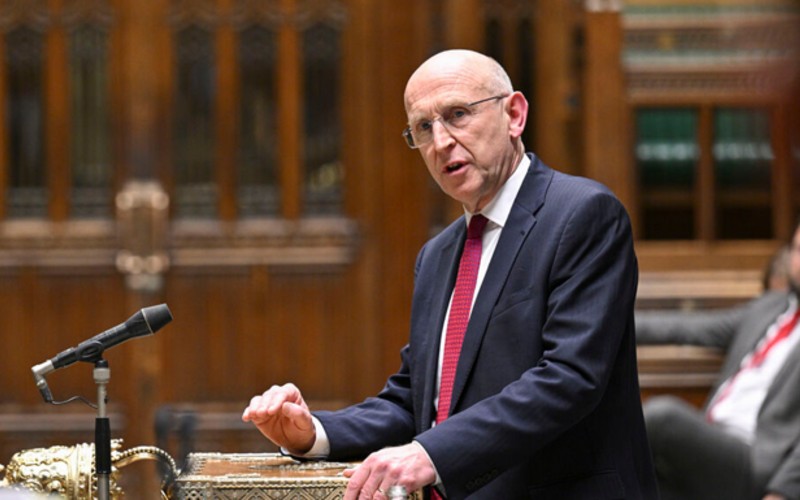
John Healey delivered his first fiscal plan as Chancellor alongside Prime Minister Andy Burnham and the capital gains tax relief stole headlines among businesses and those who support them.
The relief will apply a 10% rate of CGT to qualifying disposals of shares, up to a lifetime limit of £10 million of gains per individual.
The Government said this will incentivise those whose records, creativity and resilience in building successful businesses mean they have the potential to deliver even more UK jobs, growth and wider economic benefits in future.
It has launched a consultation seeking views on how the proposed individual, company and growth and innovation conditions will work for this in practice.
Eva Barboni, executive director of Enterprise Britain – an industry group representing more than 2,000 founders, entrepreneurs and investors – described the Budget as a “shot of adrenaline for Britain’s entrepreneurs”.
“Founders’ Relief will help keep our top entrepreneurs in Britain. Expansions to EMI mean our fastest-growing businesses can attract and retain the best talent by giving them a share in their success,”
“And reforms to non-compete clauses will get talent moving more quickly between roles, boosting innovation.
“We’ve been pushing for many of these measures for months, and it’s great to see that the government is listening. But there is still much more to do.
“Now, attention turns to Andy Burnham’s 10-year plan. If he wants to drive job creation, growth, and innovation, his plan should back the firms that have proven they can deliver.”
Richard Baker, founder and CEO of FinTech Tokenovate, welcomed the announcement but warned that the UK risks becoming an incubator for innovative businesses that ultimately scale overseas without better access to growth capital and regulatory certainty.
“The UK has established itself as a global FinTech hub, yet there is a growing risk that we become an incubator for businesses that ultimately scale elsewhere.
“As the US and other markets compete to attract financial technology companies, the UK must strengthen its funding escalator to ensure the next generation of innovators can grow, access capital and eventually list here.”
Guy Remond, co-founder of Manchester investor EHE Venture Studio, said Founders’ Relief was a “welcome token gesture”.
He added: “Having spent much of my career building and investing in businesses, I know the personal risks involved, not just giving up a salary, as the Chancellor called out.
“He didn’t mention the other sacrifices: the hellish hours usually required to build a business, often missing out on family time, and the financial risks that are often taken from savings or personally secured credit, plus so much more.
“The reinstatement of the 10 per cent capital gains tax rate on eligible gains of up to £10m recognises that risk and, importantly, gives successful entrepreneurs another reason to stay in Britain and reinvest.”
Laura Ashforth, co-founder of InsurTech 50 star Lateral, said it was “pleasing to see the Chancellor offer some support to entrepreneurs”.
Citing the Founders’ Relief fund and expansion of the EMI scheme, which aims to help startups compete for talent by giving their employees a meaningful stake in the value they help create, she said: “We desperately need more people to take on the enormous personal and financial risks required to build the businesses that will drive the UK’s future growth.
“However, you can’t build a genuinely entrepreneurial economy through investment incentives alone. You have to make ambition and risk-taking financially viable for the experienced people you’re asking to take that leap.”
Ashforth recently wrote for BusinessCloud on the reality of building a startup with a toddler and a baby.
“As a female founder with two young children, I’m interested in seeing more details about exactly what the new programme to support female business founders involves – but on principle, it sounds interesting.
“But there’s a few areas I am disappointed that were raised in this debate – the cost of childcare and the perverse incentives for ambitious people to work less, earn less and play it safe. The £100,000 childcare threshold is a particularly stark example of a system that can penalise people for earning more.
“If we want more people to take entrepreneurial risks, we need to stop making the financially rational choice the least ambitious one. You can’t build a high-risk, high-growth economy with policies that encourage people to play it safe.”
Robert Whitby-Smith, partner at investor Albion VC, also backed the Founders’ Relief announcement.
“The new Founders’ Relief gives founders a clear reason to both build and remain in Britain. As outlined in the open letter we wrote early October to the Chancellor, we would like to see this go a step further to let repeat founders who reinvest in a new UK company defer the tax until they finally cash out, so each exit funds the next company rather than ending one,” he said.
“Perhaps the most significant change is the Government’s approach to procurement. The Government is prioritising buying British, including being willing to be the first customer, which will both catalyse startups and supercharge British scaleups.”
However he added: “We are disappointed there was no reversal of the reduction in income tax relief for British individuals investing in British innovation via VCTs.
“VCTs fund the early-stage startups and science-led businesses the rest of this Budget is designed to help grow. If the Chancellor wants twice as many unicorns, as he mentioned back in September, he needs many more well-funded start-ups which this scheme produces.
“We would ask the Treasury to review the VCT tax relief and would welcome the opportunity to be part of that conversation. The time to back AI, DeepTech, world-leading British universities and innovation is now. “
Meanwhile, ‘entrepreneurs’ relief’ – officially called the business asset disposal relief – has been cut back, with the lifetime limit reduced from £1m to £500,000.
This means businesspeople will pay lower tax when they sell certain business assets or shares.
Business rates
The Chancellor said that the threshold at which retail, hospitality and leisure businesses pay rates on their commercial properties has been increased from £12,000 to £18,000.
Healey said that in practice, half of all shops, restaurants and gyms will pay no business rates at all.
“Increasing small business rate relief is something that is long overdue,” said Dr Anand Verma, founder & CEO of ExpectAI, a platform used by SMEs.
However Nick Richardson, head of funding at business finance platform Capitalise, said the rates relief for high street businesses will be eroded by rising wage bills. The National Minimum Wage and National Living Wage will both rise by 3.9% from April, including for workers aged 18 to 20.
Retail, hospitality and leisure firms face a “fine line” to stay viable as they head into Christmas and the January cash flow crunch, said Richardson.
“Raising the small business rates relief threshold is welcome news for retail, hospitality and leisure businesses. For the 70,000 firms that will no longer pay business rates, it takes some pressure off as they head into the Christmas period and prepare for the cash flow crunch that typically hits in January.
“But much of that saving will be cancelled out by rising wage costs. These sectors employ large numbers of staff on or near the minimum wage, so a 3.9% increase lands hard. With inflation where it is, higher pay is absolutely necessary. But the two measures side by side show what a fine line these businesses are walking just to stay viable.
“For many owners, including the 200,000 businesses signed up to Capitalise, the next few months will come down to managing cash flow carefully. Planning ahead for the January dip and knowing what finance options are available before they are urgently needed could make all the difference.”
The Government also pledged that 100% of business rates will be retained locally by the end of the decade.
From next year, 20% of business rate revenue will go to regional mayors, while from 2028, a portion of income tax receipts will go to them too.
AI & data centres
Healey announced £600m of investment in AI projects, including an extra £120m for the UK’s AI Security Institute and £100m for a national AI Biosecurity Lab.
However Dr Verma responded: “A nation that leads on AI security should also lead on putting AI to work. There was nothing today rewarding the use of AI in small businesses to run operations.
“AI can give a 10-person team the reach of a firm 10 times its size. That’s how SMEs compete, grow and create jobs. The Budget protects the technology, not its use.”
Remond said: “Britain wants to lead in AI – but this Budget won’t get us there.”
Meanwhile a ‘British data centre covenant’ will set out the conditions for building the controversial power-hungry facilities which are needed to serve our growing need for compute power.
Remond continued: “There was some welcome news in the Budget, particularly the government’s continued recognition that AI will play a major role in Britain’s economic future.
“The additional £140m for Sovereign AI and the proposed Data Centre Covenant are positive steps.
“But if Britain wants to compete internationally and be in control of these key technologies within our borders, we need the infrastructure to support that ambition. And it’s right that the communities hosting these facilities should benefit from the investment.”
He added: WWe shouldn’t measure the success of Britain’s AI strategy solely by how much infrastructure we build or how much public money we commit.
“The real prize is creating an environment where British AI companies can start, attract investment, grow internationally and remain headquartered here. I am not convinced that the measures put in place will achieve that – in fact, they won’t.
“We need to get capital to promising businesses earlier, particularly outside London, where access to investment remains uneven.”
Banks
Taxation on banks will increase, with lenders facing a levy of 6% – up from the current 3% they pay – from January for 15 months. This is in addition to the 25% corporation tax they are also required to pay. The levy will begin in January and last for 15 months.
Other policies
The increased bank levy will be used to pay for a £100 energy payment, made directly into people’s bank accounts, from January 2027. Twenty million households in England, in council tax bands A to D, will benefit from this. The Governments of Scotland, Wales and Northern Ireland will receive their share of the £2.6 billion scheme and be encouraged to replicate the policy.
The standing charge on gas bills – which was charged irrespective of use – is also being scrapped, which will benefit 23m homes and see almost two-thirds of them save £45 on their bills. The charge will instead be levied on the unit rate.
“Measures to ease cost-of-living pressures, including reductions to household energy bills and changes to Carer’s Allowance, are welcome, particularly for financially vulnerable households,” said Jayne Sibley, CEO and co-founder of Sibstar, a debit card and app for financially vulnerable people.
“But more needs to be done to ensure these people have access to the safeguards they need to manage their money safely and independently, just like everyone else. Financial inclusion must remain a priority, otherwise we risk leaving vulnerable customers behind.”
Paid parental leave has been extended to self-employed fathers and their partners.
From 2028, local areas will gain powers to introduce a ‘tourist tax’ – known as an overnight visitors levy.
£430m has been pledged to tackle rough sleeping.
Defence spending will rise to 3% of GDP (gross domestic product) by 2030 and to 3.5% of GDP by 2035. Details have been paused until next year’s Spending Review.