
Rail inspections are changing quickly. Instead of relying on engineers to spend hours travelling along the network, many operators now use AI to spot issues earlier and inspect assets remotely.
That doesn’t just save time. It can also improve safety, reduce unnecessary site visits, and help maintenance teams focus on the areas that need attention most.
There are quite a few companies working in this space, but they all take slightly different approaches. Some focus on AI-powered video inspections, while others specialize in asset monitoring or predictive maintenance.
In this guide, we’re looking at three rail AI monitoring providers that are well worth considering: One Big Circle, Cordel, and Hitachi Rail.
What Makes a Good Rail AI Monitoring Solution?
The best platforms don’t just collect data – they make it easier to use.
A good solution should help engineers inspect the railway remotely, automatically highlight potential problems, and make it quicker to find the information they’re looking for.
For this comparison, we looked at:
• AI-powered monitoring
• Remote inspection capabilities
• Asset monitoring features
• Ease of use
• Real-world rail deployments
So, let’s explore the three platforms we selected in more detail.
1. One Big Circle
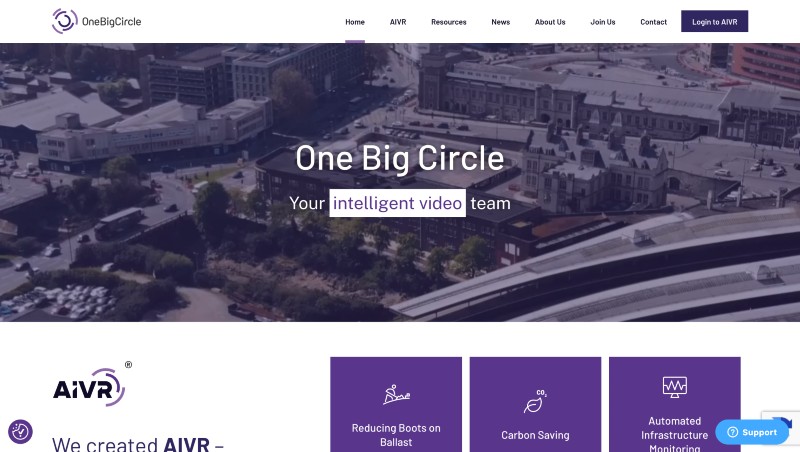
If your goal is to reduce the number of trackside inspections, One Big Circle is one of the first companies we’d look at.
Its remote track monitoring platform lets engineers inspect the railway remotely using video, thermal imagery, and AI. Instead of travelling to the site or spending hours searching through footage, teams can review everything from a web browser and let the platform highlight areas that might need attention.
One thing we like is that AIVR isn’t limited to one job. It can be used for track inspections, overhead line monitoring, vegetation management, level crossings, signal sighting, virtual site surveys, and several other inspection tasks. Having all of that in one platform makes it much easier to manage.
Another nice feature is that the platform brings different types of data together in one place. Video, thermal imagery, track geometry, and AI insights can all be viewed together, giving engineers a much better picture of what’s happening across the network.
According to One Big Circle, reviewing one hour of AIVR data can replace an estimated eight-hour site visit or cab ride, helping teams save time while reducing the need to work trackside.
Key features
• Browser-based AIVR platform
• AI-powered video review
• Forward-facing video inspection
• Thermal monitoring
• Track geometry integration
• Overhead line (OLE) monitoring
• Vegetation and conductor rail inspection
• Level crossing monitoring
• Virtual site surveys
Pros
• Designed specifically for the rail industry
• Makes remote inspections much easier
• Several monitoring tools in one platform
• AI helps identify potential issues automatically
• No software installation required
Cons
• Offers a lot of features, which may be more than some organizations need
Best for: Rail operators looking to improve inspections while reducing time spent on site.
2. Cordel
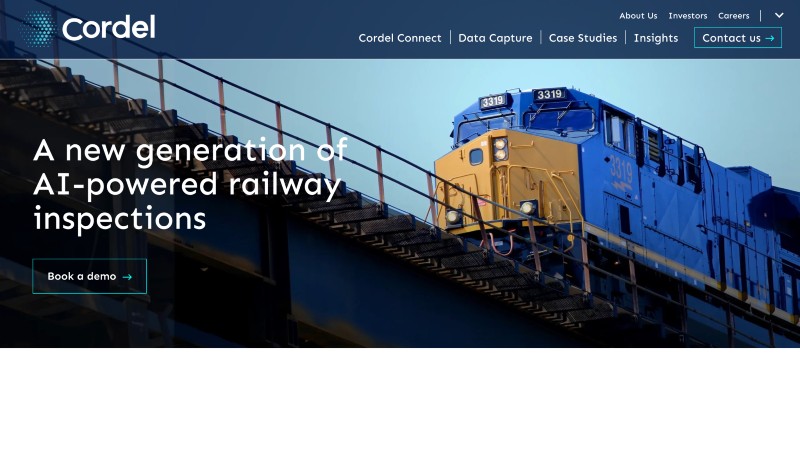
If your priority is collecting detailed information about rail assets, Cordel is definitely worth considering.
The company combines AI, computer vision, and LiDAR to automatically inspect rail infrastructure as trains travel along the network. Instead of manually checking thousands of images, engineers can use AI to identify assets, spot potential defects, and compare changes over time.
One thing that stands out is how much of the inspection process is automated. The platform can identify things like overhead line equipment, signals, vegetation, and clearances, helping engineers review much larger sections of the network without spending hours going through the data themselves.
Cordel is also cloud-based, making it easy for teams in different locations to access inspection data and collaborate on maintenance planning.
Key features
• AI-powered asset inspections
• LiDAR and computer vision
• Automated asset detection
• Clearance and vegetation monitoring
• Cloud-based data platform
•Change detection over time
Pros
• Strong automation for rail inspections
• Combines video, LiDAR, and AI
• Easy to review data remotely
• Helps reduce manual inspection work
• Good for large rail networks
Cons
• More focused on asset inspection than broader rail operations
• Some organizations may only need part of what the platform offers
Best for: Rail operators looking to automate infrastructure inspections and asset management.
3. Hitachi Rail
Hitachi Rail takes a broader approach to rail monitoring than the other companies on this list.
Along with AI-powered monitoring, the company offers digital asset management, predictive maintenance, and condition monitoring as part of its wider rail technology portfolio. The goal is to help operators spot problems earlier, plan maintenance more effectively, and reduce unexpected disruptions.
Because Hitachi Rail works on large rail projects around the world, its monitoring solutions are often used as part of bigger digital transformation programmes rather than as standalone inspection tools.
If you’re looking for a solution that fits into a wider digital railway strategy, that’s one of its biggest strengths.
Key features
• AI-assisted infrastructure monitoring
• Predictive maintenance
• Digital asset management
• Condition monitoring
• Real-time data and analytics
• Integration with wider rail systems
Pros
• Strong experience across the rail industry
• Combines monitoring with asset management
• Good fit for larger rail networks
• Supports predictive maintenance strategies
Cons
• Better suited to larger organizations and rail authorities
• Broader product portfolio may be more than smaller operators need
Best for: Rail operators looking for AI monitoring as part of a wider digital rail strategy.
Final Thoughts
AI is changing the way rail infrastructure is monitored. Instead of relying on manual inspections alone, operators can now use cameras, sensors, and machine learning to spot issues earlier and make better maintenance decisions.
All three providers on this list offer strong solutions, but they each focus on slightly different areas.
If you’re looking for an all-in-one platform that’s built specifically for rail inspections, One Big Circle stands out thanks to its flexible AIVR platform and wide range of monitoring tools. Cordel is an excellent choice for automated asset inspections, while Hitachi Rail is well suited to organizations investing in larger digital rail programmes.
The right choice ultimately depends on your network, your maintenance goals, and how you plan to use AI as part of your inspection process.