
In a workplace, protecting your employees isn’t just about avoiding accidents. It’s about creating an environment where everyone can feel safe and do their jobs confidently every day.
When employees feel safe, your business will naturally benefit too. Their productivity improves, morale stays high and those pesky, unexpected disruptions become less common.
Workplace safety isn’t something only large companies should worry about. Whether you run a small shop, an office or a growing company, the same principles apply. At the end of the day, protecting employees and securing the business are really two sides of the same coin.
What Does it Mean to Protect Your Employees While Securing Your Business?
Before we get into the ways to protect employees while securing your business, it is essential to first understand what all that means.
Workplace safety goes beyond wearing hard hats and emergency exits. These are important – but they’re only a small part of the bigger picture. Protecting employees also means giving them the tools, training and confidence to handle their work safely. People are more likely to make good decisions when they understand both the risks and the right way to respond to them.
Business security, on the other hand, is closely connected to employee safety. It is about reducing the number of accidents, which results in less downtime, fewer compensation claims and fewer interruptions. A secure business also protects its physical property, equipment, sensitive information and reputation.
Practical Ways to Protect Your Employees While Securing Your Business
Identify Workplace Safety Risks
Every workplace has its own risks. So the first place to start when you want a more secure workplace is to identify the risks.
You don’t need a sophisticated system to identify these risks. Just walk around the workplace regularly. Looking at the environment with a fresh pair of eyes often reveals hazards that can be easily ignored. Remember to involve the employees during these processes. Since they are the people on the floor, it’s easier for them to notice recurring issues.
In addition to walking around, remember to also review past incidents and even near misses. That can help you uncover patterns worth addressing.
The goal isn’t to eliminate every possible hazard overnight – it is to recognise the biggest ones before they cause problems.
Use Clear Signage and Equipment
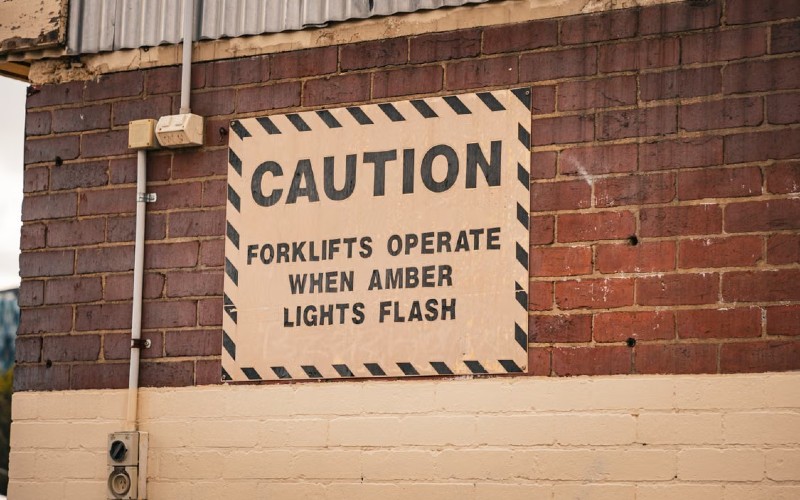
Clear communication is one of the simplest ways to improve workplace safety. People can’t avoid hazards they don’t know exist.
You need to have warning signs, emergency exit signs, floor marking and equipment labels all over the work floor. That helps employees make quick decisions, especially during stressful situations.
Investing in quality safety materials, just like Seton, which offers protection and safety solutions, can help businesses communicate common hazards clearly. However, remember, signs are not meant to replace good safety practices – they work hand in hand.
Provide Proper Workplace Safety Training
Even the best safety equipment won’t be of much help if the employees don’t know how to use it correctly. So, another important step towards a secure workplace is providing proper workplace safety training.
Make the safety training part of every new employee’s onboarding instead of treating it as an afterthought. For employees who are already on the job, you need to consider refresher sessions. That is because people forget things over time – especially procedures they rarely use.
Include practical demonstrations where possible. It’s often easier to remember something you’ve actually done than something you’ve only read about.
Provide Personal Protective Equipment
Another way to secure the workplace and keep employees safe is through providing personal protective equipment (PPEs). These include things like helmets, gloves, eye protection, hearing protection, high-visibility clothing and safety footwear (where appropriate).
The most important thing to consider with PPEs is that they should always match the specific risks employees face. Also, every piece of equipment should fit properly – protective gear is much more likely to be used consistently when it’s comfortable.
Also, replace damaged PPE promptly. Most of these equipment only work if they are in good condition. Don’t forget to show employees how to wear, store and maintain their equipment correctly instead of assuming everyone already knows.
Review and Improve Constantly
Workplace safety is an ongoing process – what works today may not be so effective as the business grows. That is why it is important to review and improve constantly.
That involves things like reviewing incidents, analysing employee feedback and carrying out regular inspections. Then make small improvements consistently, to prevent much bigger problems later.
Near misses deserve attention too. They often provide valuable lessons without the cost of a serious accident. It is also wise to review policies whenever new equipment, technology or working practices are introduced.
Continuous improvement isn’t about finding faults. It is about catching those little issues before they get bigger.
Conclusion
As you can see, protecting employees and protecting the business go hand in hand. One simply strengthens the other. Also, it doesn’t require major changes to create a safer workplace. Those small, consistent improvements often have the biggest long-term impact.
At the end of the day, workplace safety is less about reacting to problems and more about preventing them in the first place. Businesses that take those proactive steps are often better prepared for challenges, more productive and better positioned for long-term success.