
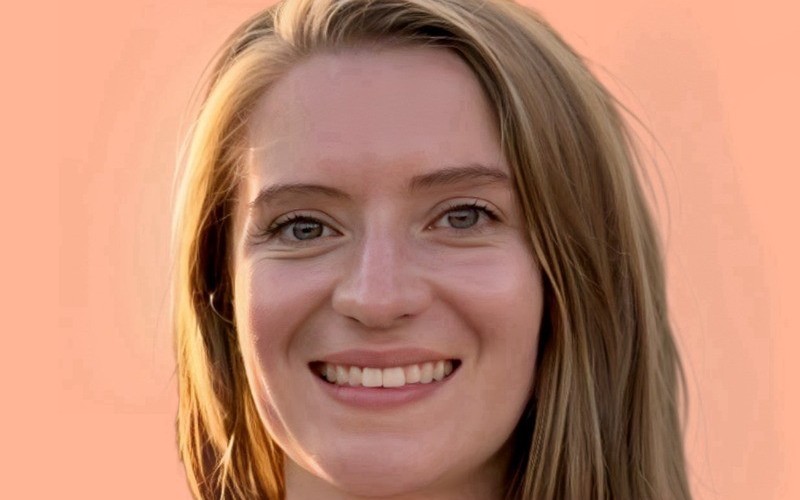

Holly Health founder Grace Gimson is clearly one of life’s ‘doers’.
She and I both attended the University of Birmingham. But while back in the late 90s I was happy enough playing Playstation and football while earning a 2:1, a dozen years on Grace had a wholly different mindset.
A member of the Skydiving Society, Entrepreneurship Society and Business School Society, she ran her halls of residence’s sports teams and events, while also working as a campus brand manager for Barclays Corporate, Thales and several investment banks.
“I liked to learn by doing,” she tells me. “I intentionally picked a business degree with a year in industry, which I spent at Microsoft in the academic and startups team.
“I also started my exposure to the UK medical system by landing in a group of Medics as my closest friends.”
Grace earned a First Class Honours degree before working as an area manager for Aldi then spending two years as an early hire at Deliveroo, including as head of UK market launch operations. Later, she joined the leadership team at Scape Technologies, which was acquired by Facebook in 2020 while she was chief of staff.
“That career path gave me a front-row seat to how technology can scale, but also opened my eyes to where technology hasn’t had enough of a useful impact yet – especially in preventive healthcare,” Grace reflects.
“From Microsoft, I learned about the importance of globalisation, constant technology iteration, and scale of ambition. From Deliveroo, I learned about growth at a rapid pace, and how to build operations – with technology and people – that don’t break when scaling from 10 to 100 cities.
“It taught me to be comfortable with ambiguity and to iterate quickly. I’ve brought that bias for action to Holly Health, but we’ve balanced it with a strong focus on clinical safety and academic outcomes evaluations.”
Enter Holly
Holly Health, a star of our HealthTech 50 ranking, was founded in 2020 at the start of the COVID pandemic.
“I saw a gap in how we approach health. Most apps are either fitness trackers for the already-fit or clinical tools for the unwell – usually focused on specific medical conditions,” Grace says.
“We wanted to support the ‘unsupported middle’ to feel better through developing mental and physical habits for health.”
Holly Health – digital health coaching for chronic conditions & day-to-day wellbeing
The platform is an intelligent digital health coach available via an app, web and SMS. It uses a combination of AI and behavioral science, specifically Acceptance and Commitment Therapy (ACT), Cognitive Behavioural Therapy (CBT), and behavioural economics, to help people create sustainable habits.
“The tech learns from your goals, health conditions, lifestyle factors and psychological barriers. It doesn’t just tell you to ‘walk more’; it might suggest a 5-minute mindfulness exercise if it detects you’re feeling overwhelmed,” explains Grace.
“We have built in EMA (ecological momentary assessment) and JITAI (just in time adaptive interventions) approaches to achieve this.”
Holly Health has deployed with more than 200 GP practices in the UK, with data showing that users see a 29% average improvement in wellbeing and a >30% reduction in GP appointments (in frequent GP attenders).
While its primary area is the NHS – Primary Care Networks and ICBs (Integrated Care Boards) – it also has a growing white-label side, now deployed with the UK’s biggest leisure centre provider, Better UK. This allows Holly to integrate its coaching experience into other people’s apps.
“The uptake for our white-label solution has been fantastic,” says Grace. “Our coaching is now embedded directly into Better UK’s ‘Live Better’ digital platform, reaching over 350,000 members. It’s a huge milestone because it proves our tech can live inside other ecosystems seamlessly.
She adds: “We also offer a subscription model for those who want to take their health into their own hands outside of a clinical setting.”
Future plans
With a team of eight and more than 70,000 patients supported to date, Holly Health has raised more than £2.7 million in funding and grants – including major backing from Innovate UK – and aims to triple its user base in the next couple of years to more than 300,000 people.
“We want Holly Health to become a go-to coaching ‘infrastructure platform’. Not just an app you download, but a standard part of the care pathway for anyone diagnosed with a lifestyle-related condition in the UK,” says Grace.
“We’re also looking at international expansion, particularly in markets with similar primary care pressures.”
Grace says the shift from reactive to preventative care is the biggest challenge facing the NHS right now. “With the right blend of psychology, software and AI, you can help millions of people live healthier lives without adding to the clinical workload.”
Tips
So what are her tips for fellow founders?
“Extreme passion: work on a problem that you and your team will want to get out of bed for even on your worst days,” is her first piece of advice.
“Science first: so much work has already been done in academia to highlight gaps and opportunities in healthcare and health tech – especially long-term health conditions. Lean into this.
“Empathy is a feature: don’t let shiny tech overshadow the human experience and the behavioural science. And being kind to others on the journey will bring you support in return.
“Iterate on feedback, not assumptions: we have spent six years iterating on our service based on real user feedback, and will continue to do so. This is why Holly Health has outlasted many better-funded organisations in a challenging health tech market.”
Away from the desk, Grace says she “loves to experience what the world has to offer”.
“I’ve done 400 skydives – great for perspective! – scuba diving, walked long distances and done triathlons.
“Anything that involves being outside or in nature is very calming to me.”
Dear Younger Me: The ‘2am problems’ will pass – celebrate your successes