
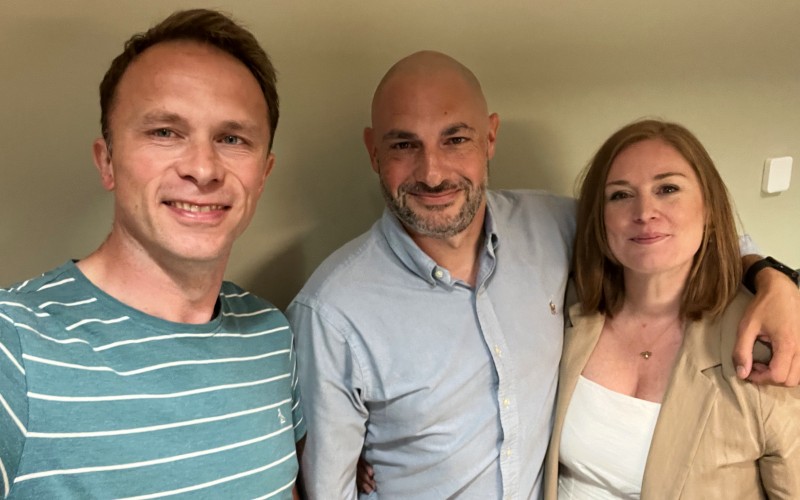
When serving West Yorkshire policeman Simon Healy lost his wife to cancer, he left the hospice with perhaps the most difficult job of his life ahead of him.
Their children were aged seven and two. “It was October 2019. She died after an 18-month illness and I went home from the hospice with a leaflet of how to deal with death,” Simon tells BusinessCloud when we meet in Harrogate for Founder Friday.
“You have all this time to prepare beforehand, but there was no one there telling us what we could do, what memories we could leave for our kids, and what the kids would like to hear later on in life.
“And I was lucky – there’s far more there in the hospice than there would be in an everyday hospital, or if she had died at home.”
Simon found apps to help the children with reading and maths, and guides for every stage of childhood – but nothing to help a family hold on to a person and navigate loss together.
Over the next few months their kids started asking questions. “I had no idea whatsoever,” he admits.
“The kids were asking: what was Mummy’s favorite colour? What was this? What was that? And you think it’s an easy question to answer – but when you’re going through the grief and the trauma, your mind goes blank.”
He continues: “You can look online for help, but you can’t trust everything that you read, and it’s often contradictory. There are helplines you can ring till six o’clock in the evening – but then there’s nothing after that, or on weekends.
“I got three sessions of counselling, but the kids didn’t get anything.”
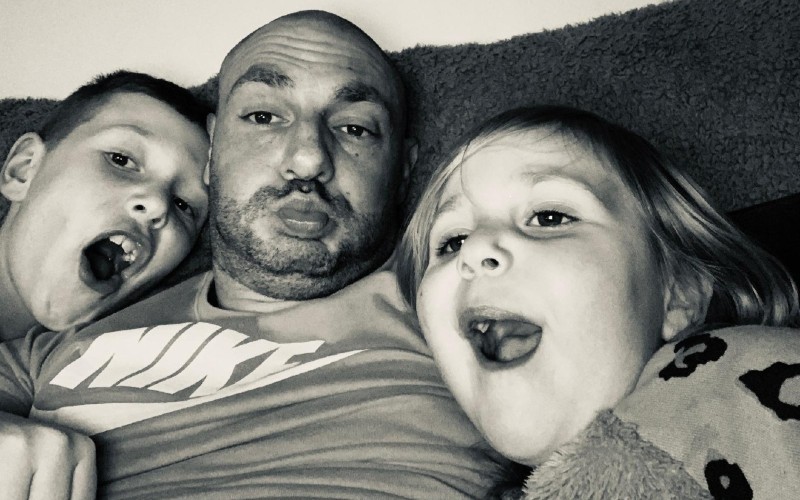
Simon was off work for a year and their son found it difficult when he went back, leading to more time off.
New love
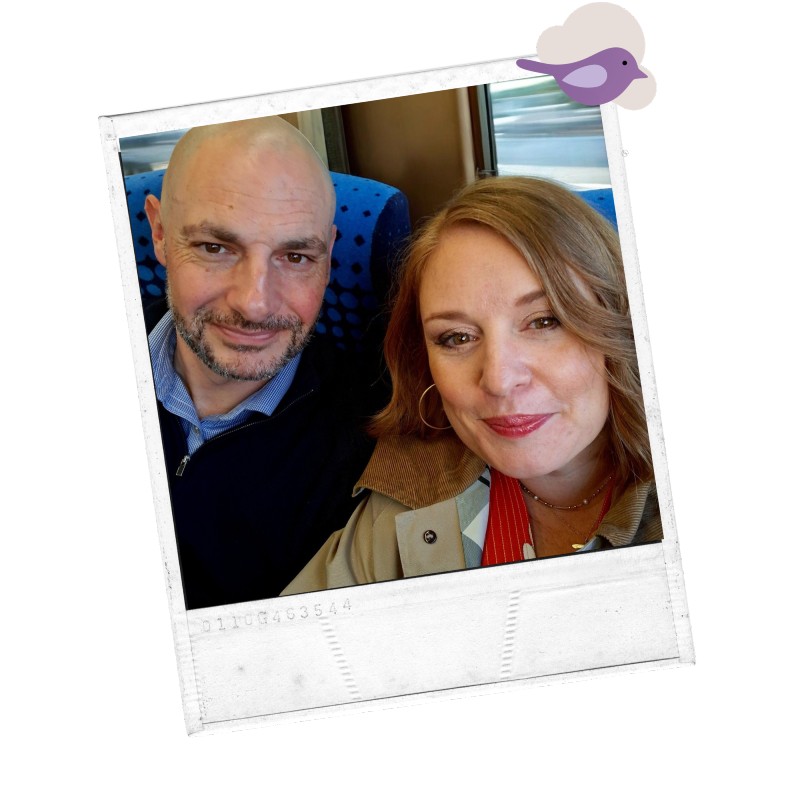
Three years after his wife’s death, he met Katie, a single mum with a daughter of her own. They are now married and have launched Memory Robin together to help other families cope with the grief and trauma that death brings.
“From that point to now, there have been different points at which the kids have asked new things; and struggled with different things,” she tells me. “Our youngest was two when her mummy died, and she was really fine, I think, when we first met – but then she hit seven or eight, and she wanted to understand who her mummy was, to help her understand who she was [herself].
“Again, we looked for ways to best support her, but there just wasn’t anything. Everything is charity websites, pamphlets and activity sheets, but there’s nothing that actually helps you understand in the context of your family; the age of the child; and the neurodiversity of the child.”
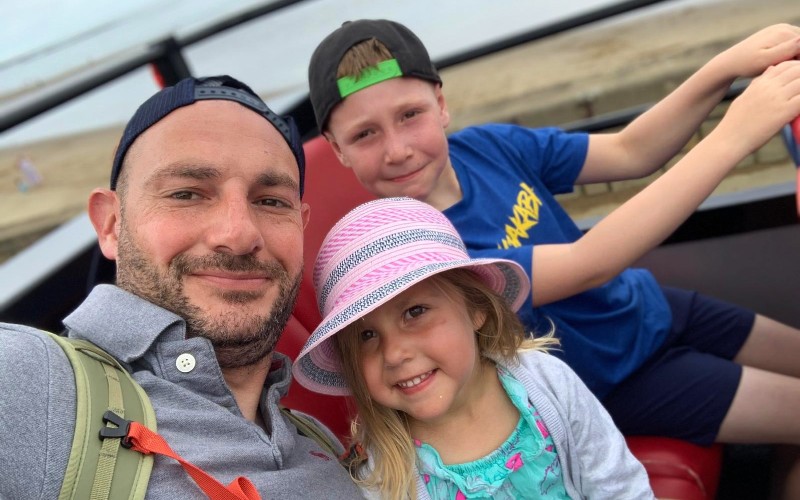
Their son was diagnosed as dyslexic when he was nine. “Obviously that’s something that his mummy didn’t know about, because it was after she passed away,” Katie says. “Had she written letters to him, he can barely read… so we’re building things like neurodiversity into Memory Robin and Pocket Robin from the absolute outset.
“We’ve lived in this. It’s all the gaps that we see. Simon always says that you join a club that nobody asks to join – because as soon as anybody knows that you’ve sat in that space, you get texts and emails asking for advice for others going through the same thing. Because there is just nothing out there.”
Memory Robin
Memory Robin is for a person who is at the end of their life: they can record stories and voice notes; upload pictures; or just talk. Beautifully designed, it suggests ideas and guides the user through the process of building what Katie calls a ‘digital library’ of resources.
“In that library, there are three sections: the first we put into the library, which is all the information the whole world over related to grief – advice, activities, best practice, guidance… it will be age-specific, and neurodiverse-specific.
“The second section is what you input into – whether that’s the person that’s dying or posthumously, because people don’t just die neatly. I could drop off the planet tomorrow, and my family might want to posthumously create something like this for my children and family.
“The last section is all around wellbeing: things like Calm, Headspace, meditation, sleep stories, exercises.
“There is a librarian – an AI agent – which speaks to whoever’s using the platform.”
That does not include child users, Katie explains. “It speaks to the guardian, or the person creating the memories, and it pulls the right books off the right shelf at the right time. It cannot hallucinate. It doesn’t make up answers.
“It is literally a retrieval system… our IP is the content of that library.”
iCloud
The personalised content is key to how families are supported together. “I had everything on my late wife’s iCloud,” says Simon. “I had to ring them up and try and get access to that.
“And it’s not just that – there’s an old recipe book and we’re scared of losing it because it contains my late wife’s handwriting… there’s so much in so many different places. What if it could be all in one place?”
Katie adds: “Our son will say: ‘I’m starting to forget what Mummy sounds like.’ That’s then a four-hour job for us, accessing a separate iCloud, trying to find videos where she’s speaking, checking what she’s speaking about first, before we then show that to him.
“We were just like: ‘My goodness, there’s got to be a better way of doing this.’”
Simon says: “It is hard for them, isn’t it? It’s hard every day – but I made a rule when she died that ‘you don’t cry alone’. So they were always talking, and they’re always there… but this will help even more.”
Katie left her corporate career in life sciences to support her family and continues to perform consultancy work as she builds the business as CEO. Simon is Memory Robin’s ‘community voice’ and is still serving as a detective sergeant.
“I come from a very heavily regulated background. This isn’t a medical device, but we’re very much following best practice,” says Katie.
Mentally tough
The couple say it was hard when they began to blend their family. “I felt like I’d stolen someone’s family,” explains Katie. “They’re our kids, I share them with her, and I’m always mindful about what she would want… but then at the same time, you’re the person mopping up the sick and up in the middle of the night with poorly people.
“I remember the first time our son got ill. He just cried and cried, and he was like: ‘I want my mummy, I want my mummy…’
“Honestly, some of the things that you experience, I never expected mentally to go through. But it’s so hard for so many people.”
Five to six million UK households are living with grief, while 95% of bereaved families never reach support. The impact isn’t just personal: grief costs UK employers an estimated £23 billion a year.
Existing services sit outside the home, on office hours, and are built for the adult. Katie says 42% of all young offenders have lost a parent in this country, which serves as an example of the problem – but things are changing.
“Bereavement is entering the curriculum for the first time this September. They’re looking at bereavement leave as well, because people currently get two days of statutory. Can you imagine being at home with your young children and your wife dies overnight – and having the pressure of being back in work two days later?
“Mental health was in this state 15 years ago, and what happened was commercial companies came in, they built things to help people, it highlighted the issues, it was talked about much more. Mental health charities are now some of the best-funded in our country.
“I’m really hoping that creating something like this will make it so much more mainstream and normal for people.”
Breaking the taboo
Simon adds: “We’re terrible with death in this country. We’re shocking. It’s like the word you can’t use… people beat around the bush, they say ‘they fought a good fight’ or ‘they went to sleep’… but no, they died.
“We don’t like using the words death, died or die, but we should use them.”
Memory Robin has early traction, including commercial discussions with major insurance and employee assistance programme providers, two hospice partnerships, and a place on the Virgin StartUp Momentum accelerator which has a focus on neurodiversity.
It has raised a small round of investment from friends and family and is now talking to angel syndicates to take the product to full launch.
So where does the name come from?
“Before she died, their mummy used to say to them that whenever a robin appears, a loved one is near,” says Katie.
Simon smiles: “They get proper giddy every time they see a robin. There have been a lot this year – so it’s ‘mummy, mummy, mummy’ everywhere!”