


A working comparison of vendor management software and supplier management software for UK organisations that need a VMS to carry supplier risk, onboarding evidence, renewal control and spend visibility
From 18 March 2027, new Financial Conduct Authority (FCA) rules will require certain UK banks, building societies, insurers, and payment firms to maintain registers of their material third-party arrangements and submit them annually. Firms in scope must also notify regulators before entering into new material arrangements or making significant changes to existing ones. Separate operational incident reporting requirements will add further scrutiny to how regulated firms identify and respond to disruptions involving critical services. For affected organisations, accurate supplier records and continuous third-party oversight are becoming increasingly important compliance priorities.
The regulatory pressure extends beyond financial services. The corporate failure-to-prevent-fraud offence under the Economic Crime and Corporate Transparency Act has applied since 1 September 2025, with liability potentially arising through third parties performing services on an organisation’s behalf. Supplier due diligence now carries statutory weight for organisations in scope, giving UK procurement, finance, legal, and compliance teams stronger reasons to replace fragmented spreadsheets with systems that maintain reliable records of supplier risk and contractual obligations.
What follows covers the eight best vendor management systems for UK buyers in 2026, examining how the strongest platforms handle supplier onboarding, continuous risk monitoring, compliance evidence, and contract oversight. It also explores where manual processes fall short and how to choose software that supports both everyday supplier management and evolving regulatory requirements.
What is a vendor management system?
A vendor management system is software that holds every supplier relationship in one place: who the vendor is, what you’ve agreed with them, what risks they carry and what you spend with them. It covers the full life of the relationship, with onboarding at one end and offboarding at the other, and it keeps an audit trail of every step between.
One UK wrinkle deserves a sentence. HR teams use the same term for contingent-workforce platforms that manage freelancers and temporary staff. The procurement meaning is the one that matters here: software for managing the companies that supply goods and services to your organisation.
How a VMS differs from ERP and P2P software
ERP platforms run core operations such as finance, HR, manufacturing and reporting. P2P tools handle the purchasing cycle, taking a requisition through to payment. Both touch supplier data, yet neither owns the relationship. An ERP stores a vendor master file without watching the vendor’s risk profile, and a P2P system pays invoices without asking whether the contract behind them still makes sense.
A vendor management system fills that gap. It owns supplier onboarding, due diligence, performance and compliance, and the best versions connect those records to contracts and spend so the whole relationship sits on one screen.
The jobs a vendor management system covers
Day to day, the software earns its keep across a handful of jobs:
- Onboarding and qualification, with structured digital forms replacing email chains and documents arriving through a supplier portal rather than as attachments.
- Risk assessment and monitoring, covering financial health, cyber posture, sanctions exposure and adverse news.
- Contract and renewal control, so agreements don’t roll over unread.
- Performance management, with scorecards and SLA tracking in place of gut feel.
- Spend visibility, holding what you pay against what you contracted.
Each job feeds the others. The questionnaire a supplier completes at onboarding becomes the baseline its risk score moves against, and the contract terms you capture at signature become the yardstick for performance reviews two years later.
Why supplier risk now comes with UK deadlines attached
Three regulatory threads make 2026 an awkward year to manage suppliers by hand.
The first is the FCA’s third-party reporting framework coming into force on 18 March 2027. Regulated firms will need to maintain detailed registers of material arrangements, submit them annually, and provide early notification of new arrangements or major changes. Combined with operational incident reporting duties for critical services, compliance teams will need continuous visibility into supplier resilience rather than periodic static checks.
The second is the failure-to-prevent-fraud offence, in force since 1 September 2025. It reaches large organisations that pass two of three size tests:
- 250 or more employees
- more than £36m in turnover
- more than £18m in total assets
Liability attaches through “associated persons”, which includes suppliers performing services for or on behalf of the organisation, though not those who just sell it goods. The statutory defence is reasonable fraud prevention procedures, and the Home Office guidance behind the offence builds on six principles, with due diligence and ongoing monitoring at the heart of them. Every one of those expectations assumes you can produce a current, evidenced record of your outsourced providers.
The third is the Modern Slavery Act. Section 54 already requires businesses with £36m in turnover to publish a statement each year; the board must approve it and a director must sign it, with a link from the company homepage. The government registry remains voluntary as of October 2026. Parliament is weighing the Immigration and Asylum Bill, which would make the six reporting topics mandatory and add electronic submission deadlines with civil penalties behind them. That bill remains a proposal, not law, yet it shows the direction of travel: supplier due diligence records that once sat in a drawer are turning into filings.
What the best vendor management software has in common
Platforms vary in scope, but the strongest share a recognisable core. Use these seven capabilities as your evaluation baseline.
Automated supplier onboarding
The best systems replace email exchanges and shared spreadsheets with structured digital workflows. Suppliers self-register and maintain their own profiles, uploading their own documents as they go, which cuts data entry errors at the source, while approvals route to the right stakeholders without anyone chasing. Teams that make this switch compress onboarding from months to days.
One central record for every supplier
Company details, contacts, certifications, insurance documents, performance history and risk assessments belong in a single structured repository with expiry alerts attached. Centralisation means every department reads the same current information about the same supplier, which kills the inconsistencies that plague manual trackers.
Risk and compliance checks built into the workflow
Strong platforms screen suppliers before contracts go live and keep watching afterwards: financial stability signals, cyber posture, sanctions exposure and certificate expiries all feed a live risk score rather than a once-a-year questionnaire. For UK organisations with ECCTA fraud-prevention duties, this is where the software earns its budget, because tiered due diligence and ongoing monitoring are the very things the statutory defence expects.
Performance tracking and scorecards
Customisable KPIs, automated scorecard generation, historical trending and side-by-side comparisons turn supplier reviews from anecdote into evidence. Tracked SLAs give you grounds for a hard renewal conversation; untracked ones give your supplier the benefit of the doubt by default.
Collaboration tools that include the supplier
Centralised messaging, shared document workspaces, task assignment and update notifications keep internal teams and vendors on the same page. The platforms that fail are the ones suppliers refuse to use, so supplier-side usability counts as much as the buyer-side dashboard.
Integrations with your ERP and finance stack
A VMS that can’t talk to your ERP becomes another silo. Look for pre-built connectors, open APIs, bidirectional synchronisation and single sign-on, so vendor data stays consistent across finance and purchasing systems without re-keying.
Secure contract and document management
Permission-controlled storage, version tracking, timestamped audit trails, renewal alerts and electronic signature support belong in the core product. When s54 statements, fraud-prevention procedures or regulator questions come calling, the evidence has to surface in minutes.
The 8 best vendor management systems in the UK for 2026
Every platform below handles the core jobs. They differ in scope and in the buyers they suit, and the write-ups say so in plain terms.
1. Gatekeeper
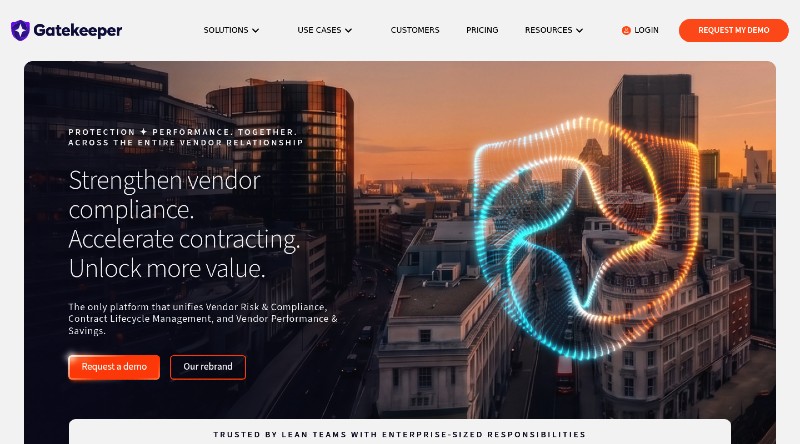
Gatekeeper runs vendors and contracts as one lifecycle on one record, which is the quality UK compliance work now rewards. The platform screens every third party before signature, checking certifications and security standards and blocking suppliers that fall short, then monitors financial stability and cyber posture around the clock once the relationship goes live. Due diligence evidence, contract terms, obligations and spend all attach to the same supplier record, so an auditor’s question gets one answer rather than four exports. Gatekeeper is a UK-registered company, and its trust centre lists ISO 9001 and ISO 27001:2022, SOC 2 Type II as well as SOC 1 Type II, with DORA support noted alongside.
The built-in AI agents are the practical difference in 2026. Because the record joins vendor data to the contract that governs it, Gatekeeper’s AI agents can review a SOC 2 report, chase an expired insurance certificate, extract obligations from a renewal and flag an invoice that doesn’t match contracted terms, all with full context of the relationship behind them. Customers a UK buyer will recognise span Auto Trader, DAC Beachcroft, Pets at Home and SumUp. The sharpest proof comes from FNZ Group, whose Head of Supplier Management, Alison McQuaker, describes the system as “an absolute crutch for us”.
Gatekeeper does not publish public pricing, requiring prospective buyers to go through sales discovery for quote details, and its tier-sizing model based on third-party counts means teams must clearly understand their active supplier base to manage costs. Some users also note a learning curve during initial setup given the breadth of automated workflows and configuration options available.
Nevertheless, its unlimited user model across all plans allows legal, finance, procurement and compliance teams to collaborate on a single record without per-seat charges. Implementation is delivered via a fixed, scoped fee agreed up front, making it a strong fit for mid-market and larger UK organisations seeking to unify supplier risk, contract management, compliance evidence and spend control in one platform.
2. Kodiak Hub

Kodiak Hub brings a Swedish supplier relationship management pedigree to the UK through its London office, and its sustainability coverage is the standout. The modular platform spans supplier information, risk monitoring, performance analytics and collaboration, with 360-degree supplier evaluations and scorecards built on audit data. Its compliance coverage names the Modern Slavery Act alongside European frameworks such as CSRD and CSDDD, which makes it a natural shortlist entry for s54 reporting work, and the company states ISO 27001 certification on its own security page.
The boundary sits at the contract and the money. Kodiak Hub references working through the contract lifecycle without claiming drafting, negotiation, execution or obligation management. No spend module appears in its offer, so SLA breach costs and savings tracking end up in other systems. Kodiak Hub does not publish pricing. It fits UK mid-market teams whose sharpest need is supplier performance and ESG evidence rather than end-to-end vendor governance.
3. Graphite Connect
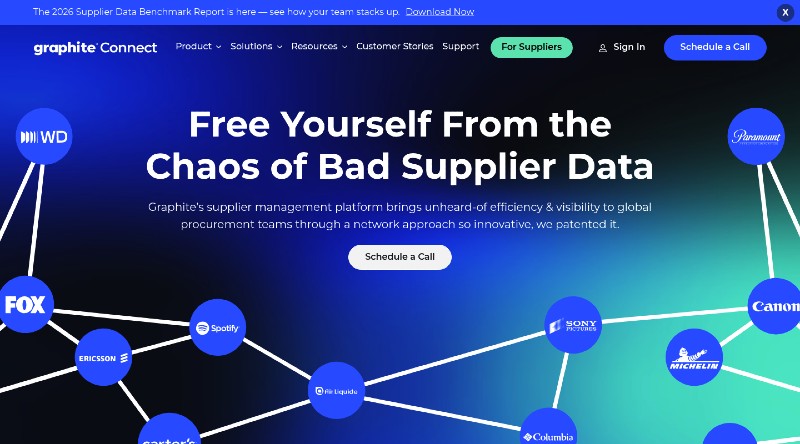
Graphite Connect treats supplier identity as the product. Suppliers hold verified profiles they keep current themselves, and the platform checks the details fraud feeds on, banking information, tax identifiers and sanctions exposure among them, before anything reaches your ERP, with controls aimed at fraudulent bank-detail changes and a deep audit trail behind each one. For a UK team weighing the Companies House verification deadline against an ECCTA defence that rests on evidenced due diligence, a supplier record verified at the source closes the exact gap that email-chain onboarding leaves open.
The boundary arrives once the supplier is in. Graphite centres on onboarding data, so contract lifecycle work, SLA tracking, audit management and spend analytics all live in other systems. Some reviewers describe suppliers wearied by the volume of verification steps, which is a cost of thoroughness. It fits organisations whose sharpest pain is trusting the data that enters the master file, with wider governance handled elsewhere.
4. Precoro
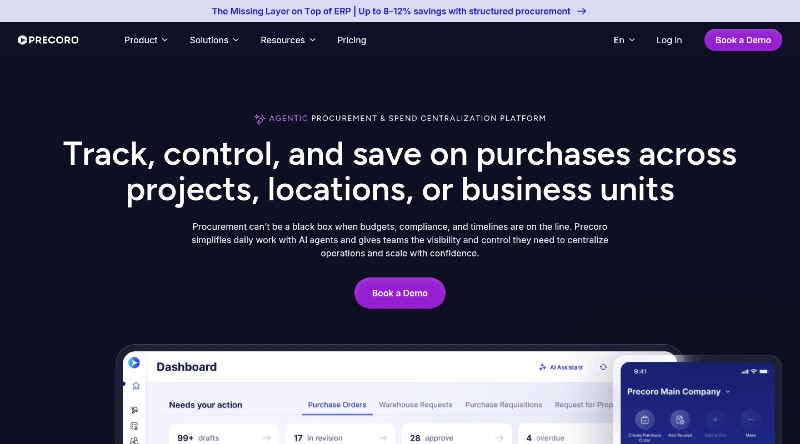
Precoro comes at vendor management from purchasing, and it does something rare on a quote-driven market: it publishes its prices. Core plans start at $499 a month on annual billing, with an Automation tier from $999, and it pairs that transparency with some of the strongest user review scores in the category on G2. The supplier portal gathers certifications, tax forms, NDAs and insurance documents through registration flows you can customise, and a contract agent lifts key terms, renewal dates, obligations and risks out of uploaded agreements. The accounts payable side brings invoice capture, two- and three-way matching, duplicate detection and e-invoicing.
The missing piece is risk discipline. Precoro offers no dedicated third-party risk product and no external intelligence feeds for credit ratings or cyber posture, so ECCTA-grade due diligence and fraud monitoring happen outside the platform. Seat-based tiers on the lower plans also cap how far compliance and legal stakeholders can reach into the system. It suits UK mid-market teams that want purchasing control first and can accept supplier risk as a separate workstream.
5. JAGGAER
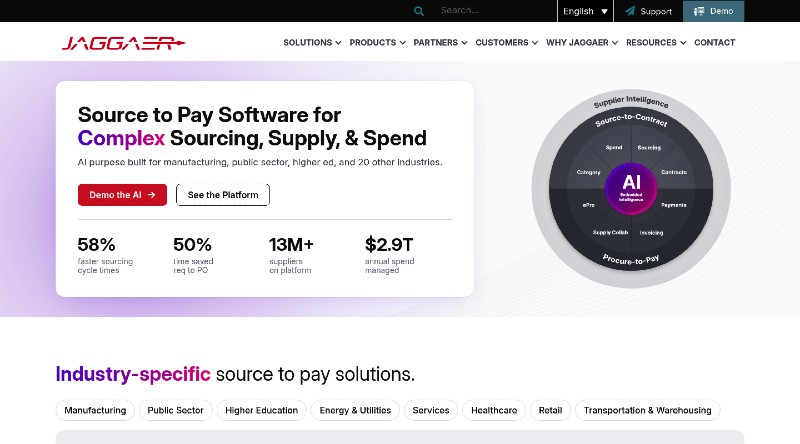
JAGGAER packages supplier management within its source-to-pay platform with risk at the centre. Risk models weigh financial stability and geographic exposure, while the 360 Supplier Snapshot puts performance, risk, compliance and development plans on one dashboard. Corrective action plans trigger when a supplier’s numbers dip, which is a capability few rivals match.
The commitment asked of buyers is serious. Contract lifecycle management goes unmentioned in the supplier management offer, which likewise names no spend capability and leans on an external partner for a slice of the risk layer. G2 averages put implementation at nine months, and one enterprise reviewer paired a setup that took a year to stabilise with support staff who failed to address concerns. JAGGAER fits large organisations with complex supply chains and the patience for a long rollout.
6. Zycus
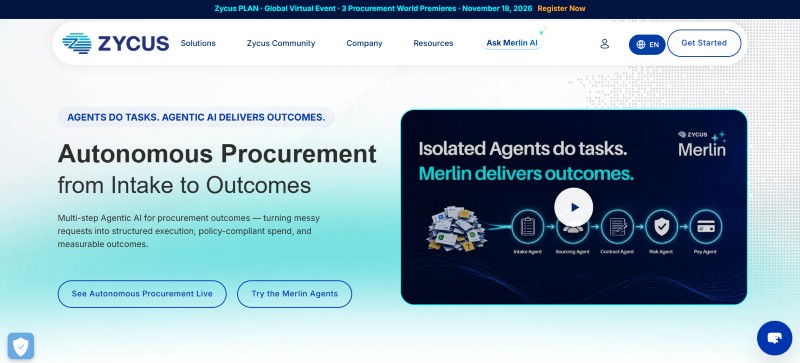
Zycus has pushed hardest among the enterprise suites on agentic AI. Its Merlin platform runs an autonomous onboarding agent that collects supplier information, validates tax and bank details, runs compliance checks and brings the supplier live in hours rather than weeks. Risk Radar draws financial, legal, ESG and compliance signals from external sources such as Dun & Bradstreet and EcoVadis. More than 500 brands use the platform per its own pages, and the company has built procurement software since 1998.
Scale and scope are the catches. Zycus pitches at large enterprises, with its own value modelling built around a $500m spend profile, and contract management lives in a sibling product line. Users on G2 also describe fixed functionality that resists customisation and friction for suppliers completing checks. It makes sense for enterprise procurement functions that want supplier governance run by agents and keep a separate contract repository anyway.
7. Ivalua
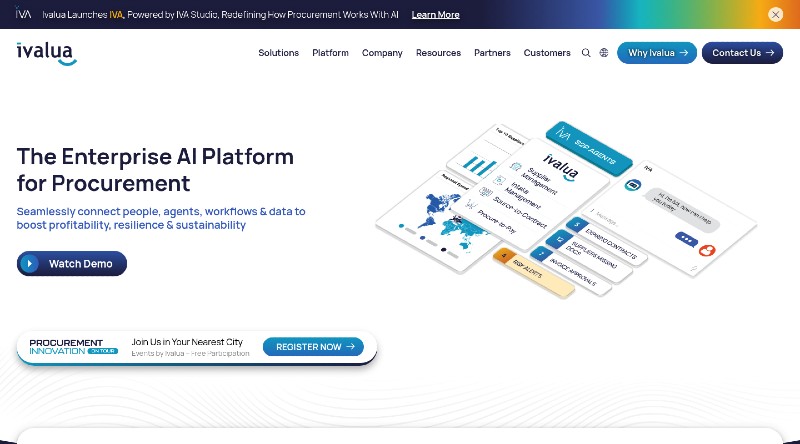
Ivalua earns a narrow slot here: global enterprises in regulated industries whose procurement processes vary by jurisdiction. It serves UK customers from a London office and holds ISO 27001 certification per its own announcement. It also sits among the Leaders in Gartner’s 2026 source-to-pay Magic Quadrant, credentials that make it a fixture on enterprise procurement shortlists.
Against this list’s brief, the gaps need naming. Supplier risk appears on Ivalua’s pages as a solution area within the suite rather than as evidenced depth in fraud monitoring, audit management or supplier SLA tracking. A compliance-led buyer must therefore verify each of those capabilities module by module before relying on them.
The suite treats procurement as the buying centre, which leaves legal, finance, risk and compliance colleagues entering through someone else’s front door. Configurability then sets the price of entry: G2’s averages put an implementation at nine months, and reviewers describe partner-led setups that went wrong alongside a platform that breaks when teams modify too much of it. For a FTSE-scale procurement function with a systems-integration budget, the programme can pay back. Mid-market UK buyers with a supplier-risk problem should look higher up this list.
8. SAP Ariba
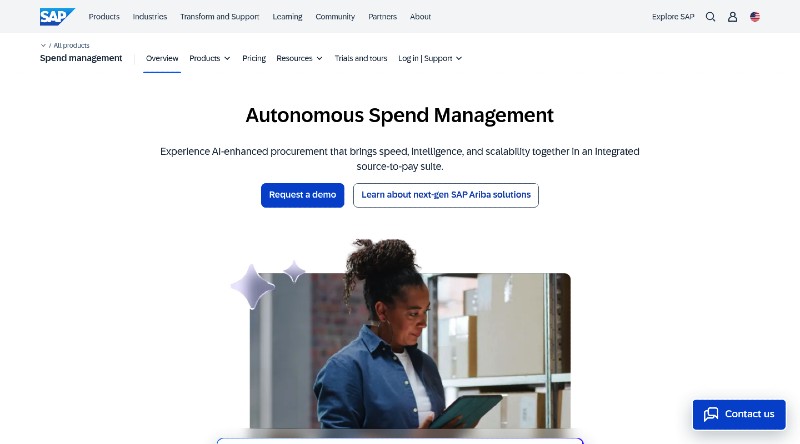
SAP Ariba remains the reference point for enterprises standardised on SAP, and its 2026 positioning leans on agents: a Supplier Management Assistant runs nine of them in one continuous intelligence loop covering supplier discovery through long-term risk monitoring, with Joule as the conversational layer across the suite. Built-in policy checks, audit rules, approvals and regulatory tracking sit throughout, and the SAP Business Network connects buyers to a vast trading community no independent vendor can replicate.
The costs are the familiar enterprise ones. G2 averages put implementation at six months, and the loudest complaint themes on its profile centre on complexity, learning curve, interface design and setup effort. Value also depends on the SAP estate, since outside an SAP shop the native alignment that justifies the price disappears. The suite’s breadth stretches into contingent workforce and travel, which a buyer with a vendor-risk problem does not need. Ariba belongs on enterprise shortlists where SAP already forms the backbone; most UK mid-market teams will find it more platform than they have problem.
Why manual vendor management falls short
Plenty of UK organisations still run supplier management on spreadsheets, inboxes, calendar reminders and goodwill. Four failure modes show up again and again.
Onboarding crawls through inboxes
Manual onboarding means forms that bounce around by email, the same data keyed into separate systems, approval chains nobody can see into and new suppliers waiting weeks while the request sits on an unknown desk. The process also misses critical compliance signals. As the FCA’s 18 March 2027 reporting rules approach, keeping material arrangement registers on spreadsheets will leave regulated firms struggling to meet annual submission deadlines or track changes to key third parties.
Compliance evidence won’t survive an audit
Expired insurance certificates, certifications nobody re-checked, questionnaires without follow-up and due diligence that lives in one buyer’s sent folder: that’s the manual pattern, and it collapses under scrutiny. ECCTA’s fraud-prevention defence rests on procedures you can evidence, and a s54 statement needs due diligence records behind it. A shared drive full of attachments proves effort, never control.
Nobody measures supplier performance
Without a system, departments judge the same vendor against different yardsticks, and formal reviews slip for years at a time. Renewal decisions run on anecdote. SLA breaches cost money nobody counts, so underperforming suppliers glide through renewal after renewal while the evidence that would support a renegotiation goes unrecorded.
Teams hold contradictory versions of the same supplier
Finance keeps one contact list and procurement keeps another, and when a payment-detail change request arrives by email, nobody holds the verified baseline to test it against. New team members inherit none of the relationship history. Fraudsters thrive on that fragmentation, which is why the gap between departments is a commercial risk rather than a tidiness problem.
What a working system does about each failure
Each of those four failures dissolves the same way: the record, rather than a person, carries the process. Here is what that looks like in practice, point by point.
Onboarding moves through a portal, not an inbox
Suppliers register themselves through structured forms that collect the right documents first time, while approvals route to named owners on a board everyone can see. The screening belongs before signature: leading VMS platforms run identity, certification, insurance and security checks at that stage, which puts FCA material third-party tracking and compliance checks right where they belong, at the gate.
Evidence files itself as the work happens
When every document and approval lands on the supplier record with a timestamp, the audit pack becomes a by-product of normal work instead of a quarterly scramble. The stronger platforms keep that file current on their own; AI agents can validate expired documents and collect fresh evidence on schedule, so the record an auditor wants already exists the day the request arrives.
Performance gets measured against the terms
Scorecards only bite when they sit beside the contract they measure. A system that holds tracked SLAs, automated supplier surveys and actual-versus-contracted spend on the same record turns a renewal conversation into an evidence review rather than an exchange of impressions.
Every team reads one version of the supplier
Role-based access to a single record retires the contradictory contact lists: legal reads flagged terms where finance reads spend, and a change made once lands everywhere. The record also has to reach the ERP and finance tools already in place, which is why integration depth belongs on the requirements list so the verified baseline survives contact with the rest of the stack.
How to choose the right vendor management system
Shortlists go wrong when teams buy scope they’ll never use or miss the one capability their obligations demand. Five tests sort the field fast.
Usability for your team and your suppliers
Demand a clean interface on both sides of the relationship. A portal your suppliers abandon sends the process straight back to email, and software that needs weeks of training loses the occasional user who matters most: the budget holder raising one request a quarter.
Room to scale with your supplier base
Check how pricing and performance behave as your third-party count grows, and whether the platform supports multiple business units. Watch the seat mathematics too; per-user pricing punishes the very cross-functional adoption that makes a VMS work.
Automation for risk and compliance work
Automated risk scoring, configurable compliance requirements, certificate expiry alerts and external monitoring feeds separate modern platforms from digital filing cabinets. Ask vendors to show the fraud and financial-health signals their system raises without a human asking.
Security credentials and audit readiness
Your VMS will hold sensitive commercial data, so apply the scrutiny you’d apply to any critical supplier: recognised certifications such as ISO 27001 or SOC 2, role-based access controls, encryption and a full activity log. UK GDPR processor obligations make this non-negotiable.
Fit with your ERP and finance stack
Native connectors for your ERP plus single sign-on decide whether vendor data flows or someone re-keys it. Ask for a reference customer running your ERP before you sign anything.
The bottom line for UK buyers in 2026
The regulatory calendar has made its point: a current, evidenced supplier record stopped being optional for UK organisations of any size that outsource serious work. The right vendor management system compresses onboarding, keeps compliance evidence audit-ready and turns supplier performance into numbers you can act on, and the eight platforms above each deliver a credible version of part of that promise.
Gatekeeper earns the top spot in this overview because modern UK compliance demands immediate, verifiable answers: whether preparing for the FCA’s material third-party register deadlines, responding to an ECCTA enquiry regarding third-party due diligence, or proving contractual alignment to an auditor. Platforms that unify these records allow organisations to capture evidence seamlessly during daily operations rather than scrambling before deadlines. When evaluating options, buyers should bring their specific supplier count and regulatory duties to vendor demonstrations to ensure the system is operational well before key deadlines.