
A Microsoft Office licence for £30 instead of £300 sounds like a scam, or at least like something that will get flagged and disabled a week later. That reaction is fair, and it’s also the exact question worth answering properly before anyone hands over a card number: is second-hand software real, is it legal in Europe, and does a specific reseller like PrimeLicense actually meet the bar.
What Second-Hand Software Actually Means
A second-hand licence is not a cracked key or a shared account: it is a genuine licence that a previous owner, typically a company that shut down, migrated to the cloud, or upgraded its systems, no longer uses. Once that first owner deactivates the software and removes it from their devices, the licence itself can legally change hands. The product is identical to a brand-new copy: same features, same security updates, same installer from the manufacturer’s own servers.
The Legal Basis: EU Court Ruling C-128/11
This market exists because of a specific, well-documented court decision. In July 2012, the Court of Justice of the European Union ruled in case C-128/11 (UsedSoft, 3 July 2012), involving Oracle International Corp., that a manufacturer’s distribution right is exhausted after the first sale.
In practice, buying software never means buying the programme itself, only the right to use it. Once that right has been sold once, the manufacturer cannot block its resale, even for licences distributed purely online rather than on physical media. The Court of Justice press materials confirm the same principle: the seller must stop using the software, deactivate it on the original device, and be able to document the transfer.
That last condition is where the entire second-hand market either holds up or falls apart. A licence with no verifiable paper trail is a liability, not a bargain.
Is PrimeLicense a Certified Reseller?
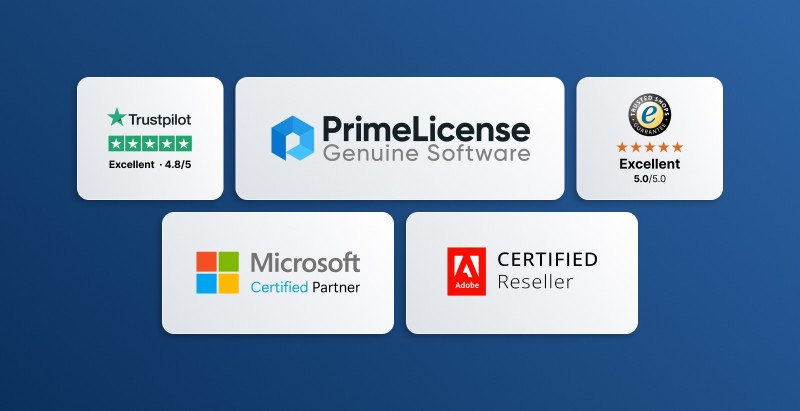
PrimeLicense operates under Prime Digital Solutions and has built its catalogue around exactly this exhaustion-of-rights principle, reselling Office, Windows, Adobe, and security licences that have been legitimately decommissioned. The company holds certified partner status with Microsoft and Adobe, along with Kaspersky and McAfee, meaning its reseller status can be checked directly on those vendors’ own partner-search tools, like the Microsoft official website, rather than taken on faith.
Every purchase includes an activation key, an official download link pointing to the manufacturer’s own site, and installation instructions, sent by e-mail within minutes. That combination, official download plus documented key, is what separates a licensed reseller from a site simply selling stolen or duplicated codes.
PrimeLicense holds an excellent reputation on reviews aggregators like Trustpilot and Trusted Shops, with a 4.8/5 rating. Customers frequently highlight rapid customer support (often responding within minutes), swift licence delivery, and pricing substantially below official retailers. The company’s Trusted Shops Quality Seal and included buyer protection up to £2,500 further reinforce customer confidence.
Why Should You Buy Software from PrimeLicense?
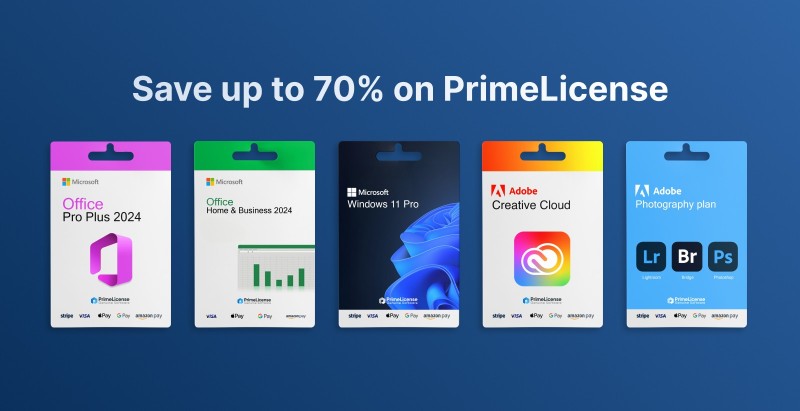
The primary advantage of purchasing from licensed resellers like PrimeLicense lies in the substantial discounts available on software licences. Savings vary significantly depending on the product and licence type, though perpetual licences tend to offer the most compelling value. The table below illustrates the typical price difference between official retail pricing and what you’ll pay through PrimeLicense:
| Software | MSRP | PrimeLicense | Approx. savings |
|---|---|---|---|
| Office Home & Business (perpetual) | ~£249 | ~£170 | 32% |
| Office Professional Plus (perpetual) | ~£119.99 | ~£42.90 | 64% |
| Windows 11 Pro | ~£219.99 | ~£25 | 89% |
These savings multiply when purchasing in volume. A business outfitting ten workstations instead of one can reduce per-licence costs dramatically, making PrimeLicense particularly attractive to small businesses, freelancers and organisations operating on tighter budgets. This is precisely why independent professionals and SMEs represent a significant portion of the reseller market.
How to Vet Any Licence Reseller Before Buying
Legal doesn’t automatically mean trustworthy. A useful checklist before buying from any second-hand software site includes:
• Confirm certified partner status directly on the manufacturer’s own site, not just a logo on the reseller’s homepage
• Treat prices that are dramatically below the rest of the market as a warning sign, not a lucky find
• Check that download links point to the manufacturer’s official domain
• Read the substance of reviews on independent platforms, not just the star rating
• Look for a clear refund policy and confirm how disputes get resolved
What Can Go Wrong?
The risks are real even when the legal foundation is sound. A licence with an untraceable origin can be flagged and revoked by the manufacturer after activation, leaving the buyer without the software they paid for. Prices far below the going rate often hide multi-use keys sold to more people than the licence permits, or keys intended for a different regional market. None of this is exclusive to disreputable sellers, but it is exactly why post-sale support matters: a serious reseller replaces or refunds a revoked key quickly, whilst a disposable storefront simply disappears.
Buyers also retain standard consumer protections under EU distance-selling rules, including a statutory withdrawal period if a digital key has not yet been activated. The European Commission’s consumer rights portal outlines these protections for online purchases across member states.
Weighing the Trade-Off
Second-hand software licences are not a legal grey area or a workaround; they rest on a specific, decade-old EU ruling that has never been overturned. What separates a safe purchase from a risky one is not the concept itself but the reseller behind it: verifiable certifications, transparent documentation, and support that actually responds when something goes wrong. Checked against those standards, PrimeLicense fits the profile of a compliant, certified operator rather than a shortcut that happens to work until it doesn’t.
FAQs
Is cheap software legal?
Yes, buying cheap second-hand software licences is legal in the EU and in the UK under the principle of exhaustion of the distribution right.
What’s the difference between second-hand software and pirated or cracked software?
Second-hand software is a genuine licence from a previous owner who no longer uses it. Not a cracked key, shared account, or duplicated code. The product is identical to brand-new: same features, same security updates, same installer from the manufacturer’s own servers. The legal distinction hinges on the original owner deactivating the software, removing it from their devices, and documenting the transfer.
How can I verify a software reseller is legitimate before buying?
Confirm the certified partner status on the manufacturer’s official site (like Microsoft or Adobe official site); verify download links point to the manufacturer’s official domain; read reviews on independent platforms like Trustpilot and Trusted Shops and look for transparency.
Can I use the software licence on multiple devices?
Most perpetual licences purchased through PrimeLicense are single-device licences, activated on one computer at a time unless differently stated in the description. You can transfer the licence to a new device by deactivating it on your old computer and reactivating it on the new one. Some licence types, like OEM licences, have restrictions and cannot be transferred once activated, as they are bound to the original hardware.
What can I do if I can’t install the software?
PrimeLicense offers rapid technical support to resolve installation issues. You can reach the support team via several channels: email or WhatsApp. Response times are typically within minutes, and the team is experienced in troubleshooting common installation problems across Windows, macOS, and various software platforms.