
Dementia is a cruel condition that can cause severe distress in those living with it – especially when their carers and families don’t fully understand their behaviour.
It is a problem Dr Emma Williams, founder and CEO of emwillcare and its AI-enabled platform Less Distress, is looking to solve.
Behavioural scientist Emma has spent 30 years working across health and social care, specialising in supporting older adults and people living with dementia.
Explaining how she got into behavioural analysis, she told me: “When my son was diagnosed with Type 1 diabetes as a toddler, I wanted to find another way to help keep him safe. I trained our family dog to detect changes in his blood glucose levels.”
Emma’s doctoral research, completed in collaboration with North Wales Police’s counter-terrorism team, then explored how behavioural science could be used to understand and influence smuggling behaviour.
“Although the setting was very different, it reinforced a principle that has shaped my career: if we understand why behaviour happens, we can respond more effectively,” she continues.
Emma then established Positive Ageing Consultancy & Training (PACT), the UK’s first consultancy dedicated to applying behaviour analysis to dementia and older adult care. Today, she is one of only 80 behaviour analysts worldwide specialising in this field.
Emma says that throughout her career, she commonly saw many people described as displaying ‘challenging behaviour’ when their behaviour was actually communicating something – pain, fear, confusion, frustration, fatigue or another unmet need.
“When we don’t understand that communication, distress can escalate,” she says. “The person suffers, families can be heartbroken, and care teams are left trying desperately to help, often with limited time, resources or access to specialist support.
“I wanted to find a way to put that specialist knowledge into the hands of every carer – at home, on every shift, every day – rather than it only being available when an expert happens to be in the room.
“That was the motivation for Less Distress.”
Less Distress
The platform – developed by CTO Tim Davies, an AI specialist – helps carers to recognise patterns, understand what may be causing someone’s distress and identify personalised ways to respond earlier. Its goal isn’t to replace specialists or professional judgement, but rather to make evidence-based behavioural support accessible to vastly more people.
“It isn’t simply an AI interface or documentation tool. Around 800 behavioural interventions are already programmed into the platform, built from specialist behavioural knowledge and mapped to different potential causes and functions of distress,” explains Emma.
“As our real-world dataset grows, the AI and machine-learning capabilities will continue to develop, enabling increasingly personalised and proactive support.”
The working platform has already progressed through beta testing and into real-world implementation. The plan is to roll out the technology commercially later this year, with an initial focus on care homes.
Training is an important part of its go-to-market strategy. “Care organisations already invest significantly in workforce development, and we’re developing scalable behavioural training that can be purchased independently or alongside Less Distress,” says Emma.
“This provides an accessible entry point for organisations, builds staff capability and creates a natural pathway towards adoption of the platform.”
Longer term, she sees significant opportunities across domiciliary care, family carers and wider health and social care settings; plans to integrate Less Distress with established digital care systems through APIs; and aims to roll out the technology globally.
Fundraising
Emma is currently raising a £500,000 round of investment to support these plans.
She says raising has been one of the biggest learning curves she has faced – but she has also been “incredibly encouraged” by the response.
“We’ve secured Innovate UK grant funding, attracted early angel investment and received support from organisations including the Alzheimer’s Society, Business Wales and a number of leading innovation and business programmes,” Emma reveals.
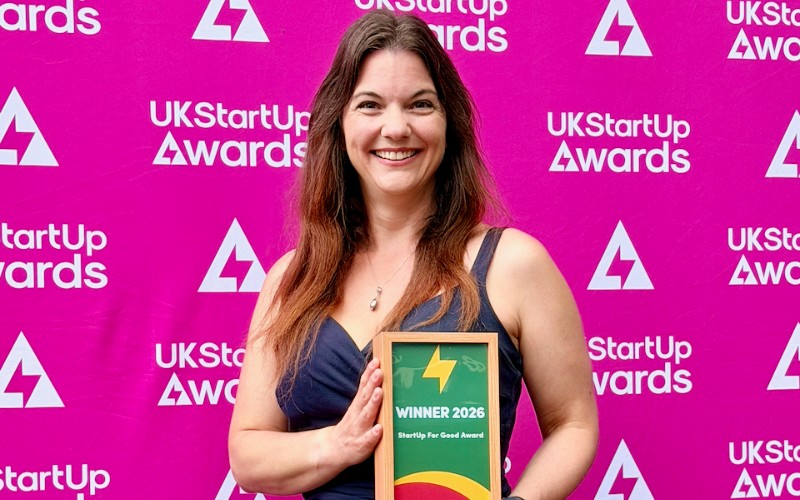
“We’ve also received significant external validation through awards and competitions, including winning StartUp for Good at the Wales UK StartUp Awards and winning the Welsh stage of the Interceltic Challenge, which gave us the opportunity to represent Wales internationally.
“Our existing angel investors are currently private, but they bring valuable experience alongside their investment.”
Emma says she is in “active discussions” with investors and investment groups, and is interested in hearing from strategic partners and care providers.
Wales
Emma is based in Tremadog, Gwynedd, North Wales, with the wider emwillcare team working remotely from locations across the UK and beyond.
“Being based in rural North Wales has never limited our ambition. If anything, it keeps us closely connected to the communities we’re designing for while allowing us to build the business around talent rather than geography,” she says.
“You shouldn’t have to move to London, Manchester or another major technology hub to build a globally ambitious company.”

Dr Emma Williams, founder and CEO of emwillcare, at Wales Startup Awards
She acknowledges that there are challenges, however: “A significant amount of networking, investment activity and industry events still take place in major cities, so there is inevitably more travelling involved.”
On the ecosystem, she adds: “Wales has been a fantastic place to start and develop the business.
“We’ve benefited from a genuinely collaborative ecosystem, with organisations such as Business Wales, Innovate UK and others willing to make introductions, open doors and help early-stage companies navigate opportunities.
“We’ve also seen first-hand the quality of innovation coming out of Wales.
“Where I think there is still an opportunity is early-stage growth capital. Wales is very good at helping companies get started, but when businesses reach the point where they need significant investment to commercialise and scale, founders can find themselves looking increasingly outside Wales.
“I’d love to see more of that capital available here, because the talent, ideas and ambition already exist.”
Snowdonia
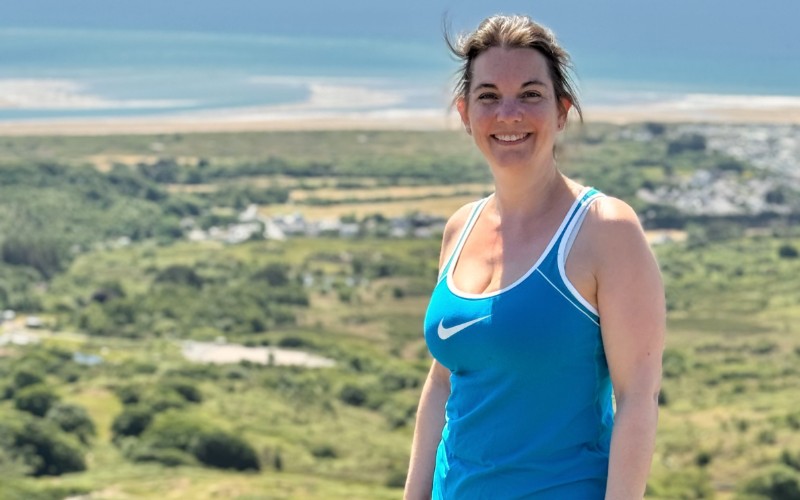
Away from the business, Emma enjoys getting out on her motorbike and also has a passion for Lego.
“They’re about as far removed from dementia care and running a HealthTech company as you can get, but they’re my favourite ways to switch off and clear my head,” she says.
“When I get the chance, there’s nowhere I’d rather ride than through the roads of Eryri (Snowdonia) National Park. It’s hard to beat the scenery on a sunny day.”